

Open, Closed, or Contested?” Hormuz Reopening Fractures Within Days; India Stays on Diversified Crude
- Published By: shivaduvvuru
- June 24, 2026 / 03:19 PM IST


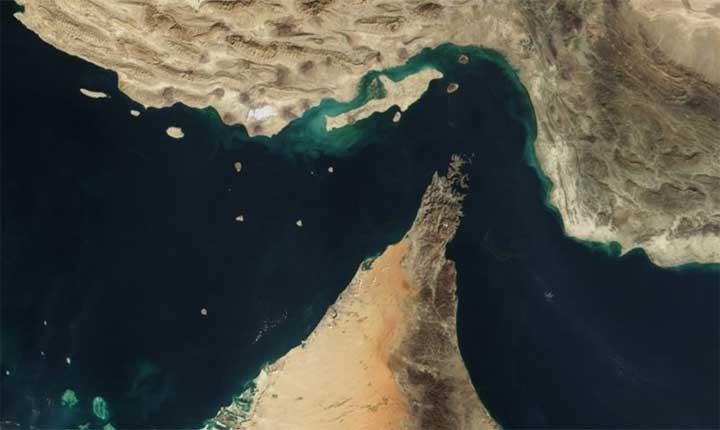
A US–Iran deal that was supposed to reopen the Strait of Hormuz has instead produced something stranger: a waterway that Washington calls open, Tehran calls closed, and the shipping industry treats as neither. A week after the breakthrough, the world’s most important oil chokepoint is contested physically, legally and institutionally leaving Indian refiners still leaning on the diversified supply network they built during the war.
The framework itself is real. Washington and Tehran signed a 14-point memorandum of understanding on June 17, 2026, calling for reopening Hormuz toll-free for at least 60 days, ending the US naval blockade of Iranian ports, lifting sanctions on Iranian oil, and starting 60 days of follow-on nuclear talks. The US lifted its blockade on June 18, and at least 10 commercial vessels transited that morning. For context on the stakes, before the war, roughly 25% of the world’s seaborne oil and about 20% of its LNG moved through the strait.
The early recovery lasted barely 48 hours. Iran declared the strait closed again on Saturday, June 20, citing Israeli strikes in Lebanon as a ceasefire violation, and the US denied the closure. The two governments are now telling opposite stories: Washington says it remains open to shipping, Tehran says it has been shut again. CENTCOM was blunt “Iran does not control the Strait of Hormuz,” a spokesperson said, adding that traffic continues to flow.
Both claims are partly true, because of geography. The strait has two navigable routes operating under entirely different conditions vessels are moving through the southern route in Omani waters under US naval coordination, while the northern Iranian-controlled route requires an Iranian permit. Iran’s newly created Persian Gulf Strait Authority issued a memo stating that no vessel may pass without a permit it issues.
On the water, traffic is trickling back rather than surging. The Joint Maritime Information Center reported that the US facilitated 32 transits on June 21, up from 28 on June 20, with traffic picking up further on June 23 and, unlike earlier Iranian “closures,” this latest warning was not followed by attacks on vessels attempting to cross. Even so, the numbers remain a fraction of the prewar baseline of more than 100 ships a day.
Crucially, “ships moving” is not “open for business.” By the stricter measure of normal, insured, any-flag commercial transit, the strait is still effectively closed: eight of the world’s largest container carriers have suspended Hormuz transits or rerouted via the Cape of Good Hope, and war-risk insurance is running about 8× normal. The four biggest carriers — Maersk, MSC, CMA CGM and Hapag-Lloyd remain on Cape routing for the rest of 2026, and the UAE’s ADNOC has said full flows won’t resume until 2027 even if the deal holds. A residual physical hazard reinforces the caution. the central deep-water channel remains closed, with an estimated 80 mines still to clear.
Markets have nonetheless priced in relief. Brent fell about 4% over 24 hours to roughly $78 a barrel, and Goldman Sachs cut its fourth-quarter 2026 Brent forecast to $80 from $90, estimating Gulf flows had already recovered to around 11 million barrels per day.
For India among the economies most exposed to a Hormuz disruption the contested status is precisely why the wartime sourcing playbook still matters. Indian state-run and private refiners leaned heavily on Russian, West African, Brazilian and US grades to offset Gulf shortfalls, and with passage neither stable nor insurable at normal rates, that diversified portfolio remains the safer bet until incident-free transits prove durable.
As one maritime analyst put it, the open-versus-closed framing itself misses the point. the debate is “kind of absurd because we’re in such uncharted territory.”
Related News
GOPIO Presents Memorandum on Diaspora Issues and Suggestions to Minister Jaishankar

Top 6 Stays in Dubai for Your Next Workation
SriLankan Airlines Restores Complete Middle East Network With Kuwait Service Resumption
Two Years After Trump’s Inflation Spotlight, Rising Grocery Prices Loom as a Political Vulnerability for Republicans Ahead of Midterms
US Imposes Up to 100% Tariffs on Drones to Curb Chinese Dominance and Bolster Security