
Donald Trump Threatens to Declare Strait of Hormuz ‘US Territory’, Prompting Sharp Rebuke from Iran
- Published By: Vishal
- August 15, 2026 / 10:51 AM IST


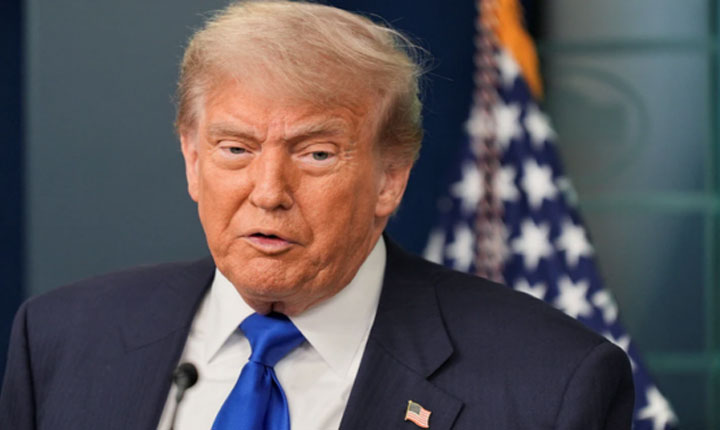
NEW YORK — US President Donald Trump stated on Friday that he will “soon” declare the Strait of Hormuz a territory of the United States while addressing a political rally in New York state. Expressing confidence that the US will defeat Iran in the ongoing conflict, Trump declared, “After we finish defeating Iran, which is being very badly defeated — pretty soon I’ll be declaring the Hormuz Strait a territory of the United States”.
The Strait of Hormuz—a crucial waterway through which one-fifth of the world’s oil and natural gas passes—has remained largely shut since the US and Israel launched a war against Iran on February 28.
Iran’s Response: “Cannot Be Seized by Tweet”
In a swift counter-statement, Iranian Deputy Foreign Minister Kazem Gharibabadi rejected Trump’s assertions, stating that the strategic waterway cannot be seized via social media, military force, aircraft carriers, or political speeches. Asserting that “Iran neither fears threats nor cowers before displays of power,” Gharibabadi emphasized that the Strait of Hormuz “has been Iranian, is Iranian, and will remain Iranian”.
Trump Claims Total Control and Naval Dominance
Prior to his rally remarks, Trump claimed that the United States holds “total control” over the strait and intends to keep it as negotiations over reopening the waterway remain stalled. Asserting that the US naval blockade is universally described as a “WALL OF STEEL” with which Iran cannot interfere, Trump stated via social media, “The USA has total control over the Strait of Hormuz. I THINK WE WILL KEEP IT!”.
Background of the Conflict and Blockade
The ongoing tussle over the strategic corridor began after Iran closed the Strait of Hormuz following an unprecedented military attack launched by the US and Israel on February 28, which aimed to halt Tehran’s alleged nuclear program. Although Tehran briefly permitted vessels from select countries (including India) to pass, it has largely maintained strict control with continuous warnings that crossing ships face potential attack.
In response, the United States enforced its own naval blockade on Iranian ports to cripple the West Asian nation’s economy. These military standoffs and shipping restrictions have driven a surge in international crude prices and sparked global fears of a broader conflict, leaving commercial shipping to navigate a highly volatile environment under strict security.
Related News
Cardiologist Raises Questions Over US President Donald Trump’s Health and White House Disclosures

Grand Conclusion of Navakundatmaka Sata Chandi Sahita Rudra Yagam

MATA 2nd Convention 2026 A Grand Celebration of Telugu Culture and Community
India and Israel Consulates Unite in Silicon Valley to Fuel AI, Cybersecurity Innovation
MATA 2nd Convention 2026 Grand Kick off in Greater Philadelphia