
India and Israel Consulates Unite in Silicon Valley to Fuel AI, Cybersecurity Innovation
- Published By: Tech Team
- February 16, 2026 / 01:34 PM IST


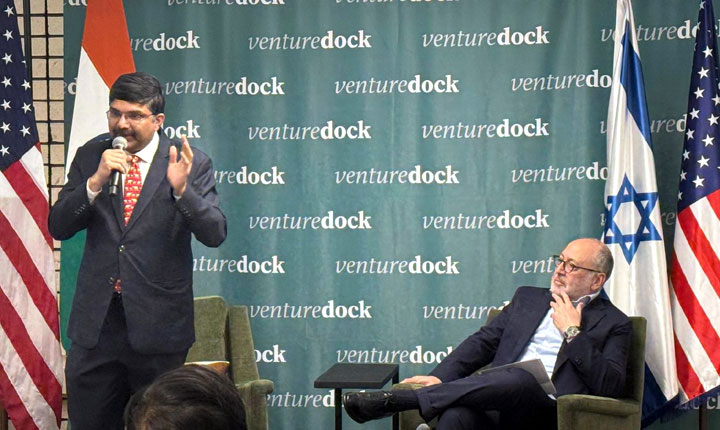
PALO ALTO, CA — In a significant move to strengthen trilateral technological ties, the Consulate General of India and the Consulate General of Israel in San Francisco, alongside Venture Dock, hosted the India–Israel AI-Cybersecurity Connect. The event drew over 130 industry titans, including founders, venture capitalists, and tech leaders, to Palo Alto to explore the strategic intersection of Artificial Intelligence and digital defense.
The gathering highlighted the growing alignment between India, Israel, and the United States in critical sectors such as semiconductors and AI. Centered on the theme Cybersecurity for AI, and AI for Cybersecurity, the forum celebrated the synergy of three powerhouse ecosystems: Israel’s Startup Nation, India’s massive scale as the world’s third-largest startup hub, and the innovation density of the U.S. Bay Area.
Diplomatic Visions for a Global Tech Partnership
Dr. K. Srikar Reddy, Consul General of India, and Ambassador Marco Sermoneta, Consul General of Israel to the Pacific Northwest, delivered a joint welcome address emphasizing the shift from historic ties to a future-focused strategic partnership.
Dr. Reddy noted the deep people-to-people connections, including the 85,000 Israelis of Indian origin, and called for the development of responsible AI for the betterment of the world. He also extended an invitation to the upcoming AI Impact Summit in New Delhi, which focuses on using technology to expand global healthcare and education access.
Ambassador Sermoneta reflected on three decades of formal diplomatic relations, stating that both nations act as forces for good in the 21st century. He detailed ongoing collaborations, such as joint hackathons and literacy initiatives, aimed at institutionalizing cooperation within Silicon Valley.
Insights from Industry Titan Jay Chaudhry
The program featured a keynote by Jay Chaudhry, CEO of Zscaler, who shared his journey of building resilient cybersecurity solutions through deep specialization. Chaudhry described his approach as being the heart surgeons of cybersecurity, prioritizing zero-trust, cloud-native models to support digital transformation.
Chaudhry characterized AI as a technological shift larger than the internet or cloud, noting its dual nature:
The Upside: Automation and agentic workflows that drive unprecedented productivity.
The Downside: A lower barrier to entry for attackers, enabling rapid intelligence gathering and sophisticated phishing.
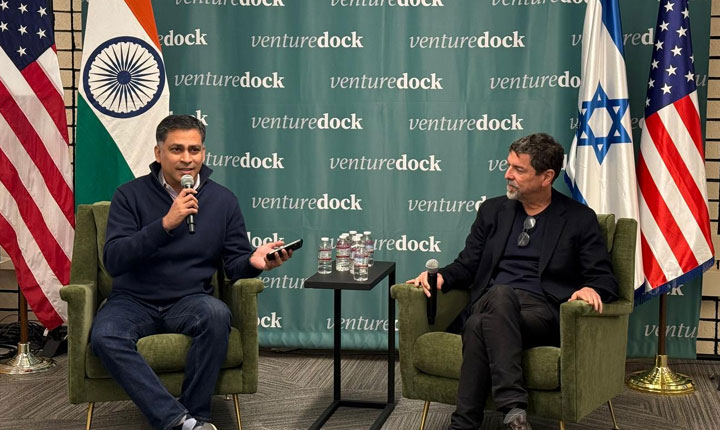
He issued a specific warning regarding AI agents, noting that if an employee utilizes dozens of compromised agents, it could amplify systemic risks across an entire enterprise. On the topic of scaling a startup, Chaudhry emphasized that success stems from hiring individuals with genuine fire and desire rather than just impressive resumes.
Balancing Innovation and Resilience
A high-level panel moderated by Raj Judge of Zscaler featured experts from Bright Security, SYN Ventures, DataRobot, Gator Security, and Lightspeed Ventures.
Guru Chahal of Lightspeed Ventures identified the lack of cybersecurity skills as a primary challenge, suggesting that entrepreneurs who solve this talent gap using AI models will build the largest companies of the future. The panel reached a consensus that while AI accelerates productivity, it demands more robust enterprise governance and defensive testing to stay ahead of evolving threats.
The evening also featured a fireside chat with Oren Zeev of Zeev Ventures, moderated by Gopi Rangan, which explored the venture capital landscape and the future of cross-border investment between the two nations.
The event concluded with a networking dinner, solidifying the commitment of India and Israel to lead the charge in secure, impactful, and responsible AI innovation.
Related News
Cardiologist Raises Questions Over US President Donald Trump’s Health and White House Disclosures
Donald Trump Threatens to Declare Strait of Hormuz ‘US Territory’, Prompting Sharp Rebuke from Iran
Grand Conclusion of Navakundatmaka Sata Chandi Sahita Rudra Yagam
MATA 2nd Convention 2026 A Grand Celebration of Telugu Culture and Community
MATA 2nd Convention 2026 Grand Kick off in Greater Philadelphia