
Cardiologist Raises Questions Over US President Donald Trump’s Health and White House Disclosures
- Published By: Tech Team
- August 15, 2026 / 04:20 PM IST


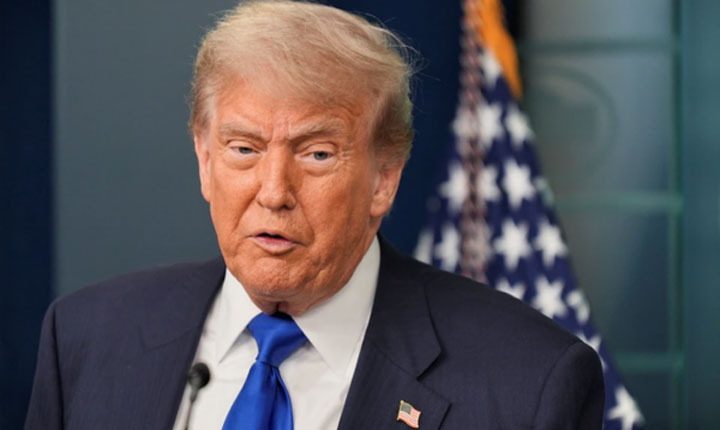
NEW DELHI — US President Donald Trump, who turned 80 in June, is facing renewed scrutiny regarding his health following questions raised by cardiologist Dr Jonathan Reiner about the transparency and extent of medical information released by the White House.
White House Assessments vs. Cardiologist’s Concerns
While White House physician Dr Sean Barbabella has repeatedly declared Trump to be in “excellent health” and fully fit to serve, Dr Reiner—who treated former Vice President Dick Cheney for 27 years—has argued that public disclosures regarding Trump remain limited. Dr Reiner contrasted this with the transparency surrounding Cheney’s medical history, which openly detailed treatments for stents, a defibrillator, arrhythmia, and blood clots.
Although the White House disclosed in July 2025 that Trump was diagnosed with chronic venous insufficiency following lower leg swelling, Dr Reiner pointed to visible indicators such as hand bruising, leg swelling, and instances of apparent daytime sleepiness that warrant further explanation. He also noted that advanced imaging was conducted at Walter Reed without clear public explanations, leaving lingering doubts about the president’s overall health status.
Seven Questions Raised by Dr Reiner
Dr Reiner outlined specific questions regarding Trump’s medical evaluations and treatment:
Why were 22 medical specialists involved in his latest health evaluation?
Could the reported aspirin dosage explain the recurring bruising on his hands?
Why was his leg swelling categorized as chronic when it was absent in earlier examinations?
Has his apparent daytime sleepiness undergone medical assessment?
Why did he undergo advanced heart and abdominal imaging at Walter Reed in October?
Are there any medications that the White House has chosen not to disclose?
Why has he undergone cognitive screening multiple times, and were more detailed assessments performed?
Lack of Legal Requirements and Constitutional Framework
There is no formal legal obligation requiring a US president to certify fitness for duty, with annual health reports continuing merely as a custom established during the Nixon administration. While the 25th Amendment provides mechanisms for presidential incapacity, Congress has not established a permanent body under Section 4, prompting Democratic Representative Jamie Raskin to introduce legislation in April seeking an independent Commission on Presidential Capacity.
Related News
Donald Trump Threatens to Declare Strait of Hormuz ‘US Territory’, Prompting Sharp Rebuke from Iran

Grand Conclusion of Navakundatmaka Sata Chandi Sahita Rudra Yagam
MATA 2nd Convention 2026 A Grand Celebration of Telugu Culture and Community

India and Israel Consulates Unite in Silicon Valley to Fuel AI, Cybersecurity Innovation
MATA 2nd Convention 2026 Grand Kick off in Greater Philadelphia