
Iran Mocks Trump Over Secret Aircraft Switch During Turkey Visit
- Published By: Vishal
- August 14, 2026 / 12:28 PM IST


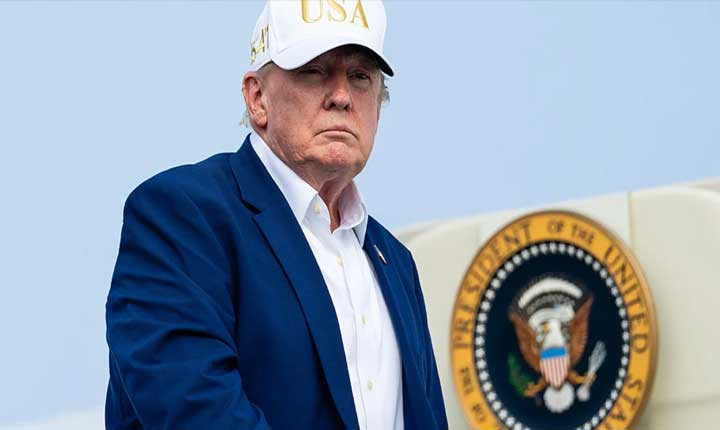
Iranian state television and media outlets have strongly mocked U.S. President Donald Trump following the emergence of details surrounding a secret aircraft switch during his recent visit to Turkey. According to state reports, the episode highlights what Tehran portrays as deep-seated anxiety regarding Iran’s military capabilities. A presenter on Iranian state television remarked that the incident has turned into a major source of humiliation for the U.S. president, stemming from a perceived fear of Iran’s regional power.
The Secret Operation and Security Threats:
The covert operation was triggered by credible and imminent intelligence indicating that Air Force One could potentially be targeted by a shoulder-fired missile during Trump’s departure from Ankara, where he was attending a NATO summit amid ongoing hostilities between the U.S. and Iran. According to sources briefed on the matter, U.S. officials were additionally alarmed to discover that Iranian entities possessed precise location data regarding Trump’s stay in Ankara, including the exact floor of his hotel.
To execute the stealthy maneuver on July 8, Trump and a small group of aides were transported in a catering food truck to switch from the large presidential aircraft to a smaller, nondescript C-32A jet. Meanwhile, Air Force One departed separately carrying senior administration officials, White House staff, and the traveling press corps.
Wider Geopolitical Context and Social Media Reactions:
While Tehran has not issued an official statement addressing the airplane switch or the specific allegations, Iranian diplomatic channels and state-linked accounts have capitalized on the narrative. The Iranian embassy in South Africa shared a viral social media post featuring a meme depicting Trump inside a catering box, accompanied by satirical commentary. Anti-U.S. sentiment remains highly visible across Tehran through billboards and murals depicting Trump in hostile imagery.
This security scare unfolds against the backdrop of heightened tensions following the death of the former Iranian supreme leader on the first day of the war, with his successor, Mojtaba Khamenei, having previously pledged vengeance. Analysts, including Ali Vaez from the International Crisis Group, note that hardliners in Iran are taking satisfaction in the extreme security protocols necessitated by U.S. concerns over Trump’s safety. Meanwhile, diplomatic efforts to secure a permanent end to the conflict in the Gulf remain stalled, with ongoing friction between Washington and Tehran.
Related News
Top 6 Stays in Dubai for Your Next Workation
SriLankan Airlines Restores Complete Middle East Network With Kuwait Service Resumption
Two Years After Trump’s Inflation Spotlight, Rising Grocery Prices Loom as a Political Vulnerability for Republicans Ahead of Midterms
US Imposes Up to 100% Tariffs on Drones to Curb Chinese Dominance and Bolster Security
KLH Student Bags Silver at the French Chess Championship