
Two Years After Trump’s Inflation Spotlight, Rising Grocery Prices Loom as a Political Vulnerability for Republicans Ahead of Midterms
- Published By: Vishal
- August 17, 2026 / 11:49 AM IST


Bedminster, New Jersey: Two years after Republican presidential candidate Donald Trump held a high-profile press conference surrounded by everyday grocery items to criticize inflation under the Democratic administration, food prices continue to climb upward despite his earlier commitments to lower them. This growing disconnect between campaign promises and economic reality has emerged as a significant political vulnerability for Republicans as the country approaches the upcoming November midterm elections.
Background and Voter Sentiment:
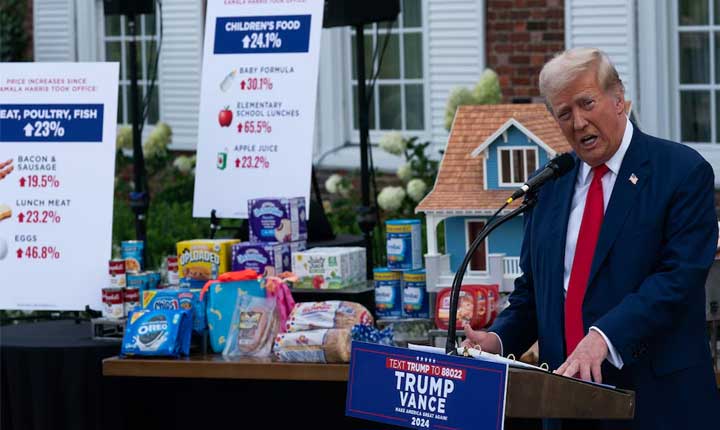
Standing between tables piled high with fruit, beef, cereal, milk, and other household staples at his Bedminster golf club on August 15, 2024, Trump blamed the Biden administration for sharp increases in groceries. The spectacle, complete with charts showing higher prices, was aimed at undercutting the Democratic nominee, Kamala Harris, and highlighted Trump’s central promise: he alone could tame inflation and lower the cost of living.
Two years on, higher gasoline and grocery prices are squeezing household budgets and turning the cost of living into the top issue for American voters. Voters now give Democrats a slight edge over Republicans in who they view as better stewards of the economy for the first time in nearly a decade, according to Reuters/Ipsos polling.
Sheila Carney, a 68-year-old Trump voter, punctuated her frustration with an expletive as she unloaded $70 worth of groceries into her car outside a supermarket not far from Trump’s Bedminster club. The haul was modest: some meat, detergent, and a 12-pack of iced tea. For Carney, the receipt was evidence that the affordability concerns Trump has sometimes dismissed as a Democratic “hoax” remain a daily burden for many Americans. “This is real. He can say it’s not, but it is,” said Carney, a hospital administration assistant who has delayed retirement while helping pay off her son’s student loans. “He hasn’t brought anything down.”
Economic Analysis and Government Data:
A Reuters analysis of 26 grocery categories tracked by the Bureau of Labor Statistics and featured in Trump’s Bedminster display found prices have risen 3.4% in the first 19 months of his second term. That’s less than a quarter of the pace recorded at the same point in former President Joe Biden’s term, but still falls short of Trump’s pledge to lower prices, as surges in coffee, beef, and apples have more than offset declines in items including eggs and butter.
A White House official pointed to data on Wednesday that showed U.S. consumer prices barely increased in July from the month before as evidence that inflation is under control, noting that prescription drug and auto insurance costs continue to fall, real wages are rising, and beef prices have cooled while other household essentials remain low.
Political Impact in Key Battlegrounds:
A registered Republican, Carney said high grocery and gasoline prices due to the Iran war were among the reasons she had grown disillusioned enough to consider sitting out the midterms, underscoring recent polling suggesting Republicans are less enthusiastic about voting than Democrats. Carney was one of 17 Republicans and independents Reuters interviewed in New Jersey’s 7th Congressional District, a battleground that includes Bedminster and where swing voters and turnout could prove decisive. The race pits Republican incumbent Tom Kean against Democrat Rebecca Bennett, who has sought to capitalize on voters’ frustration over the cost of living. More than half of those interviewed said they were either undecided or leaning toward Bennett.
Francesco Trebbi, a public policy professor at the University of California, Berkeley, recently co-authored research finding that Trump drew stronger support in the 2024 election in counties where inflation outpaced income growth, eroding households’ purchasing power. With real wages rising only marginally and lagging the pace of broader economic growth, Trebbi said it is likely that pattern will reverse in November, describing grocery shopping as a “psychologically salient” reminder of the squeeze on household finances.
Diverging Perspectives Among Voters:
To be sure, presidents have limited influence over inflation, which is driven by a range of factors and more directly addressed by the Federal Reserve. Many Republicans appear willing to give Trump the benefit of the doubt, even as his tariffs and the Iran war have contributed to rising prices. Bonnie Chandler, 64, plans to vote for Kean, saying she believed some companies were keeping prices elevated to make Trump look bad. Similarly, Lauren DeGirolamo, a 34-year-old Trump voter, said issues such as education and border security mattered more to her than grocery prices, which she believes have stabilized under Trump.
According to BLS data, egg prices have fallen nearly 40% under Trump, reflecting a market correction after avian flu-driven shortages triggered a surge that began during Biden’s presidency. Eggs are among six of the 26 categories showing falls since 2025, along with butter, bacon, and cooking fats and oils. Yet most of the items Trump displayed at Bedminster are now pricier, some by a lot: uncooked beef has jumped 19.2%, fresh fish and seafood 8.6%, apples 14%, and coffee nearly 23%.
Conclusion and Outlook:
A Reuters/Ipsos poll that concluded earlier this month found Trump’s net approval rating on his handling of the cost of living was at -47%, down from -6% at the start of his term, making it his weakest issue by a wide margin. Bennett told Reuters that if elected she would seek to undo Trump’s tariffs, rein in the Iran war, and restore food stamp benefits. Whether Kean can hold on to his seat may depend on voters like Margaret Derkach, 84, who typically votes Republican but is now considering switching her vote if economic conditions don’t improve, remarking, “The cost of living, as far as homes, apartments and food the necessities they have gone up. It’s shocking, shocking.”
Related News

Top 6 Stays in Dubai for Your Next Workation

SriLankan Airlines Restores Complete Middle East Network With Kuwait Service Resumption
US Imposes Up to 100% Tariffs on Drones to Curb Chinese Dominance and Bolster Security
Iran Mocks Trump Over Secret Aircraft Switch During Turkey Visit

KLH Student Bags Silver at the French Chess Championship