

The World Is Worried About ‘Q-Day’. What Is It?
- Published By: Tech Team
- August 15, 2026 / 10:20 AM IST


— Surya Prakash Josyula
Think about the things we send and store every day — WhatsApp messages, online bank transactions, personal photos in the cloud and confidential files on company servers. We believe all of them are safe because they are protected by strong encryption.
But what if a computer becomes powerful enough to break that encryption?
Data that looks completely safe today could suddenly become exposed. Secrets that were meant to stay private could become public. This is the fear behind what the tech world calls ‘Q-Day’.
What is this technology?
After artificial intelligence, quantum computing is one of the technologies attracting huge interest around the world.
Normal computers may need years — or even billions of years — to solve some very complex mathematical problems. Quantum computers could solve certain types of these problems much faster.
But quantum computing will not necessarily change every part of our lives like AI could. Its biggest impact may come in areas such as chemistry, physics simulations and highly complex mathematical problems.
There is, however, one area where quantum computing could create a major problem: cybersecurity.
Why is everyone worried?
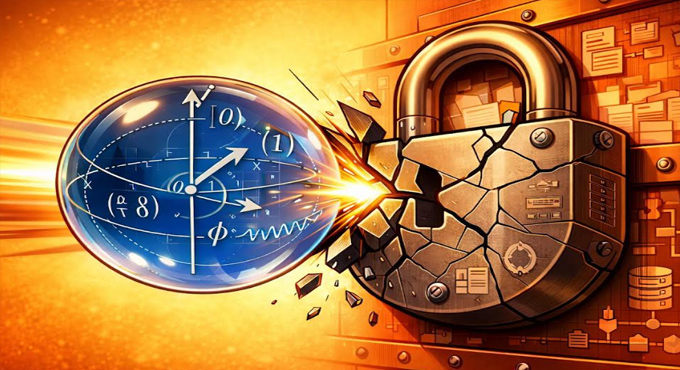
Much of the digital world depends on encryption. Our bank details, emails, company secrets and personal files are protected by digital locks that are extremely difficult for today’s computers to break.
But a powerful enough quantum computer could potentially break some of these encryption systems much faster.
That is why the tech world talks about ‘Q-Day’ — the day when quantum computers become powerful enough to seriously threaten today’s encryption methods.
And here is the worrying part: the threat does not begin on Q-Day.
Some governments and cybercriminals may already be collecting encrypted information today. They may not be able to read it now, but they could store it and try to decrypt it in the future when powerful quantum computers become available.
This strategy is known as “Harvest Now, Decrypt Later.”
Imagine someone steals an encrypted file from you today. It may be useless to them for now. But if they can break the encryption ten years later, that old file suddenly becomes valuable.
This could be especially dangerous for government secrets, military information, medical records, financial data and important research.
Is there a solution?
Yes. It is called Post-Quantum Cryptography (PQC).
PQC uses new mathematical methods designed to remain secure even against powerful quantum computers. The good news is that it can be used on today’s ordinary computers. We do not have to wait for quantum computers to arrive.
Several major browsers, messaging services and cloud companies have already started moving towards PQC.
The race, therefore, is not simply to build the world’s most powerful quantum computer. It is also to make sure that our digital locks are ready before that computer arrives.
Related News
Ordered From Blinkit or Zepto? Check This Before You Accept It

‘Will the Drug Work?’.. What If AI Tests It on a ‘Digital Human’ First?

Elon Musk Is Getting Richer by ₹8,350 Crore a Day. But Nobody Is Paying Him

Facebook, Instagram Face ₹125 Lakh Crore Lawsuit Over Alleged Harm to Children

A surprising new feature in smartwatches.. Could they detect the risk of diabetes early?