
One Allegation. 76,000 Lawsuits. A $5.5 Billion Settlement. What Was the Real Twist Behind Johnson & Johnson’s Talc Story?
- Published By: Tech Team
- July 29, 2026 / 04:30 PM IST


— Surya Prakash Josyula
It is one of the strangest corporate stories in recent history.
Johnson & Johnson won most of the major talc cases that went to trial. Yet, after fighting for nearly 12 years, the healthcare giant agreed to pay $5.5 billion to settle the remaining lawsuits.
At first glance, it makes no sense. Why would a company that was winning in court agree to pay billions of dollars? Was it admitting defeat, or was it simply making a business decision?
To understand the answer, we need to go back to a product that millions of families trusted for generations.
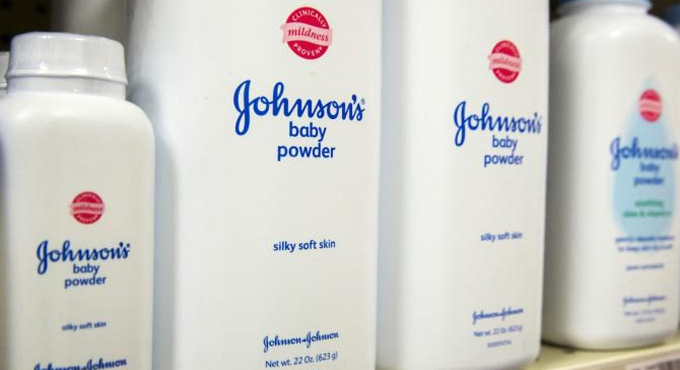
For many people, Johnson & Johnson baby powder was more than just another household product. It was part of childhood. Parents used it after every bath, and its familiar fragrance became part of countless family memories. Few could have imagined that the same baby powder would one day become the center of one of America’s biggest legal battles.
The controversy began when thousands of women claimed that years of using the company’s talc-based baby powder had caused them to develop ovarian cancer. Their stories quickly drew public attention and created widespread concern. For many families, the question became deeply personal. If a product they had trusted for years was being linked to cancer, what did that mean for them?
The fear spread much faster than the science.
For decades, researchers have tried to answer one difficult question: Can talc actually cause ovarian cancer? Even today, there is no simple scientific answer. Some studies have suggested a possible association, while others have found no clear evidence of a direct causal relationship. Because of these conflicting findings, scientists have never reached a unanimous conclusion.
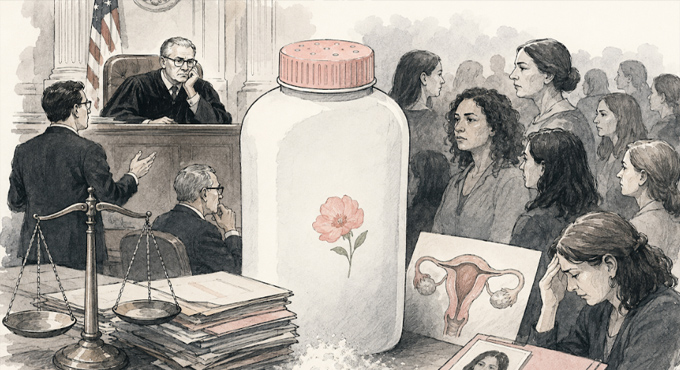
That uncertainty became one of the biggest challenges in court. During recent proceedings, even expert witnesses acknowledged that they could not say with certainty that talc directly caused ovarian cancer. At one point, the judge raised an important question: if science itself remains uncertain, how can plaintiffs prove their claims with certainty?
While science continued searching for answers, the legal battle kept growing.
What started with a few lawsuits eventually became a wave of litigation. One woman filed a case. Then others followed. Before long, more than 76,000 women had brought claims against the company.
This happened because the American legal system allows large numbers of people with similar allegations to pursue legal action through Mass Tort Litigation. Law firms reached out to potential claimants through advertisements, encouraging people who believed they had been affected to come forward. As more people joined, the number of lawsuits grew rapidly, creating enormous legal pressure.
Johnson & Johnson responded by defending its products in court. The company argued that the available scientific evidence did not prove that its talc products caused ovarian cancer. In many of the cases that reached trial, juries or appellate courts ruled in the company’s favor. Out of 20 major ovarian cancer cases that went to verdict, the company secured favorable outcomes in 19 through wins, mistrials, or successful appeals.
Yet those victories did not end the problem.
Winning individual cases was one thing. Managing tens of thousands of lawsuits was something entirely different. Every new case meant more legal costs, more years in court, more uncertainty for investors, and more headlines linking one of the world’s best-known consumer brands with cancer allegations.
The company also explored another path. It created a subsidiary and attempted to resolve the claims through bankruptcy proceedings, hoping to establish a trust that would compensate claimants while bringing the litigation to an end. Courts, however, rejected that strategy, ruling that the bankruptcy process could not be used in that way because the company had the financial ability to meet its obligations.
With that option closed, Johnson & Johnson returned to the negotiating table.
The company eventually proposed a $5.5 billion settlement to resolve the remaining lawsuits, subject to broad participation by the remaining claimants. From the company’s perspective, ending years of legal uncertainty and moving forward with its core business became a more practical option than continuing thousands of individual court battles.
The legal fight also produced an unexpected courtroom twist. A lawyer who had previously worked with Johnson & Johnson later became associated with a law firm representing plaintiffs. The company argued that the lawyer had access to confidential information, creating a conflict of interest. The court agreed, and the law firm was removed from the litigation.
After more than a decade of courtroom battles, one question still remains.
Who actually won?
The women who filed the lawsuits brought global attention to their concerns, but money cannot undo illness or erase years of suffering.
Johnson & Johnson achieved favorable outcomes in many individual trials, yet still chose to pay billions to end the legal uncertainty.
Science, meanwhile, continues to study the possible relationship between talc and ovarian cancer, meaning the broader debate has not completely ended.
That is why the Johnson & Johnson talc litigation is remembered as much more than a multi-billion-dollar settlement. It is a story about trust, fear, science, business, and the law—each pulling in a different direction, with no answer that satisfies everyone.