
‘Climate Economy’: How Thailand is Commercializing the Heat..!
- Published By: Tech Team
- July 10, 2026 / 08:15 AM IST


— Surya Prakash Josyula
Every era that reshaped the global economy has been defined by a distinct narrative. Once, it was the Oil Economy, where nations with oil reserves dictated global terms. Then came the Digital Economy, followed closely by today’s AI Economy, where artificial intelligence is completely rewriting business frameworks. Yet, amidst these transitions, a new term is steadily gaining ground: the Climate Economy.
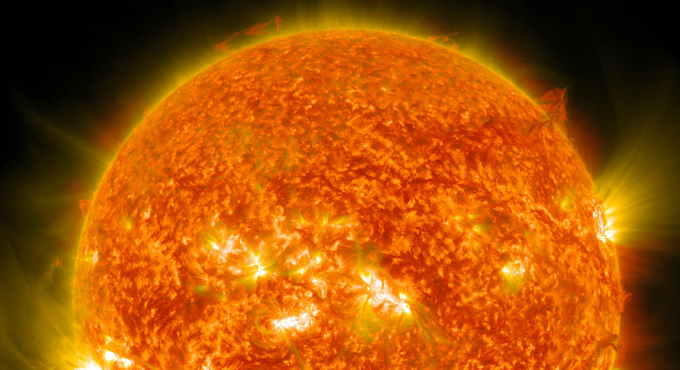
Today, the primary driver of global change is no longer just technology—it is the climate itself. As global temperatures rise and extreme heat becomes a regular reality, it is giving birth to a massive Cooling Economy. This shifts our focus to a critical question: “Who is actually profiting from this global heatwave?”
The answer is Thailand.
Europe’s Crisis, Thailand’s Business
This year, Europe is once again reeling under severe heatwaves, with countries like France, Germany, Spain, and Italy experiencing unprecedented temperatures. This shift has exposed a major structural vulnerability: European homes, traditionally built to retain warmth during long winters, have now become heat traps that seal the warmth inside. Consequently, there is an explosive demand across the continent for portable air conditioners, cooling equipment, and industrial fans. Thailand was remarkably quick to capitalize on this urgent demand.
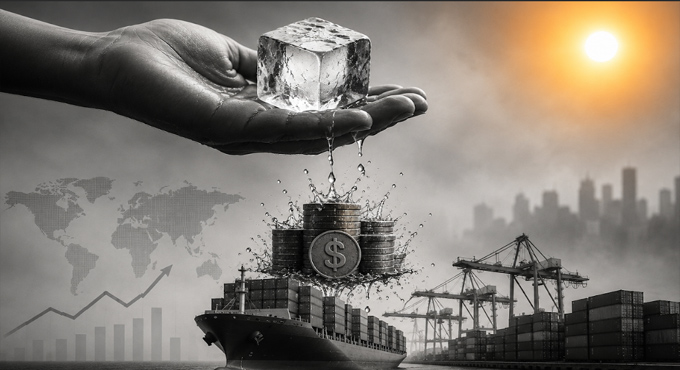
As one of the world’s leading manufacturing hubs for air conditioning units, Thailand seamlessly converted Europe’s climate crisis into a massive export opportunity. In May alone, Thailand’s air conditioner exports to Europe surged by 41.3 percent, bringing in hundreds of millions of dollars in revenue from the European market during the first five months of the year.
Furthermore, Thailand’s strategy went beyond hardware exports. The country brilliantly rebranded the crisis into a tourism campaign, inviting heat-weary Europeans to escape the scorching summer and enjoy Thailand’s cooler monsoon season instead. By doing so, they turned a single global problem into two highly lucrative business streams: appliance exports and seasonal tourism.
Why Are Air Conditioners So Rare in Europe?
While temperatures hitting 45 degrees Celsius during April and May are a normal occurrence in India, European infrastructure and cities are completely unprepared for such extreme heat. This vulnerability stems from their geography; Europe experiences cold weather for most of the year, which led to a historic design philosophy of building homes that trap heat rather than vent it.
Because severe summers were historically rare, the vast majority of households never required air conditioning. However, climate change is now completely altering this reality. Air conditioners, which were long viewed as luxury items across most of Europe, are rapidly becoming essential survival tools, forcing citizens to purchase them on a massive scale.
History Repeats Itself
A look back at global economic history reveals that every major crisis has ultimately laid the foundation for a new market.
The COVID-19 Pandemic: When global lockdowns brought the physical world to a standstill, shutting down offices and schools, it triggered a massive shift toward remote work. This crisis single-handedly created an unprecedented boom for digital meeting platforms like Zoom, Microsoft Teams, and Google Meet.
The Ukraine War: When Europe faced an energy crisis due to its heavy reliance on Russian gas, a geopolitical conflict forced a massive restructuring of the global energy trade, driving Europe to drastically increase LNG imports from nations like the United States and Qatar.
The Electric Vehicle (EV) Boom: Rising concerns over pollution, carbon emissions, and climate change paved the way for EV manufacturers like Tesla and BYD to dominate the global automotive sector, transforming environmental anxiety into a multi-billion-dollar market.
Heatwaves and the Solar Industry: As temperatures climbed and electricity bills skyrocketed, a critical need emerged for sustainable energy, causing a rapid global expansion in solar panels, rooftop solar installations, and advanced battery storage systems.
Water Scarcity and Water Technology: Severe water shortages in regions like the Middle East, Africa, and California fueled exponential growth in specialized industries focused on desalination, water recycling, and smart irrigation systems.
What Lies Ahead for the Climate Economy?
The Climate Economy is essentially an economic system driven by the shifting purchasing habits, investments, and business models resulting from climate change. Moving forward, residential architecture will adapt by utilizing smart materials engineered to block external heat.
Similarly, the insurance sector will be completely reshaped by climate risk models, while technologies like desalination and water recycling will experience massive financial inflows. Ultimately, wealth in tomorrow’s world will not be determined solely by oil reserves, but by the technology required to turn climate challenges into commercial opportunities.
Will India Seize This Opportunity?
India is already positioning itself as a major global hub for air conditioner manufacturing. Driven by the ‘Make in India’ initiative and Production Linked Incentive (PLI) schemes, numerous multinational corporations are aggressively scaling up their production capacities within the country. If the European demand for cooling products continues to escalate due to recurring heatwaves, it could open massive export corridors for Indian manufacturers.
However, access to the market alone will not guarantee success. To effectively compete with established giants like China and Thailand, India must rapidly strengthen its capabilities across four critical pillars: massive economies of scale, highly competitive pricing, superior energy efficiency, and a robust, uninterrupted supply chain.
Conclusion: Oil vs. Cooling—The New Global Asset
While a heatwave presents a severe crisis for Europe, it serves as a highly profitable business landscape for Thailand. If water scarcity intensifies in the future, desalination companies will thrive; if floods become more frequent, the climate insurance market will expand; and if global temperatures continue to break records, cooling technology could very well become the most vital industry on the planet.
Consequently, the world’s most valuable resource in the near future may no longer be oil, but rather a nation’s inherent capacity to convert climate change into a strategic advantage.
The primary question that remains is whether India will participate in this emerging Climate Economy as a nation that sells solutions, or merely as a consumer that buys them. Global history has proven time and again that every major crisis births a new economic era—and climate change is currently doing the exact same thing.