
Telangana’s Governance Revolution A Success Story in Foundational Literacy and Numeracy

- Published By: Vishal
- July 9, 2026 / 08:09 PM IST


The National Education Policy (NEP) 2020 established foundational literacy and numeracy (FLN) as the cornerstone of India’s educational agenda, recognizing that reading proficiency and basic mathematical skills by Grade 3 are essential for future learning. To implement this vision, the Ministry of Education introduced the NIPUN Bharat Mission in July 2021, focusing on curriculum, teacher training, and data-driven governance to ensure every child achieves key learning milestones. In Telangana, this initiative has successfully reached 10.34 lakh children across 24,000 government schools, supported by a dedicated workforce of 60,000 primary grade teachers.
A Paradigm Shift in Governance:
Before 2022, school oversight in Telangana often lacked visibility, functioning primarily as administrative “check-box” exercises without tracking instructional quality. The state, through a collaboration between SCERT, the Directorate of School Education, and Samagra Shiksha, transformed this by integrating school visits, reviews, and data into a single, cohesive governance system.
Key pillars of this digital architecture include:
School visits have been redesigned as mentoring exercises, where officials use a common observation tool via the Telangana School Education Application to record real-time feedback.
Five interconnected platforms including the Integrated School Management System, TLM tracking, and the Vidya Sameeksha Kendra (VSK) Monitoring Centre now provide a “single source of truth” across all 33 districts.
Monthly review meetings are now compulsory and are structured around fixed, learning-focused agendas powered by live data from monitoring dashboards.
These changes have led to a 2.5-fold increase in official school visits, reaching 98% of schools every quarter, and ensuring that over 90% of students receive teaching-learning materials within the first month of the academic year.
Rigorous Independent Assessment:
To ensure accountability, Telangana implemented an independent, annual sample-based assessment for Grade 2 children, covering approximately 8,500 students across 1,750 schools. To maintain neutrality, these assessments are performed by trained DIET students rather than classroom teachers.
The impact of this reform is evident in the data from the 2024–25 to 2025–26 academic years:
Telugu sentence reading scores rose by 6 percentage points, English sentence reading by 9 points, and mathematics addition and subtraction scores by 8 and 6 percentage points, respectively.
Narayanpet district emerged as a standout performer, recording a 19-point jump in Telugu word reading, a 29-point increase in English sentence reading, and a 28-point improvement in numeracy subtraction.
Telangana’s model demonstrates that when a state connects school oversight with rigorous, independent measurement, it does more than just track school performance it creates a system that actively drives academic improvement.
Related News

BenQ Unveils “MOBIUZ Game Art Museum” Experience at Tokyo Game Show 2026

Dreame Technology Launches Flagship X60 Ultra Complete Robot Vacuum in India

Turtle Wax Marks 80 Years of Global Leadership as CEO Laurie King Visits India to Accelerate Expansion Plans

Hyundai Motor India Opens Bookings for the New Intelligent Utility Vehicle, Hyundai BAYON
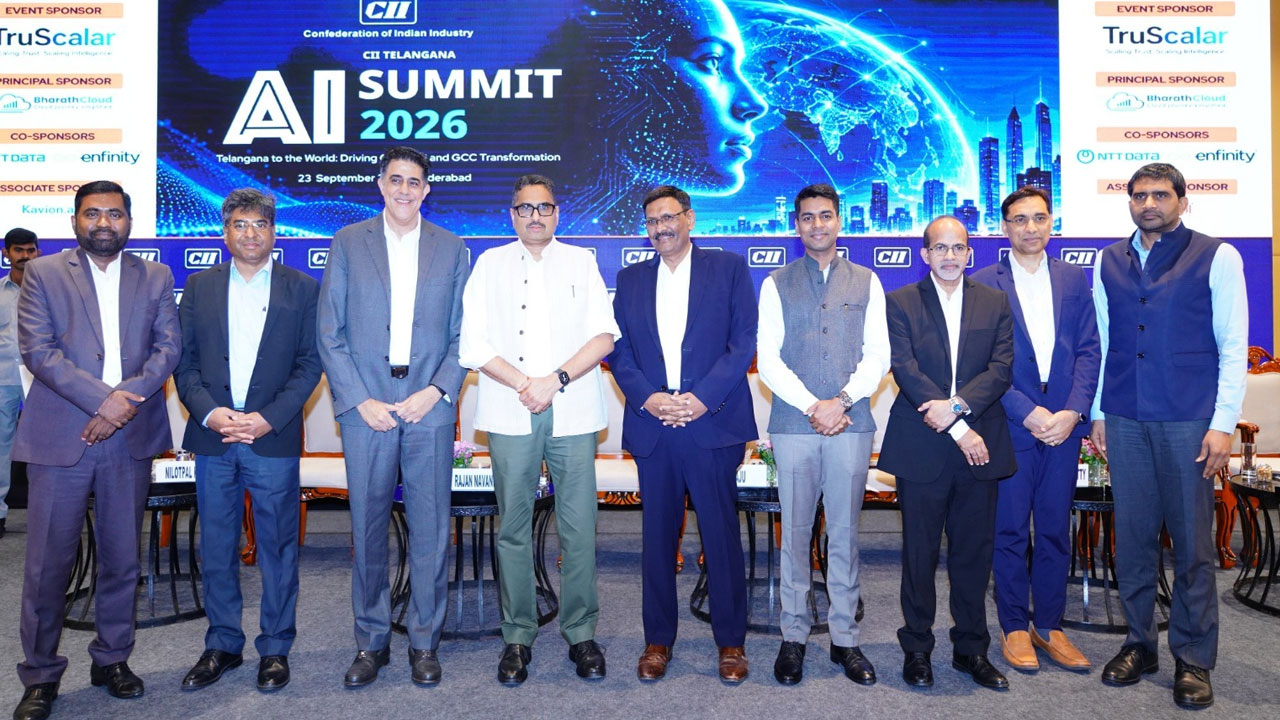
Telangana AI Summit 2026 Drives State’s Vision to Become a Global Artificial Intelligence Hub