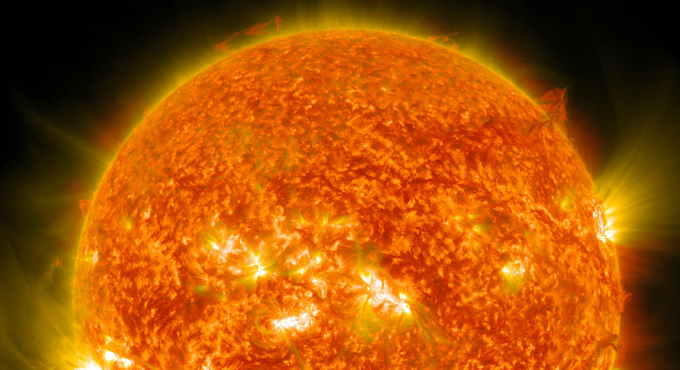

Do you know how many liters of water are spent behind a single question you ask an AI?
- Published By: Tech Team
- July 9, 2026 / 04:46 PM IST


—Surya Prakash Josyula
It is true that AI is changing the world. But would you believe that your electricity, your water, and your land are being heavily spent for it? This is now a hot debate in some parts of America.
For many, a data center seems like just a big building filled with computers. But the discussion currently happening within some local governments in America is quite different. “Should people’s resources be sacrificed for AI?”—with this question, locals are challenging Big Tech companies. This is not just a technology story… it is a story of electricity, water, land, and people’s rights.
What is the actual price of AI?
Today, crores of people use AI tools like ChatGPT, Gemini, and Claude every day. But many do not know how much massive infrastructure works behind a single AI answer.
According to the International Energy Agency (IEA) report: While a normal Google search consumes 0.3 watt-hours of electricity, a ChatGPT request requires nearly 2.9 watt-hours of electricity. This means it is 10 times more than a normal search!
When we ask a question, the answer comes in a few seconds. But thousands of servers work simultaneously behind that single answer.
According to Washington Post investigations… the electricity required to run a large data center is equal to the electricity consumed by a small town with about 30,000 to 50,000 houses. As AI usage grows, this electricity demand is increasing even faster.
Water Shock… Crores of liters per day!
Not just electricity… the real discussion is now happening on water consumption.
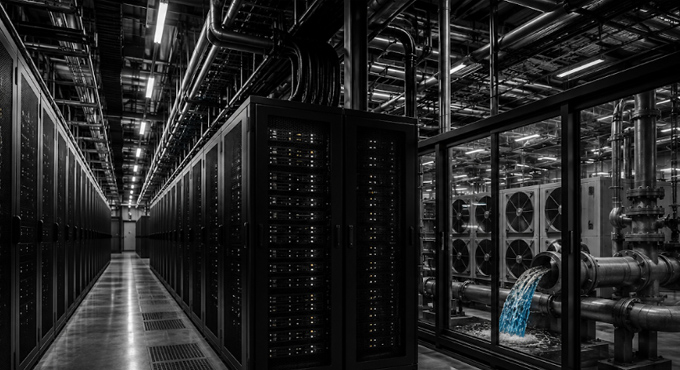
Server Heat: Servers in data centers work 24 hours a day and become heavily heated. Special cooling systems are required to cool them down.
According to University of California (UC Riverside) research: For every short conversation of 10 to 50 questions you have with AI, nearly half a liter of water evaporates.
Daily Consumption: According to this, these data centers across the world are evaporating crores of liters of fresh water daily for cooling servers. While water scarcity is increasing globally on one hand, using such massive amounts of water for AI services on the other hand is causing severe concern among local people.
Did you know?
AI is not just software. Thousands of high-performance servers work continuously behind it.
That is why continuous electricity, heavy cooling, and large infrastructure are required.
For this reason, data centers have now become a key topic in political and environmental discussions.
Hundreds of acres of land… but very few jobs!
This is another question that local people are asking. Hundreds of acres of land are being allocated for data centers, and electricity and water are being used on a massive scale. However, criticisms are being heard that the jobs coming to locals are very limited.
Contrast Point: Local groups believe that since a small number of staff is enough to maintain servers, the employment opportunities are very minimal compared to the resources people are losing.
Why are some regions in America putting brakes on data centers?
Opposition against Big Tech companies has started right in America, which leads the world in AI. Companies like Google, Microsoft, and Amazon are earning massive profits. However, the question of why local people should sacrifice their electricity, water, and land for them is being heard strongly there.
However, this is not happening across the whole of America. Only local governments in certain specific cities like Seattle and some counties (regions) in Maryland and Washington State, where the pressure of data centers is high, have started imposing temporary bans (Moratoriums) or implementing strict regulations on new data centers. These local governments are taking these decisions with the intention of reducing pressure on people’s resources.
Could a similar situation arise in India too?
Experts believe that this discussion, which started in some cities in America, might be heard in India too in the future.
Our country too is currently constructing data centers on a massive scale around cities like Mumbai, Chennai, and Hyderabad.
If AI usage increases further in India, the electricity demand, water consumption, and land requirement will also increase drastically.
Then, a discussion that conservation of natural resources is just as important as development is likely to begin even among the common man here.
Anyway…
AI may be a technology that changes the future of the world. But if pressure increases on people’s water, electricity, and land for that same AI, how do we achieve a balance?
Will the “AI vs People’s Resources” discussion that started in some parts of America begin in India tomorrow too? Development of Big Tech companies and conservation of people’s natural resources—how should the balance be between these two?