A Key Clue in the Cancer Mystery..! Has an Answer to a Long-Standing Question Finally Been Found?
- Published By: Tech Team
- July 10, 2026 / 08:24 AM IST


— Surya Prakash Josyula
For years, the medical world has been searching for an answer to one question: “Why is cancer so difficult to stop?” Now, scientists believe they may have uncovered an important part of that mystery.
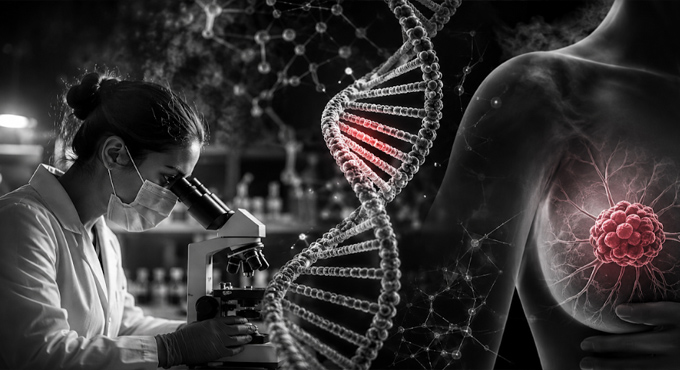
Researchers have identified the role of 81 genes that are linked to the growth of breast cancer. This is not a new cure, but experts believe it could become an important clue that helps develop better treatments in the future.
Researchers from Sinai Health in Toronto, Canada, published their latest study in the prestigious Nature journal. They identified the role of 81 previously unknown genes linked to the growth of breast cancer.
Breast cancer is one of the most commonly diagnosed cancers among women in India. Every year, lakhs of new cases are reported. In many patients, the disease is detected only after it has progressed. Why does it spread so fast? Why does it return in some patients even after treatment? This study is an important step towards answering those questions.
How Serious Is the Situation in India?
High number of cases: Breast cancer is one of the most common cancers among Indian women.
Growing risk among younger women: Lakhs of new cases are reported every year.
Early detection matters: If diagnosed in Stage 1 or Stage 2, the chances of successful treatment increase significantly.
At a Glance: What Scientists Found
Research Institution Sinai Health, Toronto (Canada)
Published In Nature Journal
Discovery The role of 81 genes linked to breast cancer growth
Key Gene PLGRKT
Technology Used CRISPR-KOALA
Current Stage Laboratory Research
Future Use A new direction for Targeted Therapy research
This Is Where the Big Breakthrough Happened
Imagine trying to catch a thief without knowing where he is hiding. That is exactly how cancer research has been for years.
Scientists have now identified the role of 81 genes that were previously unknown but are linked to the growth of breast cancer.
However, one thing is very important to remember.
This is not a cure for cancer. It is a major scientific breakthrough that could help researchers develop better treatments in the future.
“A cure for cancer has not arrived yet… but scientists are slowly uncovering its hidden secrets.”
This research focused on one of the most aggressive forms of breast cancer called Basal-like Triple-Negative Breast Cancer.
It grows and spreads very quickly.
Hormone therapy and HER2-targeted treatments usually do not work for this type.
Treatment options are limited, and chemotherapy remains one of the main treatment methods.
It also has a higher chance of coming back after treatment.
Why Is Everyone Talking About This One Gene?
Among the 81 genes identified, PLGRKT attracted special attention.
Normally, cells become weak when oxygen levels are low. But researchers found that this gene helps cancer cells survive even in low-oxygen conditions, allowing the tumour to continue growing.
More research is needed to confirm its exact role, but scientists believe it could become an interesting target for future treatments.
How Did Scientists Identify These 81 Genes?
The research team used a new gene-editing research method called CRISPR-KOALA.
Using this technology, they studied around 3,700 genes in mice and identified the genes that play an important role in breast cancer development.
Note: This technology is currently meant only for research. It is not yet available for routine clinical use.
How Can This Research Help Patients?
This study will not change treatment immediately. However, it may open the door to several future developments.
More accurate genetic tests.
Personalised Medicine: Treatments designed according to each patient’s genetic profile.
New Targeted Therapies, especially for Triple-Negative Breast Cancer.
Is What You See on Social Media True?
Myth: Scientists have found a cure for cancer.
Fact: No. This study only helps scientists better understand how cancer grows.
Myth: Cancer can now be detected immediately through genetic testing.
Fact: No. More research and clinical trials are still required.
What Does This Research Really Mean?
“This is not a new cure for cancer. But it is an important step towards developing better targeted treatments in the future.”
Every Woman Should Know This
Watch out for these warning signs:
A painless lump in the breast.
Changes in the skin or shape of the breast.
Unusual discharge from the nipple.
These symptoms should never be ignored.
Women above 20 years should perform a breast self-examination once every month. Women above 40 years should undergo a mammogram after consulting their doctor.
In the End…
Every cancer has a story. Understanding that story is the first step towards fighting it. This research is another important milestone in that journey. It may not offer a cure today, but it could help shape better treatments tomorrow.
If you have women in your family, please share this information with them. If you notice any unusual symptoms, consult a qualified doctor without delay.
Note: This article is meant only for public awareness. For medical advice or treatment, please consult a qualified healthcare professional.
Related News

Do You Need to Pay ₹1 Crore to Go to America? Trump’s New H-1B Shock

Shocking: Are Governments Using Criminals to Carry Out Killings?

Flying Abroad from India? This Airport Routine Is About to Disappear

America Is Fighting Russia. Why Could India End Up Paying the Bill?

One QR Code Scan Could Empty Your Bank Account?!