
AMNS India Secures First PM-SETU Approval for Visakhapatnam ITI Cluster
- Published By: Tech Team
- May 31, 2026 / 08:49 PM IST


NEW DELHI: In a major boost to industrial skill development, the National Steering Committee under the Ministry of Skill Development and Entrepreneurship has approved the first-ever Strategic Investment Plan (SIP) under the ₹60,000 crore PM-SETU scheme. The approval was granted to ArcelorMittal Nippon Steel India (AM/NS India) for the Visakhapatnam ITI Cluster, making Andhra Pradesh the first state in the country to operationalize an industry partnership under this flagship national initiative.
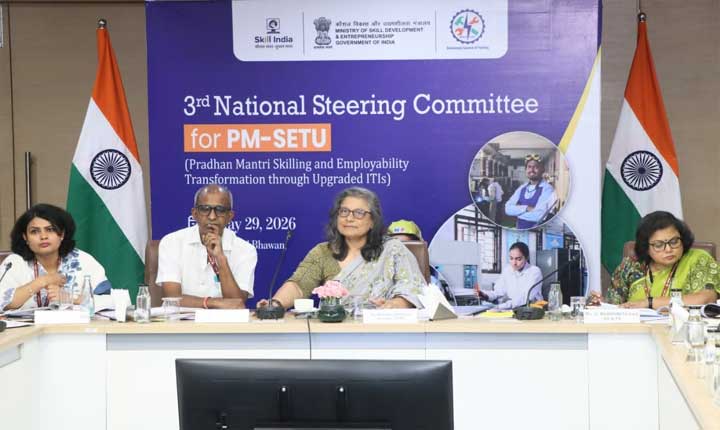
The decision was finalized during the 3rd National Steering Committee meeting held at Kaushal Bhawan in New Delhi. Chaired by Smt. Debashree Mukherjee, Secretary of MSDE, the meeting brought together central officials, state representatives, and major corporate leaders from organizations like Hindustan Aeronautics Limited (HAL), Hero MotoCorp, Bajaj Auto, and ITC Limited, alongside development partners including the World Bank and the Asian Development Bank.
AM/NS India submitted the winning strategic plan alongside its academic partner, the New Age Makers Institute of Technology (NAMTECH). Under the approved plan, the Visakhapatnam ITI Cluster will transition into an industry-managed, outcome-oriented hub designed to bridge the gap between traditional vocational training and the demands of modern advanced manufacturing.
A Pioneer Model for Vocational Training:
The Pradhanmathbf Pradhan Mantri Skilling and Employability Transformation through Upgraded ITIs (PM-SETU) scheme is an ambitious central initiative aiming to modernize 1,000 government ITIs across India using a Hub-and-Spoke model. By onboarding AM/NS India as an Anchor Industry Partner (AIP), Andhra Pradesh establishes a blueprint for how states can integrate corporate expertise directly into public education infrastructure.
Key focus areas of the transformation include:
Industry-Led Governance: Transitioning institutional management to corporate-backed Special Purpose Vehicles (SPVs) to improve operational efficiency and financial sustainability.
Curriculum Modernization: Aligning trade courses with emerging global technologies, high-growth industrial sectors, and advanced automation.
Enhanced Employability: Creating direct talent pipelines from classrooms to manufacturing floors to ensure high-placement outcomes for rural and semi-urban youth.
Scaling Up for Viksit Bharat 2047:
The approval marks the beginning of a broader rollout nationwide. Currently, 32 states and union territories have formed their respective State Steering Committees, and 12 states have already floated Requests for Proposals (RFPs) to secure their own Anchor Industry Partners.
As more state-industry consultations close in the coming weeks, a robust pipeline of similar investment plans is expected to head to the National Steering Committee for clearance. Officials noted that the successful integration of the Visakhapatnam cluster will serve as the primary operational benchmark as the central government accelerates ITI transformations to build a future-ready workforce for a developed India.
Related News
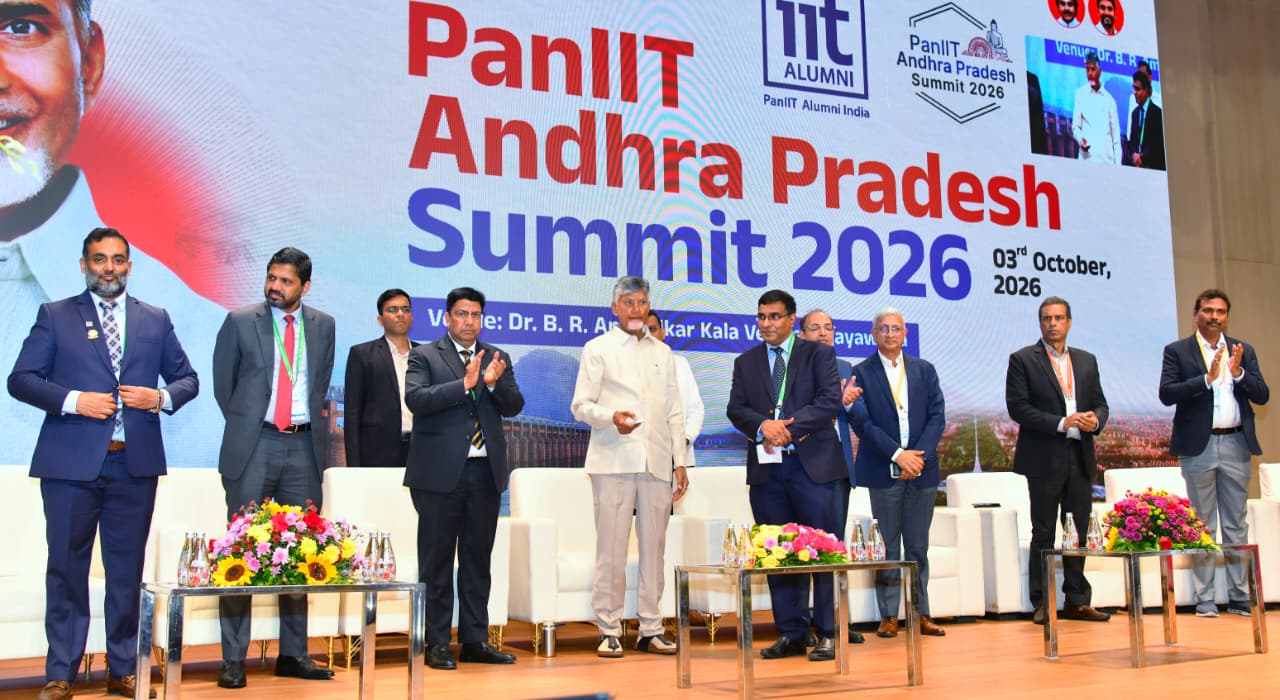
Chief Minister Chandrababu Naidu seek cooperation of IIT professionals to develop Andhra Pradesh as a global knowledge hub
CM Chandrababu Naidu to lay foundation for three lakh housing project in Tenali constituency along with Union Minister Shivraj Singh Chouhan
Keep rivers clean: Chief Minister express concern over discharge of waste water into Krishna and Godavari rivers
Initiate measures on war footing to permanently address drinking and industrial water requirements of Visakhapatnam: CM

BGMI HOT DROP Lands in Visakhapatnam at Inorbit Mall