

Paid for a Confirmed Berth, But Couldn’t Use It: Family Gets ₹75,000 From Railways
- Published By: Tech Team
- August 13, 2026 / 07:54 AM IST


— Surya Prakash Josyula
You booked a train ticket. Your berth was confirmed. You happily got on the train. But when you reached your seat, the situation was completely different.
Someone else was sitting on your berth. More people were sitting on the floor. There was hardly any space to walk. Even going to the washroom was difficult. You had a ticket, but you could not properly use the berth you had paid for.
Many railway passengers face situations like this. Usually, what do we do? We complain to the TTE, ask someone to move, somehow manage the journey and forget about it once we reach our destination.
But one family in Kerala decided not to let it go.
Other passengers occupied their reserved berths and the coaches were heavily overcrowded. The family documented what happened and later approached the consumer commission.
The result? The Railways was ordered to pay the family ₹50,000 as compensation and another ₹25,000 towards legal expenses. That is ₹75,000 in total.
The important point here is not just the money.
The case shows that a confirmed railway ticket is not simply permission to travel. It also gives you the right to use the berth you have paid for.
What exactly happened?
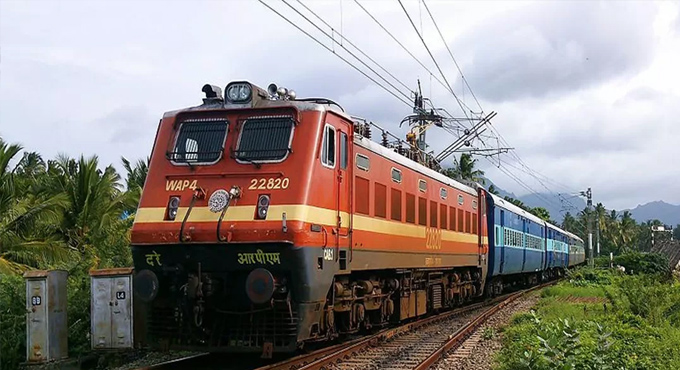
On December 10, 2023, Parthasarathi T, his wife Nirmala and their son Aditya travelled on the Kanyakumari-Pune Express. All three had confirmed sleeper-class reservations.
The parents had lower berths in S2, while their son had an upper berth in S6.
But once the journey started, the situation became difficult.
Unreserved passengers, waitlisted passengers and even passengers without tickets entered the reserved coaches. Some occupied reserved berths, while others sat or slept on the floor.
The coaches became so crowded that moving around was difficult. Even reaching the washroom became a problem.
The parents were senior citizens. They had to repeatedly ask other passengers to move before they could use their lower berths. Their son also had to repeatedly ask passengers to vacate his reserved upper berth.
They complained to RailMadad
The family did not simply put up with the problem.
At 8.12 pm, they filed a complaint through RailMadad. They later filed another complaint, saying that S6 was packed with unreserved passengers and that the TTE had not properly checked the coach.
The Railways said its staff had responded to the complaints and removed unauthorised passengers at different stations.
But there was a problem with this claim.
The Railways could not produce proper evidence, including statements from the concerned railway staff, to prove that the passengers had actually been removed as claimed.
The family, on the other hand, produced RailMadad complaints and photographs showing the condition of the coaches.
This became an important part of the case.
There was the Railways’ version on one side. On the other side, there were complaints made during the journey and photographs showing the situation.
The evidence produced by the family helped strengthen its case.
A confirmed reservation also gives you a right to use your berth
The Palakkad District Consumer Commission considered an important question in the case.
If a passenger has a confirmed reservation, the passenger should be able to use the berth for which they have paid.
The Railways cannot simply say that the train was crowded and walk away from its responsibility if the passenger was unable to use the reserved accommodation.
Under consumer law, such a situation can amount to “deficiency in service.”
In simple words, if you have paid for a particular service but cannot actually use it because the service was not properly provided, you may have grounds to complain.
The commission also considered the difficulties faced by the senior citizens in this case. Not being able to use a lower berth or move through an overcrowded coach can be much more difficult for elderly passengers.
Why did the family get ₹75,000?
The family completed the journey, so the commission did not order a refund of the ticket fare.
Instead, it ordered the Railways to pay ₹50,000 as compensation for the deficiency in service, inconvenience and mental suffering faced by the family.
Another ₹25,000 was awarded towards legal expenses.
So the total amount came to ₹75,000.
The Railways was given 45 days to make the payment. If it failed to pay within that period, an additional ₹500 per month or part of a month would apply until payment.
Why is this case important for railway passengers?
Overcrowding on trains is not new in India. During festivals, holidays and peak travel periods, passengers often complain about people entering reserved coaches.
Many passengers simply think:
“What can we do? This is how train travel is in India.”
But this case sends a different message.
You paid for a reservation. A specific coach and berth were allotted to you. Allowing you to use that reserved accommodation is also part of the service provided by the Railways.
So, when a problem happens, don’t depend only on a verbal complaint.
Create a record of what happened. What should you do if someone occupies your reserved berth?
First, file a complaint through RailMadad. Save the complaint number and take screenshots.
Note down the train number, coach number, berth number, date and approximate time when the problem occurred.
If it is safe to do so, take photographs or videos showing the overcrowding or unauthorised occupation of your berth.
Inform the TTE or railway security staff and note what action they take.
Most importantly, keep your confirmed ticket, payment details, RailMadad complaints, photographs and videos safely.
There is a big difference between saying after the journey, “I had a lot of trouble,” and showing that you complained about the problem while the journey was still going on.
In this case, the family’s records became an important part of its evidence.
Does this mean everyone will get ₹75,000?
No. This does not mean that every passenger who faces a railway problem will automatically get ₹75,000. Every case will depend on its own facts, evidence, inconvenience and the action taken by the Railways.
But the case does establish an important point.
A railway reservation is not just a berth number printed on a ticket. It represents a right to use the service you have paid for.
So if someone occupies your reserved berth, you do not necessarily have to suffer in silence and forget about it after the journey.
Complain. Keep evidence. If the problem is serious and is not properly resolved, you can consider the legal remedies available to you.
The Bottom Line
Buying a railway ticket does more than confirm your journey. It also confirms your right to use the reserved berth you paid for.
And if that right is not respected, having proper evidence can make a big difference when you decide to question it.
Related News
A surprising new feature in smartwatches.. Could they detect the risk of diabetes early?
ChatGPT Is About to Become That Annoying Friend Who Gives Advice You Never Asked For

Gen Z’s Drinking Story Is Changing: Shocking Truths From a New Survey

Hollywood’s Age-Gap Obsession: What Younger Men See in Older Women
Good News for NRI Pensioners: No Need to Come to India for Life Certificate