
Gen Z’s Drinking Story Is Changing: Shocking Truths From a New Survey
- Published By: Tech Team
- August 13, 2026 / 10:43 AM IST


— Surya Prakash Josyula
“Are young people drinking less these days? Is that really true?”
That is a question we keep hearing these days. There are endless stories about Gen Z becoming more health-conscious, caring about fitness, counting calories, protecting their sleep and trying to avoid the terrible morning-after feeling. Many of these stories also go viral on social media, often shared by Gen Z itself.
All of this has created a popular image of Gen Z as a generation that sees a bottle of alcohol and quietly walks away. But a new global survey suggests that the reality is far more interesting. Gen Z has not given up alcohol. It is simply changing the way it drinks.
The new approach is less about completely staying away from alcohol and more about drinking with some calculation. How much should I drink? What should I drink? How much should I spend? And perhaps most importantly, how am I going to feel tomorrow morning?
A few years ago, “Shall we have another round?” might have been the most important question at a party. Today, another question seems to be joining it: “If I drink this much tonight, what is going to happen tomorrow?”
That could mean waking up on time for work, getting to the gym, travelling, meeting friends or simply avoiding a day lost to a hangover. It is a small change in thinking, but it says a lot about how drinking culture is evolving.
A new study by Ipsos, IWSR and AB InBev, which looked at alcohol consumption patterns around the world, offers some surprising numbers.
Is Gen Z Really Drinking Less?
Here comes the first surprise.
In late 2023, 72 per cent of legal-age Gen Z consumers said they had consumed alcohol. By March 2026, that figure had actually increased to 74 per cent.
So the popular idea that Gen Z is simply walking away from alcohol does not completely match the data. The generation is still drinking. What is changing is the way it approaches drinking.
The clearest change can be seen in the amount consumed on each occasion. In 2023, Gen Z consumers averaged 3.3 drinks per drinking occasion. By 2026, that had fallen slightly to 3.2 drinks. Across all legal-age consumers, the average also slipped from 3.4 to 3.3 drinks.
The difference may look tiny on paper, but the bigger story is the mindset behind it. The question seems to be shifting from “Why not have another drink?” to “Do I really need another one?”
That is where health, money and lifestyle begin to enter the picture.
Health Is Becoming Part of the Drinking Decision
The survey found that 79 per cent of consumers want greater control over their health choices, up four percentage points from 2023. Cost and the desire to drink less were each cited by 26 per cent of respondents as reasons for cutting back.
Calories, fewer social occasions and avoiding hangovers were also important factors.
There is a very practical reason behind this. Life does not stop after a party anymore. There is work the next morning, a workout to get through, a flight to catch, family commitments and a long list of things waiting on the phone calendar.
So the calculation is changing. It is no longer only about how much fun a person can have tonight. There is also the question of how much trouble that fun might create tomorrow.
In a slightly amusing way, the drinking ritual itself seems to be getting more complicated. Earlier, the only calculation at a party might have been how many drinks were left in the bottle. Now, the price of the bottle, the next morning’s schedule and perhaps even the calculator on the phone can all become part of the decision.
Drinking Less Does Not Mean Spending Less
This is where the story takes its most interesting turn.
If consumers are drinking less, you might assume that they are also spending less on alcohol. But the market data suggests something different.
Consumers are becoming more selective about what they buy. Premium-plus alcohol volumes grew at an average annual rate of 5 per cent between 2014 and 2024, while premium beer grew by 5.6 per cent a year.
In other words, the new attitude may not be “I want more alcohol for my money.” It may be closer to “If I am going to drink, I want something better.”
That changes the economics of drinking. A person may have fewer drinks in an evening but choose a better beer, a premium spirit or a more carefully made cocktail.
So the number of drinks may be falling, while the amount spent on each drink does not necessarily fall with it.
The old logic was simple: more quantity meant better value. The new logic appears to be moving towards quality, experience and choice.
The Strange Rise of Alcohol-Free Drinks
Perhaps the biggest evidence of this changing mindset is the growth of no-alcohol beverages.
Between 2019 and 2024, no-alcohol beer volumes grew by 50 per cent to around 35 million hectolitres. No-alcohol beer still dominates the global zero-alcohol category, accounting for around 93 per cent of volumes.
But other categories are growing even faster. No-alcohol ready-to-drink beverages increased by 51 per cent, alcohol-free wine grew by 78 per cent and zero-alcohol spirits recorded an extraordinary 208 per cent growth.
There is something almost amusing about that last number. The alcohol-free spirits market is growing rapidly precisely at a time when people are supposedly moving away from drinking.
But the explanation is fairly simple. Many people do not necessarily want to give up the social experience associated with drinking. They still want something interesting in their glass when they are out with friends. They still want flavour, presentation and the feeling of being part of the occasion.
The alcohol itself may simply be becoming less important.
That could be one of the biggest changes in drinking culture: the drink is becoming a social accessory rather than the main event.
The Party Is Not Going Anywhere
Despite all the talk about moderation, socialising remains a major reason people drink. Around 35 per cent of consumers in the survey said socialising was their main reason for drinking.
This is important because it shows that changing drinking habits do not necessarily mean changing social habits.
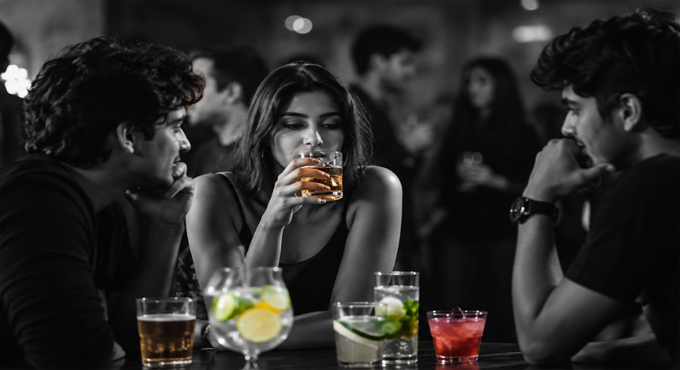
People still want to meet friends, watch live sports, attend concerts, go to restaurants and spend time together. The difference is that everyone at the same table does not necessarily need to drink the same thing anymore.
One person might have a beer, another might order a cocktail, while someone else chooses a zero-alcohol drink. They can still have the same conversation, laugh at the same jokes and stay out for the same evening.
The party remains. The choices simply become more personal.
Beer Is Quietly Winning
Beer also appears to be benefiting from this changing market.
Beer and “Beyond Beer” categories, including hard seltzers, flavoured malt beverages and premixed cocktails, now account for more than half of global alcohol servings. Their combined share is expected to rise from 50.7 per cent in 2026 to 51.4 per cent by 2035.
Beer itself is projected to increase its share of global servings from 44 per cent in 2019 to 47.5 per cent by 2035. Wine, meanwhile, is expected to fall below 10 per cent of global servings by 2035.
The message is fairly clear. Consumers are looking for products that offer convenience, variety, flavour and different levels of alcohol. The traditional idea of drinking is making room for a much wider menu.
Taste Matters More Than Ever
Ready-to-drink beverages are another example of this shift. They have become one of the fastest-growing alcohol categories over the past decade.
More than half of consumers who choose these products say flavour is the biggest reason, while nearly 40 per cent value convenience.
That tells us something important about the modern drinker. Alcohol content alone is no longer enough to make a product attractive. People want something that tastes good, looks appealing and fits easily into their lifestyle.
The industry has clearly noticed this. New product launches and limited-edition offerings contributed 55 per cent of total retail sales value growth in beverage alcohol between 2015 and 2024.
In other words, the industry cannot simply keep selling the same bottle and expect consumers to remain interested. New flavours, new formats and new experiences are becoming increasingly important.
But There Is One Thing Consumers Still Want: Trust
Consumers may be willing to experiment, but they are not necessarily willing to take unlimited risks.
Around 77 per cent said they were more likely to try a new beverage if it came from a brand they already recognised. Trust in commercial brands has also risen to 72 per cent globally.
So the winning formula for the future may be surprisingly simple: give consumers something new, but give them a reason to trust it.
A new flavour can attract attention. A familiar brand can remove hesitation. A lower-alcohol option can appeal to health-conscious consumers. And a premium experience can justify a higher price.
Put all of that together and you get a very different kind of alcohol consumer.
So, What Is Gen Z Really Doing?
The easiest story to tell is that Gen Z is giving up alcohol. The survey suggests something much more complicated.
Gen Z is not necessarily leaving the drinking culture. It is taking more control over it.
How much to drink, what to drink, how much to spend and how to feel the next morning are all becoming part of the decision.
That means the future may not be divided simply into people who drink and people who do not drink. There could be a much larger middle ground: low-alcohol drinks, alcohol-free options, premium beer, ready-to-drink beverages, better flavours and more personalised choices.
In the end, the Gen Z drinking story is not really about giving up the glass.
It is about deciding what goes into it.
Once, people drank to forget the world. Now, perhaps, they want to enjoy a drink without forgetting what is waiting for them the next morning.
Times have changed. The glass, however, is still in the hand.