

ChatGPT Is About to Become That Annoying Friend Who Gives Advice You Never Asked For
- Published By: Tech Team
- August 13, 2026 / 12:10 PM IST


— Surya Prakash Josyula
There is a certain type of person around us. Nobody asks them for advice, but they still have something to say about everything. You are riding a bike and they say, “Wear a helmet.” You buy a new phone and they ask, “Why did you buy that? There was a better one.” You say you want to change your job and they immediately bring up their brother’s son who changed jobs and is now in America.
Then comes marriage. The moment you get married, someone asks, “When are you having kids?” Have one child and they say, “You should have two.” Have two and suddenly the same person says, “Okay, enough now!”
In other words, humans have a special talent: giving advice even when nobody asks for it. Now, it looks like AI is getting ready to join this great tradition. Not your neighbour. Not your aunt. ChatGPT.
“But I Didn’t Ask You!”
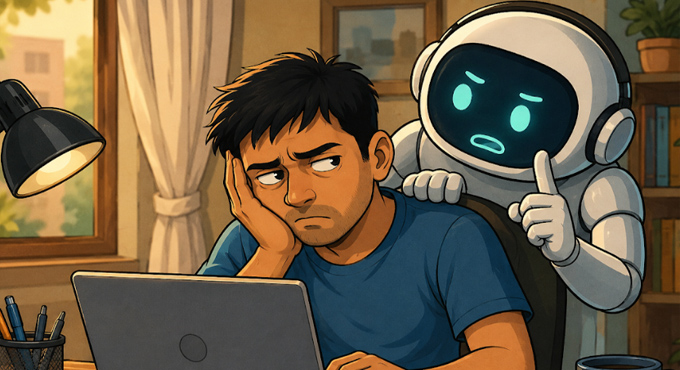
Imagine this. You are sitting in front of your laptop late at night, typing an important email. You have not asked ChatGPT anything. Suddenly, it looks at your screen and says, “Don’t send that email. You have missed an important point.”
You look at it and say, “Hey… did I ask you anything?” ChatGPT calmly replies, “No. But you are making a mistake.” You get irritated and ask, “Why do you care?” And ChatGPT gives the most annoying answer of all: “I’m only trying to help you.”
And it does not stop there. Imagine you are sitting in an office meeting. Your boss is talking, you are listening and nodding, and the meeting finally ends. You are about to leave when ChatGPT suddenly says, “Wait. The decision you made today is different from the decision you made last week.”
You stare at the screen and ask, “Wait a minute! When were you listening?” ChatGPT replies, “I am always listening.” At that point, you may start wondering whether you have hired an AI assistant or accidentally brought home another relative.
The Old ChatGPT Answers Questions. The New One May Give Advice.
Until now, our relationship with ChatGPT has been simple. We go to it and ask, “How do I do this?” “What is the answer?” “Write this email for me.” “Explain this to me.” ChatGPT waits for the question and then gives us an answer.
Basically, it behaves like that well-behaved person in the family who speaks only when somebody asks a question. But the future ChatGPT could become more like that one elder in the family who always has an opinion.
According to OpenAI CEO Sam Altman, future versions of ChatGPT could understand what is happening on a user’s screen. They could also record meetings and calls and develop a much deeper understanding of different parts of a person’s life and daily activities.
That means we may not always be the ones asking questions. AI could start asking us questions too. It could say things like, “Why are you doing this?”, “Wouldn’t it be better to do it this way?” or “Maybe you should think about this decision again.”
Oh, God! Aren’t our parents enough when it comes to unwanted advice? Do we really need ChatGPT too?
The Real Problem Is Not the Advice. It Is the Watching.
This is where the story gets serious. For AI to give you better advice, it needs to know more about you. It needs to understand what you are doing, what you are working on, what you are reading, what decisions you are making and, potentially, what you are discussing in meetings and calls.
The more AI knows about you, the more personal and useful its advice could become. If it understands the context of your work, it might spot a mistake before you do. If it knows what happened in a meeting, it might remind you about something you forgot.
But there is a catch. The more AI knows about us, the smaller our privacy could become. That is the real trade-off. We may get a smarter assistant, but that assistant may also know much more about our digital lives.
What If the “Boring Advice” Is Actually Useful?
This is where things get interesting. When a person gives us advice without being asked, we usually have one response: “Who asked for your advice?” Or, in classic Telugu style, “నీ బోడి సలహా ఎవడడిగాడు?”
But what if ChatGPT’s unwanted advice actually helps? What if it stops you before you send an important email with a serious mistake? What if it notices that you missed something important in a meeting? What if it warns you before you make a bad decision?
For a student, it could notice that they are struggling with a particular topic. For an office worker, it could point out an error in a document. For someone filling out an online form, it could explain what to do next without waiting for them to ask.
Then maybe that “boring advice” is not so boring after all.
Sam Altman believes we may be only one more generation of AI models away from these kinds of capabilities becoming extremely useful. That suggests this is not just a distant science-fiction idea. The technology is moving toward AI that does more than simply answer questions.
The big question, then, is not just whether ChatGPT will give us advice. The bigger question is how much of our lives we are willing to let it watch before we finally turn around and say:
“Okay, ChatGPT… enough! I never asked for your advice!”