
Hollywood’s Age-Gap Obsession: What Younger Men See in Older Women
- Published By: Tech Team
- August 13, 2026 / 08:30 AM IST


— Surya Prakash Josyula
Hollywood once had a very simple formula for stories about older women and younger men. The woman was usually shown as a secret attraction for the young man, while he was often just an exciting experience in her life. From Mrs Robinson in The Graduate to “Stifler’s Mom” in American Pie, these characters largely followed the same pattern.
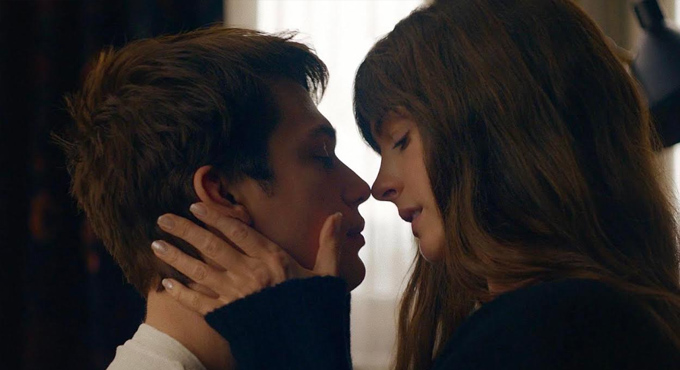
But Hollywood is now changing that formula. The Idea of You tells the story of a divorced woman who falls in love with a much younger boy-band star. Babygirl puts a female CEO into a complicated relationship with a younger intern. Vladimir follows a professor who becomes attracted to a younger man, while Bridget Jones: Mad About the Boy also places an age-gap relationship at the centre of its story. Now I Want Your Sex has joined the same trend.
So this is no longer just a coincidence. Hollywood seems increasingly interested in stories where the woman is older and the man is younger. But the more interesting question is not simply why filmmakers are making these movies. It is why audiences are responding to them.
Why are these stories suddenly working? Why does Hollywood keep returning to this particular age gap? And more importantly, why are some younger men attracted to older women? The answer goes beyond physical attraction. There are some interesting psychological reasons behind it.
For some younger men, an older woman can represent something different from a woman of their own age. She may appear more confident about who she is, what she wants and what she expects from a relationship. That can make the relationship feel more direct and less confusing. Instead of constantly wondering how to impress her or whether she likes him, a younger man may feel that she already knows what she wants.
That confidence itself can become attractive. In a dating culture where some young men are increasingly nervous about making the first move, clear interest from an older woman can feel very different. Fear of rejection, changing ideas about consent and uncertainty about how to approach someone have made dating more complicated for many young people. In that situation, a woman who is confident enough to make her feelings clear can offer a different kind of experience.
For a younger man, there can also be a psychological appeal in being chosen by an older woman. He is not necessarily trying to prove that he is good enough for her. Instead, the idea that an experienced and confident woman has chosen him can itself create a feeling of validation.
That gives Hollywood a powerful story because the age difference does more than create romance. It completely changes the power dynamic between the characters.
Traditional Hollywood romances often showed an older, experienced man with a younger woman. The man usually had more experience, money or social power, while the younger woman entered his world. The new generation of movies flips that formula. Here, the woman may be the more experienced person. She may have a successful career, financial independence and a much clearer idea of what she wants. The younger man is the one who enters her world.
That reversal makes these stories feel fresh. The romance is no longer just about two people falling in love. It becomes a story about power, confidence, freedom, desire and the changing way society looks at age.
There is also a possible Gen Z angle, although it would be wrong to say that all Gen Z men think this way or that these movies are mainly watched by young men. There is not enough audience data to make that claim. But dating trends do show that some young men are becoming more open to relationships with older women. Hollywood appears to have noticed that curiosity and turned it into a new kind of romantic fantasy.
The fantasy is simple but powerful. The younger man is not always presented as an inexperienced boy who needs to be guided. He can also be confident, desirable and emotionally invested. At the same time, the older woman is no longer treated simply as a sexual fantasy. She is shown as a complete person with a career, ambitions, insecurities and desires of her own.
Psychology works in the opposite direction as well. For some younger men, an older woman may represent maturity and emotional clarity. She may have more life experience, understand herself better and feel more comfortable talking openly about relationships. That does not automatically make her a better partner, of course, but the perception itself can be attractive.
For the older woman, the attraction can come from somewhere else. A younger man can bring energy, excitement and novelty into a life that may have become predictable. More importantly, being desired by someone younger can challenge the idea that a woman’s attractiveness somehow has an expiry date.
That is where these movies become more interesting than simple age-gap romances.
For some women, discovering that they are still desired is not just about sex or romance. It can change the way they see themselves. After years of being defined by roles such as wife, mother, boss or successful professional, a new relationship can remind them that there is still another side to their identity.
That is why many of these Hollywood stories are not really asking whether the couple will get married. The bigger question is what happens to the woman after the relationship enters her life. Does she become more confident? Does she rediscover something she had lost? Does she change her career? Does she start looking at her own life differently?
I Want Your Sex is a good example. Elliot is not simply a younger lover for Erika. His presence pushes her to look at her sexuality, her art and her career in a completely different way. In Vladimir, desire also becomes more than a physical experience. It gives the woman a new creative energy and changes the way she sees herself.
That is why the younger man in these films often becomes something more than a romantic partner. He becomes the trigger for change.
And that is perhaps the biggest difference between today’s Hollywood stories and the old “older woman, younger man” formula. Earlier films often treated the older woman as a fantasy. The new films are more interested in what that fantasy does to her life.
This trend is not limited to Hollywood either. In America, the share of unmarried heterosexual couples living together where the woman is older increased from 14.5% in 1995 to 22% in 2023. A Match.com study found that 30% of American men had dated a woman at least ten years older than themselves. On Feeld, the share of men aged 18 to 25 looking for relationships with older women increased from 65% to 73% in two years.
So Hollywood did not create this change. It is turning a change already happening in society into movie stories.
There is still an interesting contradiction, though. Age-gap relationships may be becoming more visible in dating, but marriage remains much more traditional. In America, heterosexual marriages where the woman is at least three years older have remained around 10% since 2000.
In other words, dating is changing faster than marriage. People may be more willing to experiment with relationships, but when it comes to choosing a long-term partner, traditional ideas about age are still surprisingly strong.
That contradiction is exactly what makes these stories useful for Hollywood. They offer romance, fantasy and controversy at the same time. They allow filmmakers to challenge an old social rule without having to completely abandon the familiar language of romantic movies.
Ultimately, these films are not really asking whether an older woman can fall in love with a younger man. That has never been the difficult part.
The more interesting question is whether a woman can reach a certain age, look at her life and still decide that she wants something completely new.
Hollywood’s answer seems to be yes.
And perhaps that is why the younger man is becoming less of a romantic destination and more of a doorway. Once he enters her life, the real story begins when she starts looking at herself differently.