
Niu Lai: China’s ‘Worst’ Animation Turns Viral and Storms the Box Office
- Published By: Tech Team
- August 18, 2026 / 12:09 PM IST


A movie was released in China without a trailer, a promotional tour or any major publicity. Most people did not even know that the film existed. During its first 10 days, it made just 7,700 yuan, with fewer than 300 people across the country buying tickets.
It looked like the movie was heading straight for failure. But then something completely unexpected happened. The film suddenly became a topic of discussion on social media, and people started going to theatres to see it for themselves.
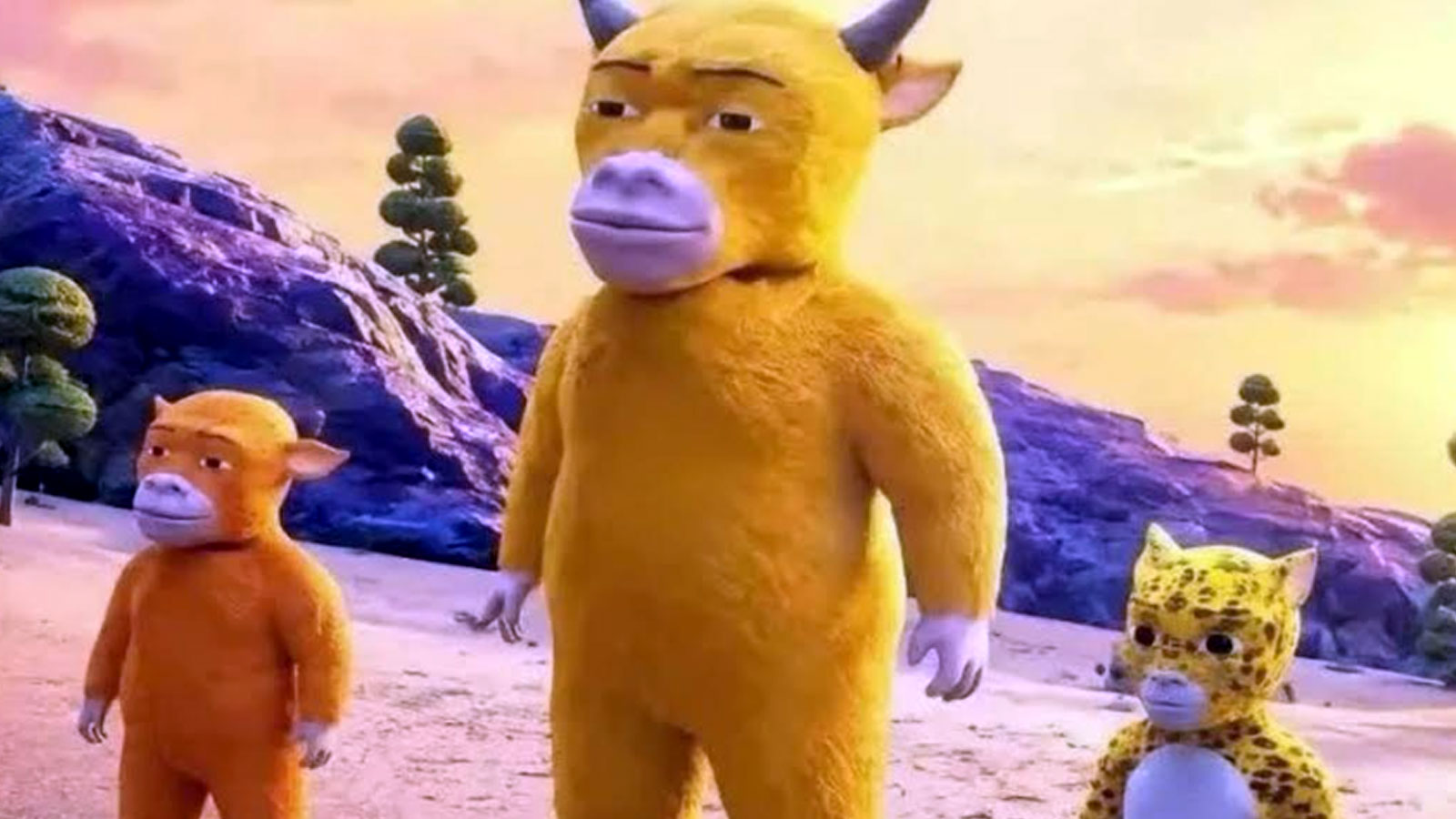
The movie is ‘Niu Lai’, an 86-minute animation about a newborn calf and a skylark. Their relationship develops through a strange, dream-like story. But the animation looks nothing like the polished, expensive films audiences are used to seeing.
The visuals are rough. The effects are basic. The animation lacks the glossy finish of big-budget productions. Instead of ignoring the film, however, Chinese audiences started making fun of it online.
Soon, one question began spreading everywhere: “How can a movie be this bad?”
Ironically, that question became the movie’s biggest marketing tool. People who had never planned to watch the film started buying tickets simply because they wanted to see how bad it really was.
A movie that made only 7,700 yuan in its first 10 days has now crossed 14.9 million yuan, roughly ₹17 crore. What looked like a complete failure has turned into one of the year’s most unexpected box-office stories in China.
There is another fascinating part to the story. ‘Niu Lai’ was not created by a major animation studio. It was made by just two people, Xin Yumeng and Sun Lifang, reportedly a mother-and-son team.
They spent nearly five years working on the film. They wrote it, directed it, produced it and even provided the voices. In an industry where animation is increasingly becoming a high-tech business, this was almost the opposite approach.
Big studios are spending huge amounts of money trying to make every frame more realistic, more beautiful and more perfect. ‘Niu Lai’ arrived looking almost handmade.
And that is where the story becomes interesting in the age of AI.
Today, AI can create images in seconds and generate videos in minutes. Technology is making polished visual content easier and faster than ever before. Almost everything can now be made to look perfect.
But perhaps audiences are beginning to get tired of perfection.
The roughness of ‘Niu Lai’ makes it feel different. You can see the human limitations behind the work. You can see that real people made it, struggled with it and made mistakes while creating it.
Some viewers on Chinese social media even wondered whether the film’s crude visual style was deliberately chosen in the age of AI. There is no clear evidence that this was the filmmakers’ intention, but the reaction itself is interesting.
For years, audiences have been surrounded by films where every frame is carefully designed, every character looks perfect and every visual effect is polished. Now AI is pushing that perfection even further.
In that environment, an imperfect film can suddenly feel fresh.
The bigger lesson from ‘Niu Lai’, however, may be about movie marketing rather than animation. People did not buy tickets because everyone said the film was brilliant. They bought tickets because everyone was saying it was terrible.
That curiosity created online discussions. The discussions created word of mouth. Word of mouth brought people into theatres. And those theatre visits turned into box-office revenue.
In other words, negative publicity became positive business.
The contrast with other films at the Chinese box office makes the story even more fascinating. Christopher Nolan’s ‘The Odyssey’ opened in China with 192 million yuan over its first three days. Chinese film ‘Once Upon a Time in the Middle East’ performed even better, taking 477.9 million yuan during the same weekend.
These are major productions backed by big budgets, stars and huge promotional campaigns. Yet, alongside them, a tiny animation made by a mother and son managed to capture a completely different kind of attention.
That is why ‘Niu Lai’ is more than just a strange box-office story. It tells us something about how audiences behave.
People do not always search for the best movie. Sometimes they search for the most unusual one.
The internet turns that unusual thing into a meme. The meme creates curiosity. Curiosity sells tickets. And suddenly, a movie nobody cared about becomes a hit.
So the real question is no longer whether ‘Niu Lai’ is a great movie.
The more interesting question is what its success says about the future of entertainment. As AI makes movies more polished, faster and more perfect, will audiences start looking for something that feels imperfect and genuinely human?
Once, people went to theatres to see things they could never create themselves.
In the future, they may also go to theatres to see something that a machine cannot quite reproduce.
Maybe the next big trend in entertainment will not be perfection.
Maybe it will be imperfection.
——Surya Prakash Josyula
Related News
SHOCKING: Human Brain Inside a Computer! Is This the Next Big Thing After AI?
A Heater Inside the Human Body? The Shocking Secret From the Ice Age
One Click.. A List of Offices Where Bribes Are Reportedly Demanded!

From “Luxury Porn” to AI Power: The Shocking Cami Clark Story Behind Anthropic’s CEO
Who Left ₹1 Lakh Crore Behind? RBI Reveals the Shocking Pile of Unclaimed Bank Deposits