The World is Running Out of Economic Safety Nets, Warns Departing IMF Chief
- Published By: shivaduvvuru
- June 29, 2026 / 12:45 PM IST


IMF: The global economy is flying without a net, and time is running out to patch the holes.
That is the parting warning from Pierre-Olivier Gourinchas, the outgoing chief economist of the International Monetary Fund (IMF). Speaking just days before he steps down on July 1 to return to UC Berkeley, Gourinchas delivered a stark reality check: the emergency buffers that saved the global economy from recent crises are officially running dry.
Between heavily depleted oil reserves, an aggressive wave of U.S. tariffs, and unprecedented volatility, the world is losing its capacity to absorb the next big shock.
The Energy Cushion is Gone:
When conflict flared in the Middle East earlier in 2026, catastrophic spikes in energy prices were averted. Early estimates feared up to 15% of the world’s oil supply would vanish; instead, swift refinery tweaks and massive releases from strategic petroleum reserves kept the actual market loss to just 3%.
But that victory came at a steep cost.
Gourinchas warned that those vital strategic reserves are now “fairly depleted.” If another geopolitical crisis hits energy markets later this year, governments will find themselves with dangerously little room to maneuver. The cushion has been deflated.
Tariff Warfare and the Unshakable Dollar:
The global trade map is being aggressively redrawn, fueled by President Donald Trump’s unilateral tariffs targeting most of the world. Yet, anyone betting on the collapse of American financial hegemony is mistaken.
Despite the trade upheaval, Gourinchas stressed that the U.S. dollar remains the absolute anchor of global trade, banking, and central bank reserves.
> “We are seeing very, very little in terms of movements that would indicate that we’re moving away from a dollar-centered world,” Gourinchas noted. “We are very firmly in the dollar-centered world.”
Instead of killing globalization, tariff pressures are simply forcing it to evolve. Emerging markets are proving remarkably resilient, and nations are rapidly building workarounds. For instance, the European Union recently bypassed Washington entirely, locking down major trade agreements with Latin America and India.
The lesson? Tariffs and economic sanctions have a shelf life. Eventually, targeted countries find new routes, forge new alliances, and render unilateral penalties ineffective.
Blind Flying: Why Economists are Guessing:
Perhaps the most unsettling takeaway from the departing chief is that the economic turbulence of 2025 and 2026 has fundamentally broken traditional financial forecasting.
With no historical precedent to rely on, the IMF has been forced to abandon standard, single-point predictions. Instead, economists are now flying blind, dealing in wide ranges of “possible outcomes.”
How volatile is the road ahead? We will get our next major clue on July 8, when the IMF releases its highly anticipated and fiercely debated global forecast.
Related News
GOPIO Presents Memorandum on Diaspora Issues and Suggestions to Minister Jaishankar

Top 6 Stays in Dubai for Your Next Workation
SriLankan Airlines Restores Complete Middle East Network With Kuwait Service Resumption
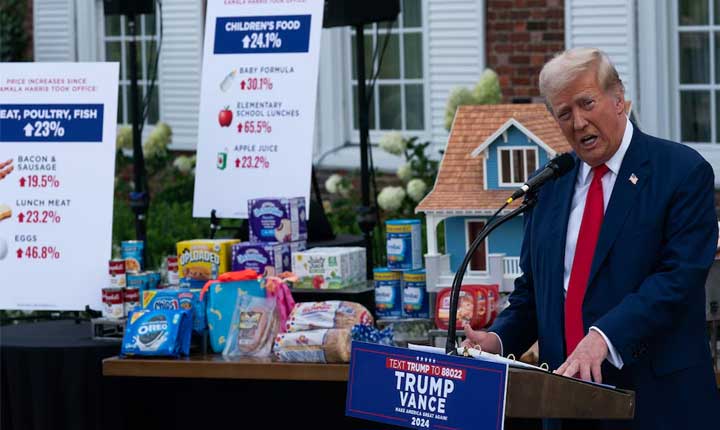
Two Years After Trump’s Inflation Spotlight, Rising Grocery Prices Loom as a Political Vulnerability for Republicans Ahead of Midterms
US Imposes Up to 100% Tariffs on Drones to Curb Chinese Dominance and Bolster Security