

Meta Smart Glasses Put Cinemas on Piracy and Privacy Alert
- Published By: Tech Team
- August 27, 2026 / 11:30 AM IST


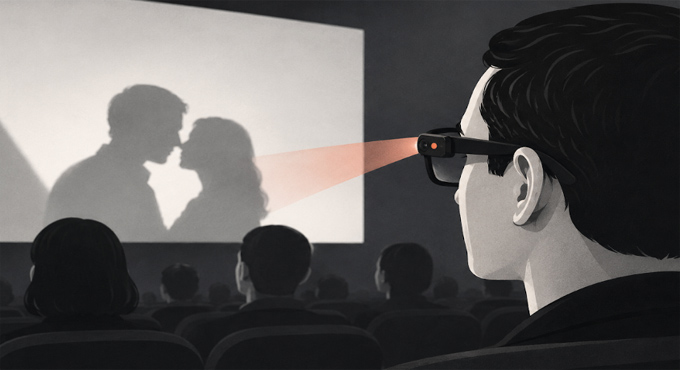
Taking a camera into a cinema has always been a serious concern. But what if the camera is hidden inside a pair of glasses? That is the question now worrying cinema operators in the UK and elsewhere. AI smart glasses can record what is happening on the screen without the user holding a phone or making it obvious that they are recording. Some cinema chains in the UK are now considering restrictions or even a ban on these glasses.
The issue is not just about a new type of eyewear. It is about whether new technology can make film piracy much harder to detect. Meta’s smart glasses have built-in cameras, raising concerns that a person sitting in a cinema could watch a movie and record it at the same time without attracting much attention.
The Camera Is No Longer Easy to Spot
The smart glasses at the centre of the debate are made by Meta in partnership with Ray-Ban. They cost around ₹50,000 and look much like ordinary glasses, but come with cameras, microphones, speakers and AI features. Users can take photos, record videos, make calls, listen to music and use live translation without having to hold a phone.
That creates a problem for cinemas. When someone records a movie on a phone, people around them can usually notice it. With smart glasses, however, a person simply appears to be sitting and watching the screen. It may not be immediately clear whether the glasses are being used to record. Even if someone does not record the entire movie, recording important scenes, climax sequences or other content can still create serious piracy concerns for the film industry.
Meta says the glasses have a safety system to make recording visible. A small LED light comes on when the camera is being used, and the company also uses tamper-detection technology to prevent users from covering the light while recording. Meta’s position is that recording is therefore not completely hidden.
But another question remains: can everyone in a dark cinema actually notice such a small light? And even if someone notices it, can they know exactly what the person is recording? These concerns are making cinema operators more cautious.
Piracy Fear Is Also Becoming a Privacy Issue
According to the UK Cinema Association, there have been no reports so far of its members officially banning these glasses. However, some cinema chains are considering rules for camera-enabled smart glasses. The concern is not limited to film piracy. Privacy is becoming an equally important issue.
The debate is also moving beyond cinemas. Restrictions on Meta’s smart glasses are already being seen in places such as restaurants, theatres, pubs and court buildings. A person may not know that they are being recorded. If someone uses a phone to record them, the camera is usually visible. But when the camera is built into a pair of glasses, it becomes much harder to know when recording is taking place.
That is why criticism of the technology is growing. Some people have even described these devices as “spy glasses”. The technology may offer several useful features, but the possibility of recording people without their knowledge or permission is raising serious concerns.
The Same Glasses Can Also Help Some People
There is another side to the story. These smart glasses are not simply entertainment gadgets. They can also work as assistive technology for people with specific needs.
For example, AI features can help people with vision problems understand their surroundings. The glasses can also provide customised subtitles for people with hearing difficulties. In a cinema, this could allow some viewers to receive information according to their individual needs without affecting other people watching the film.
That is why the UK Cinema Association says cinema operators need to consider both sides. They have to protect films from piracy and protect customers’ privacy, but completely banning technology that can help people with accessibility needs may not be the right answer either. The real question for cinemas may therefore be less about whether to ban the glasses and more about how to regulate their use.
Smart Glasses Are Changing the Rules of Public Spaces
The issue is not limited to cinema halls. Pub chain Wetherspoons has also raised similar concerns. The company says its pubs do not allow customers or employees to be recorded without their permission, and it believes Meta’s glasses could potentially go against this rule.
This shows why the debate around smart glasses is bigger than just one new gadget. It is also about where the line between private and public spaces should be drawn when cameras become part of everyday objects.
Until now, people have generally associated cameras with smartphones or other visible devices. With smart glasses, the camera can sit directly in front of a person’s eyes. That could create a new level of uncertainty, because people may not know whether someone is simply looking at them or recording what they see.
Stopping the Technology Is Easy. Regulating It Is Harder.
Meta argues that a complete ban would not be the right approach. The company says its glasses are useful for everything from listening to music and live translation to hands-free calls, and that they offer important new technology for people who are blind or have low vision. Meta also points out that its glasses have a visible light that indicates when a photo or video is being taken, something that smartphones and other cameras do not necessarily provide in the same way.
For cinemas, however, the stakes are different. Movies often involve huge investments, and if recorded content reaches the internet within hours of a theatrical release, it can become part of a piracy chain that affects the entire film business.
That is why cinemas could eventually introduce a simple rule: camera-enabled smart glasses may not be allowed inside. But even such a rule could create another difficult question. What happens when a person with a visual impairment needs the same glasses to understand or experience a movie? Should an anti-piracy rule also restrict their access to useful technology?
That is the real challenge created by smart glasses. The same device can be seen as a tool for piracy by one person and as a useful new way of experiencing the world by another. The challenge may not be stopping the technology altogether, but deciding where, how and with whose permission it can be used.
What started as a small debate inside cinema halls could eventually become a much bigger question for society: Are we simply looking at each other, or could we be recording each other without knowing it?
— Surya Prakash Josyula
Related News

India Made Generics Its Strength. Why Is That Now Becoming a Problem?

Don’t Make This Mistake When Buying a Swimsuit for Your Child.. They May Be Hard to See in Water!

Who Is Shaking Colgate’s Mighty Empire?

Companies Spent Crores on AI.. But Did They Really Gain Anything?

Buying Property From an NRI? October 1 Brings a Key Tax Rule Change