
Has the Delhi High Court Redefined the Rights of Content Creators?
- Published By: Tech Team
- August 5, 2026 / 10:45 AM IST


By Surya Prakash Josyula
“Bro… they copied my story.”
Anyone working in digital media has probably heard this complaint more than once. A journalist spends hours researching and writing a news story, only to find a nearly identical version published on another website within a short time. A YouTube creator uploads a carefully produced video, and within hours dozens of similar videos begin appearing online.
An original social media post is shared, copied and reposted across hundreds of accounts almost instantly. For years, this was seen as a problem between human creators competing with one another.
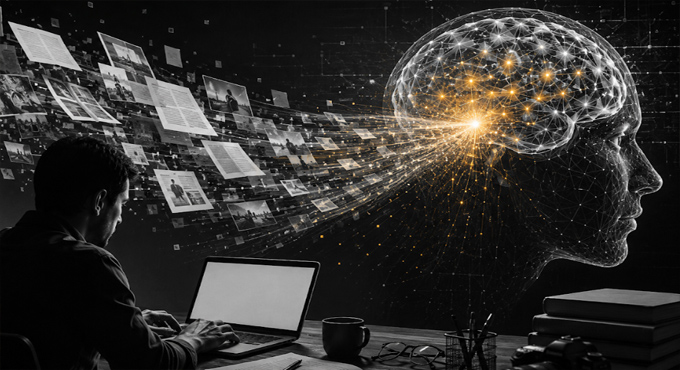
Today, however, the conversation has become much bigger. The competitor is no longer just another journalist, writer or creator. It is a new generation of technology capable of reading articles, understanding books, analysing videos and learning from enormous collections of human-created content. That has led to an important legal and ethical question.
If a company builds valuable products by learning from your articles, videos or books, should you receive a share of that value? Or is such use legally permitted? This debate is no longer limited to media organisations. It now concerns everyone who creates original content on the internet. That is exactly why the ongoing legal dispute between ANI and OpenAI in the Delhi High Court has attracted global attention.
The dispute began after ANI alleged that its news reports had been collected and used without permission to train large language models. The defence responded by arguing that the model training did not take place in India and that the servers involved are located outside the country. The Delhi High Court, however, made an important observation during the proceedings.
It noted that if a company provides services in India and earns revenue from Indian users, it cannot automatically avoid Indian laws simply because its servers are located abroad. In other words, while digital technology may operate across borders, legal responsibility does not necessarily disappear with geography.
Another major issue in the case revolves around the copyright principle known as “fair dealing.” Copyright law allows limited use of protected material for purposes such as research, private study, criticism and review. During the hearing, the Court observed that research may not always be restricted to individuals and that, in certain situations, even research carried out by private organisations could fall within the scope of fair dealing.
It also took note of the argument that the material used during AI training is not reproduced or directly made available to the public in its original form. At the same time, the Court made it clear that these are only interim observations and not the final verdict in the case.
Even so, the larger issue remains unresolved. Behind every published article lies hours of reporting, phone calls, interviews and fact-checking. A YouTube creator may spend days writing a script, recording footage and editing a single video. A book often represents months or even years of research and writing.
If advanced technologies learn from that work and use it to build powerful systems that generate enormous commercial value, should the original creators have any rights over that process? That question is now being debated not only in India but across the world.
This is also why the issue goes far beyond journalists. Thousands of people earn their livelihood by creating original content—YouTubers, bloggers, freelance writers, photographers, educators, publishers and independent creators. Their work forms the foundation of the digital economy.
If that work becomes part of the knowledge used to train new technologies, should they receive recognition? Should there be financial compensation? Or should such use be allowed because it ultimately benefits society by improving technology? There is still no global consensus.
At the same time, there is another side to the debate that cannot be ignored. Technological innovation has already transformed healthcare, education, scientific research and financial services. New AI systems are helping doctors analyse medical information faster, enabling students to access knowledge more easily and allowing businesses to work more efficiently.
Very few people argue that such innovation should be stopped altogether. The real challenge is finding a balance—encouraging technological progress while ensuring that the people whose creativity made that progress possible are treated fairly.
Although the Delhi High Court has not yet delivered its final judgment, the case has already started an important conversation about the future of copyright in the age of artificial intelligence. It may eventually lead to changes in copyright law, new licensing systems for digital content and fresh agreements between technology companies and content creators. Whatever the final outcome may be, one question is likely to remain at the centre of this debate.
Human knowledge drives technological progress, but human beings create that knowledge in the first place. If technology generates immense value by learning from human creativity, who deserves a fair share of that value?