
Gandhi’s 688 Pages Sold for ₹16.20 Crore! What Was Written in Them?
- Published By: Tech Team
- August 21, 2026 / 02:00 PM IST


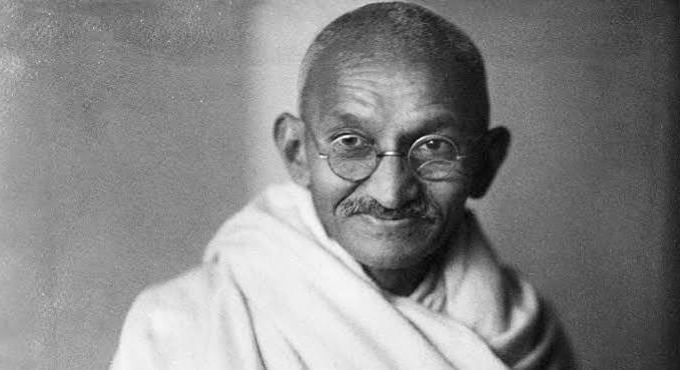
An old bundle of papers appeared in an auction room. The person who had signed those pages was no ordinary man. It was Mahatma Gandhi, one of the most important figures in Indian history.
As the auction continued, the price kept rising. Finally, the bidding stopped at ₹16.20 crore, creating a new world record for an Indian historical document sold at auction. But what was actually written on those 688 pages? And why were these handwritten papers by Gandhi considered so valuable?
To understand that, we need to look at Gandhi from a different angle. Not as the leader of India’s freedom movement, not as the man who fought British rule, and not as the political leader who addressed huge crowds.
Here, we see a much more personal Gandhi.
What Were the 688 Pages About?
At the “Gandhi: From the Collection of Anand T Hingorani” auction conducted by Saffronart, Gandhi’s handwritten collection of 688 thoughts, titled “A Thought for the Day,” was sold for ₹16.20 crore.
The sale created a new world record for an Indian historical document sold at auction. These papers belonged to the collection of Anand T. Hingorani, a freedom fighter and one of Gandhi’s close associates.
After Hingorani’s wife Vidya died, he went through a deeply painful period in his personal life. Gandhi supported him during this difficult time.
But Gandhi did not stop with one or two letters. For nearly two years, he sent Hingorani a handwritten thought, message or piece of guidance almost every day.
These messages were later brought together and published as “A Thought for the Day.”
Why Are These Pages So Important?
This is where the real value of the collection becomes clear. These were not speeches written for the nation or political statements made during the freedom struggle.
They were words Gandhi wrote to help one individual deal with personal pain. That makes the 688 pages much more intimate and revealing.
They give us a closer look at Gandhi’s way of thinking and his personal beliefs. How did he understand truth? How did he see non-violence, not just as a political weapon but as a way of life? How should a person deal with fear?
The writings also explore ideas such as desire, duty, religion, God, service and discipline.
What Did Gandhi Write About?
The collection covers a wide range of subjects, including truth, non-violence, celibacy, simplicity, fearlessness, religious equality, the fight against untouchability, prayer, Ram Naam, service, hard work, hunger, duty, Swaraj, moral responsibility, silence, conscience, detachment and the search for God.
In other words, these pages are not about the political strategies of a national leader. They are about how a person should live, and how Gandhi tried to guide another person through a difficult period.
That is what makes the collection historically rare.
A Gandhi We Do Not Usually See
Most of the Gandhi we know comes from his public life — political movements, protests, prison, public speeches, negotiations and the freedom struggle.
But if we really want to understand how a person thinks, we need to look beyond their public speeches. The words they write privately to people close to them can reveal a very different side.
The messages Gandhi sent to Hingorani offer exactly that kind of window. On one side, we see Gandhi comforting a man who was going through personal grief. On the other, we see how Gandhi applied his own principles to everyday life.
That personal relationship between Gandhi and Hingorani is also what makes this collection special, according to Saffronart co-founder Dinesh Vazirani.
More Gandhi Memorabilia Was Auctioned
The auction was not limited to “A Thought for the Day.” The sale included 86 lots featuring Gandhi’s letters, manuscripts, photographs and personal objects.
The Hingorani family had preserved this collection for generations. Together, these items provide rare evidence of a relationship between Gandhi and Hingorani that continued for more than two decades.
Another important collection was titled “Message on God.” It included three manuscripts and correspondence related to Gandhi’s thoughts on God and the Bhagavad Gita. It was sold for ₹1.68 crore.
Gandhi’s Spinning Wheel Also Found a Buyer
A small peti charkha, or portable spinning wheel, used by Gandhi was also part of the auction. The box contained the spinning wheel along with two letters written by Gandhi about the spiritual discipline behind spinning the charkha.
The charkha was originally estimated to sell for around ₹50–70 lakh, but it eventually sold for ₹1.02 crore.
A signed photograph of Gandhi writing sold for ₹78 lakh, while a collection of Gandhi’s letters, telegrams and postcards dealing with economic independence was sold for ₹57.60 lakh.
In the end, the ₹16.20 crore price was not simply about 688 old pages.
It was about something much harder to put a price on — a rare glimpse into the private thoughts of one of the most influential figures in modern Indian history.
— Surya Prakash Josyula