
Crucial meeting between Telangana and Maharashtra on Tummidihetti barrage soon
- Published By: Saidulu
- October 23, 2026 / 07:02 PM IST


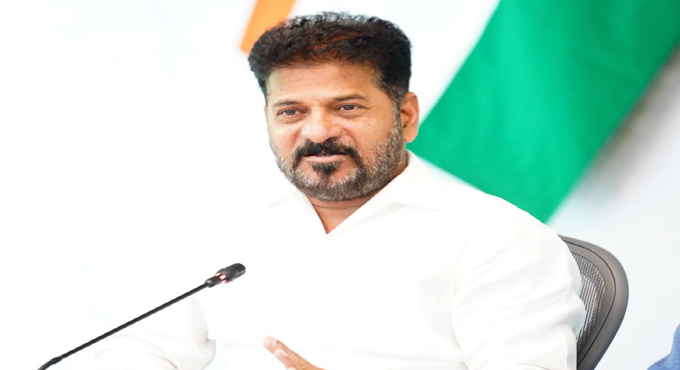
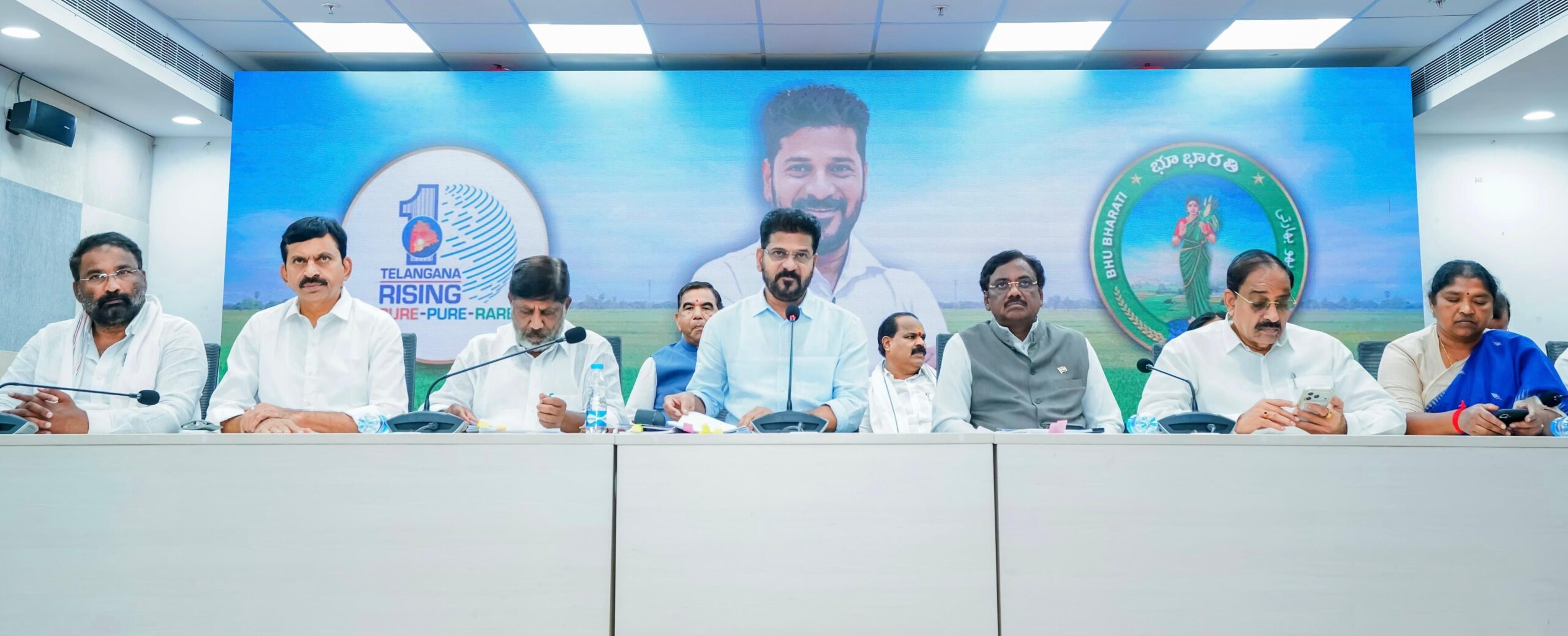
Honourable Chief Minister Shri A. Revanth Reddy ordered the officials concerned to prepare for a crucial dialogue with the Maharashtra government on the construction of the Tummidihetti Barrage. The Chief Minister said that Maharashtra Chief Minister Devendra Fadnavis expressed his willingness to hold talks after October 23.
The CM held a review with irrigation department officials at the Bodhi Pavilion, attended by Deputy Chief Minister Bhatti Vikramarka, Irrigation Minister Uttam Kumar Reddy, Ministers Jupally Krishna Rao and Duddilla Sridhar Babu, Rajya Sabha member Vem Narender Reddy, and senior officials from the Irrigation wing.
During the meeting, CM Revanth Reddy reviewed various contentious issues surrounding the Tummidihetti Barrage as well as the Dindi and Achampet lift irrigation projects. The Irrigation engineers briefed the Chief Minister on the volume of water that could be diverted, up to the Yellampalli project, by constructing a barrage at Tummidihetti at the heights of 152 meters and 150 meters, respectively.
The officials clarified that the construction of the Tummidihetti barrage would not pose any risk of submergence to villages within the state of Maharashtra. If the barrage is constructed at the height of 152 meters, it would result in the submergence of approximately 2,300 acres of land, whereas a height of 150 meters would limit the impact to less than 1,000 acres. The CM directed the officials to assess the potential submergence impact in Maharashtra and proceed with the construction of the barrage in a manner that maximizes water diversion.
CM Revanth Reddy further instructed officials to keep all details from the previous meetings held in Delhi between the two states under the aegis of the Central Water Commission (CWC) readily available and to ensure that any information requested by the CWC is provided.
The Chief Minister highlighted the importance of the Tummidihetti barrage which is being built to provide irrigation water to 2 lakh acres in the undivided Adilabad district endowed with forests, huge tribal population, and significant socio-economic backwardness. The CM was hoping that positive discussions and consultations with Maharashtra would help to address decades-old water crisis in the tribal dominated district. The chief minister stressed that the barrage would benefit the forest-dwelling communities who have long struggled under the banner of “Jal, Jungle, Zameen” (Water, Forest, and Land). The officials were directed to make all necessary arrangements to expedite the Tummidihetti project and fulfill the Adilabad people’s demand for irrigation needs .
Considering the importance of the barrage, CM Revanth Reddy instructed irrigation engineers to focus on the route design for water flow from Tummidihetti to Yellampalli, and land acquisition soon after a clarity regarding the height of the barrage emerged.
Noting that Maharashtra had previously agreed to construct the barrage at a height of 148 meters, the CM pointed out that a barrage built at such a low height would not allow for the diversion of the required volume of water. Preparation of comprehensive technical reports, covering water availability, the extent of the submergence area, and other relevant factors to persuade the Maharashtra government to agree to a barrage height of 152 meters was discussed in the meeting.
The officials were also directed to promptly submit details regarding the recent meetings held in Delhi by CWC, the main issues discussed and the reports requested by the Commission. The Chief Minister suggested the ministers to clearly articulate Telangana’s water requirements and to present the state’s position effectively during discussions with Maharashtra.
Reviewing the increasing water requirements, CM Revanth Reddy instructed officials to make the necessary arrangements to lift 0.5 TMC of water from the Edula reservoir for the Dindi project, and 0.1 TMC for the Achampet lift irrigation scheme.
The Chief Minister further directed that arrangements be made to source this total of 0.6 TMC of water for these two projects from the Srisailam reservoir. A dedicated system should be established to lift additional water from Srisailam via Narlapur to the Yedula reservoir, The CM said ordering the Irrigation officials to immediately conduct a study and prepare designs, specifically examining where pumps and pump houses should be installed, whether the existing canal and tunnel infrastructure is sufficient, and where the capacity of the canals needs to be expanded. Such important measures would ensure there is no shortage of water requirements in the Palamuru project. These works should be executed in a manner that allows water to be supplied from Yedula to the Dindi and Achampet projects, without compromising the water allocations earmarked for the Palamuru project.
The meeting also addressed concerns and requests raised by representatives from the Mahabubnagar and Nalgonda districts regarding water for the Dindi project sourced from Narlapur or Yedula. The officials presented a detailed breakdown in the powerpoint presentation comparing the estimated costs for both options (sourcing from Narlapur versus Yedula) and outlined the respective advantages and disadvantages of each.
The ministers supported the Chief Minister’s proposal, who offered a balanced solution by undertaking works to secure additional water for the Dindi and Achampet lift irrigation schemes and ensuring that the water supply for the Palamuru project remains entirely unaffected. State Irrigation Advisor Adityanath, CMO Secretary Manikraj, Secretary (Tunnel) Colonel Parikshit Mehra, Irrigation Joint Secretary Srinivas, and the Chief Engineers (CEs) of all the projects were also present.
Related News
CM Revanth inaugurated the Southern Regional Police Coordination Committee Meeting at ICCC
Next general elections are crucial : CM Revanth Reddy
CM Revanth Reddy announces all vacant posts in the Police department will be filled by 2028
CM Revanth Reddy pitches Hyderabad as ideal location for Hyundai to establish car manufacturing
Chief Minister requests farmers of Telangana to defer one crop