
Farmers Vs Lay’s Chips Case Reaches Supreme Court… What Exactly Happened?
- Published By: Tech Team
- August 8, 2026 / 11:44 AM IST


—Surya Prakash Josyula
When you buy a packet of Lay’s chips at a supermarket, you probably never imagine that the potato used to make those chips is at the centre of a major legal battle. That battle has now moved beyond the Delhi High Court and reached the Supreme Court, bringing PepsiCo and farmer groups into a fresh legal fight.
The issue may sound simple, but it raises a much bigger question. If a farmer grows a special potato variety developed by a company on his own land, who has the legal right over it — the farmer who grows it, or the company that developed the variety?
That is the question at the heart of the dispute. PepsiCo, farmer groups, seed rights and farmers’ freedom have all come together in a case that could have implications far beyond one type of potato.
What is the dispute about?
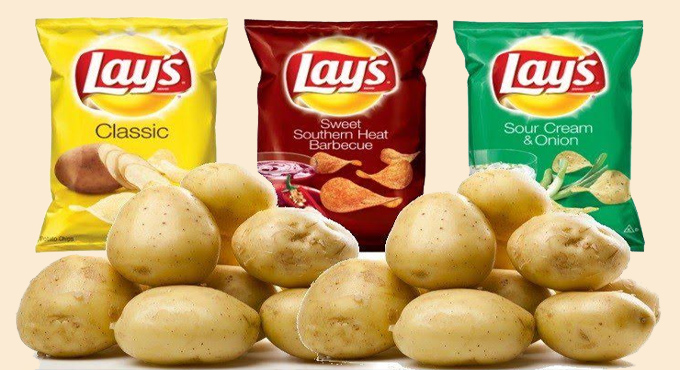
Don’t worry, this is not about an ordinary potato. The entire dispute revolves around a special variety known as FL 2027, which was developed mainly for making chips and wafers.
This potato has lower moisture content compared with ordinary varieties, making it more suitable for commercial chip production. For a farmer, it may simply look like another crop growing in the field. But for the company, it is a specially developed commercial variety created through research and investment.
And that is where the real conflict begins.
‘This Variety Belongs to Us,’ Says PepsiCo
PepsiCo says it has special rights over this potato variety under the Protection of Plant Varieties and Farmers’ Rights Act, 2001. The company says it received registration for FL 2027 in 2016, giving it breeder rights over the production, sale and marketing of the variety.
In simple terms, PepsiCo’s argument is that a company that spends money and resources developing a new plant variety should be able to protect it from unauthorised commercial use. The larger question before the court is how far those rights can extend when farmers start growing the protected variety.
That is where the company’s rights come face-to-face with the rights given to farmers under Indian law.
Farmers Have a Different Argument
Farmer groups say Indian law also gives farmers important protections. They argue that farmers have the right to grow, save, use and, under certain conditions, sell seeds, even when the variety has been protected under the law.
They are particularly relying on Section 39 of the Protection of Plant Varieties and Farmers’ Rights Act. Their argument is that the law cannot give breeders strong protection while taking away the traditional and legally recognised rights of farmers.
So the real question is not simply whether PepsiCo owns rights over FL 2027. It is about how those rights should work alongside the rights specifically given to farmers by the same law.
The Bigger Question: Farmer Vs Company
This is what makes the case much bigger than a dispute over one potato variety. On one side, companies argue that developing new seeds and plant varieties requires years of research and large investments, and those investments need legal protection.
Without such protection, companies may have less incentive to develop new agricultural varieties. But on the other side is an equally important question: how much freedom should a farmer have over the crop and seeds grown on his own land?
That makes this more than a technical legal dispute. It also raises questions about the future of India’s agricultural system.
Why ‘Food Sovereignty’ Matters
Farmer groups are looking at the case from an even wider perspective. They argue that if private companies gain strong control over important seed varieties used for food crops, farmers could become increasingly dependent on those companies.
A seed is not just another agricultural input. It is the starting point of the next crop. If control over seeds increases, it can also influence who controls the production of crops and, eventually, parts of the wider food system.
That is why the dispute over breeder rights has also brought the idea of food sovereignty into the discussion. The issue is no longer limited to one company and a group of farmers; it touches on who should have control over the building blocks of agriculture.
But PepsiCo Has Its Own Argument
PepsiCo, however, says it is not targeting ordinary farmers. The company argues that it takes action when the protected potato variety is being grown commercially on a large scale, particularly in situations where competing chips manufacturers may be benefiting from it.
From PepsiCo’s point of view, this is not a fight against farmers’ rights. It is about protecting its intellectual property and breeder rights over a variety that it says was specially developed and legally registered.
Farmer groups see the matter differently. For them, the case represents a larger conflict between corporate ownership rights and the legal protections available to farmers.
Now, What Will the Supreme Court Decide?
After the Delhi High Court restored protection in favour of PepsiCo, farmer groups challenged the decision before the Supreme Court. The case now puts a much larger question before the country’s highest court.
When a farmer grows a protected plant variety on his own land, where exactly do the breeder’s rights end and the farmer’s rights begin? And how should the law balance the two?
The answer could have consequences far beyond FL 2027. It could influence how hundreds of protected plant varieties are treated, how farmers use them and how agricultural companies protect their investments in the future.
That is why the Lay’s potato dispute matters.
What looks like a simple packet of chips on a supermarket shelf is actually connected to a much bigger debate about seeds, farmers, companies and control over agriculture.
The real question is not simply who owns this potato? The bigger question is: who should have the final say over the seeds that shape India’s food future — the farmer, the company, or the law that is supposed to protect both?