
America Moves First in Venezuela’s Oil Hunt. Where Does That Leave India?
- Published By: Tech Team
- September 3, 2026 / 10:17 AM IST


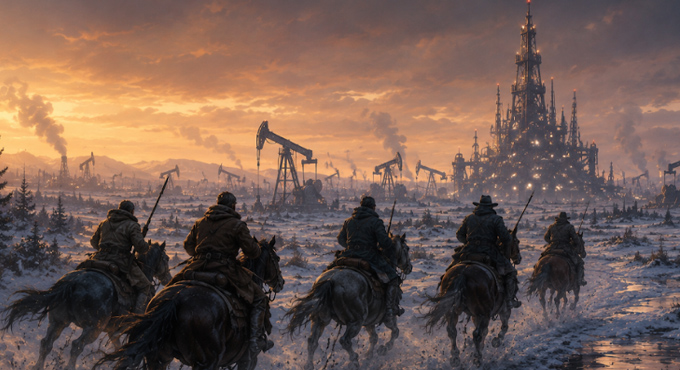
Thousands of years ago, humans went into the forests to hunt. They carried weapons and had only one thing on their minds: survival. Whoever hunted first got the food, and whoever was stronger often got the bigger share. A successful hunt meant the family would eat and survive. If the hunt failed, there was only one option—go back into the forest and try again.
A lot has changed since then. Humans have changed, forests have changed, and weapons have changed. But the hunt itself has never really disappeared. Even today, the world’s most powerful countries are hunting. The only difference is that they are no longer hunting animals.
Now, they are hunting for oil.
And that is exactly what is happening in Venezuela.
This Time, the Hunting Ground Is Venezuela
India has a problem, and America has a plan. Between them lies one of the most valuable resources on Earth: oil. The twist is that both countries have an interest in Venezuelan oil. But America appears to have moved faster. It got there first, made a deal and secured an important position in the Venezuelan oil industry.
That is where India’s concern begins.
India needs oil in enormous quantities and its dependence on imports makes access to multiple suppliers extremely important. Venezuela is particularly attractive because it has massive oil reserves and produces heavy crude that can work well with some Indian refineries.
So the question naturally becomes: If America has already secured the best position, will there still be enough room for India?
That is the real story behind this new oil hunt.
What Exactly Did America Secure?
Venezuela is not just another oil-producing country. It sits on one of the world’s largest oil resources. The latest arrangement involves 17 oil fields and an estimated 65 billion barrels of proven reserves.
Under the proposed structure, the United States is expected to receive a 35 percent stake in the new venture. More importantly, America would have special access to part of the oil produced and preferential rights over the remaining output.
Think of it like standing in a long queue to buy a ticket. Everyone is waiting for their turn, but one person has already reached the counter and secured priority access.
That person, in this case, is America.
And India is now looking at the same oil fields and wondering what space will be left for others.
Why Is Venezuelan Oil So Important for India?
Many people may ask a simple question: India already buys oil from Saudi Arabia, Russia and other countries. So why worry about Venezuela?
The answer is equally simple. Depending too heavily on one supplier is always risky.
Imagine buying everything from one shop. What happens if that shop suddenly closes? What if it raises prices? What if supplies are disrupted? Or what if your relationship with the shop owner turns sour?
You need alternatives.
India’s oil strategy works in much the same way. The country needs huge volumes of crude oil every day, and that supply cannot suddenly stop. That is why India buys oil from different parts of the world and constantly looks for new suppliers.
Venezuela could become one of those important sources. In fact, it could be more than just a backup option. With its enormous reserves and the compatibility of its heavy crude with some Indian refineries, Venezuela has the potential to become a major supplier for India in the future.
But America Is Already Standing at the Door
That is where the situation becomes interesting.
America has moved first. It has secured a stake and gained preferential access. If Venezuelan oil production increases significantly in the coming years, America will already be in a strong position.
So what happens when India wants more Venezuelan oil?
Will America take its share first? Will India have to compete for what remains? Could stronger competition eventually push up prices?
These questions do not yet have clear answers. It would be wrong to say that America has blocked India from Venezuelan oil. There is no evidence of that at this stage.
But America has certainly put itself in a powerful position.
In simple terms, it has reached the hunting ground before others and picked the best spot.
Is India Already Falling Behind?
Not necessarily.
India may not have moved as aggressively as America in this particular deal, but that does not mean it is out of the game. Venezuela still has enormous oil reserves, and developing those resources will require major investments, infrastructure and time.
The oil hunt is far from over.
India remains one of the world’s biggest oil buyers. That gives New Delhi significant bargaining power. Any country that wants to sell large volumes of oil will find it difficult to ignore the Indian market.
At the same time, India has another advantage: it does not depend on just one source. It can buy from Russia, the Middle East, the United States and other suppliers. This flexibility gives India room to negotiate and adjust its strategy.
The Hunt Is Bigger Than India and America
This is not simply a competition between Washington and New Delhi.
China has interests in Venezuela. Russia has had strong links with the Venezuelan oil industry. America is now trying to expand its influence.
India, meanwhile, is watching closely because it needs energy security.
That is what makes Venezuela important.
This is no longer just about buying barrels of crude oil. It is about who controls future supplies, who gets priority access and who gains influence over one of the world’s biggest oil-producing regions.
The Final Hunt Is Still Ahead
America may have taken the early lead, but the final result has not been decided.
India still has time. It still has options. And most importantly, it still has the power of being one of the world’s largest oil markets.
Thousands of years ago, humans fought over food because survival depended on it. Today, powerful nations are competing for oil because modern economies cannot survive without energy.
The forests may have disappeared from the story. The hunters no longer carry bows and arrows. Instead, they carry investment deals, political influence, strategic partnerships and economic power.
But the basic rule remains the same.
The one who reaches the hunting ground first usually gets the advantage.
For now, America appears to have the upper hand in Venezuela.
But the hunt is not over.
The real question is whether India will find its own way into Venezuela’s oil fields—or whether it will have to wait and see what is left after the world’s biggest players have taken their share.
This is not just an oil deal. It is the beginning of a much bigger Oil Hunt.
— Surya Prakash Josyula