

THE VALIANT DECCAN QUEEN WHO HELD BACK A MIGHTY EMPIRE
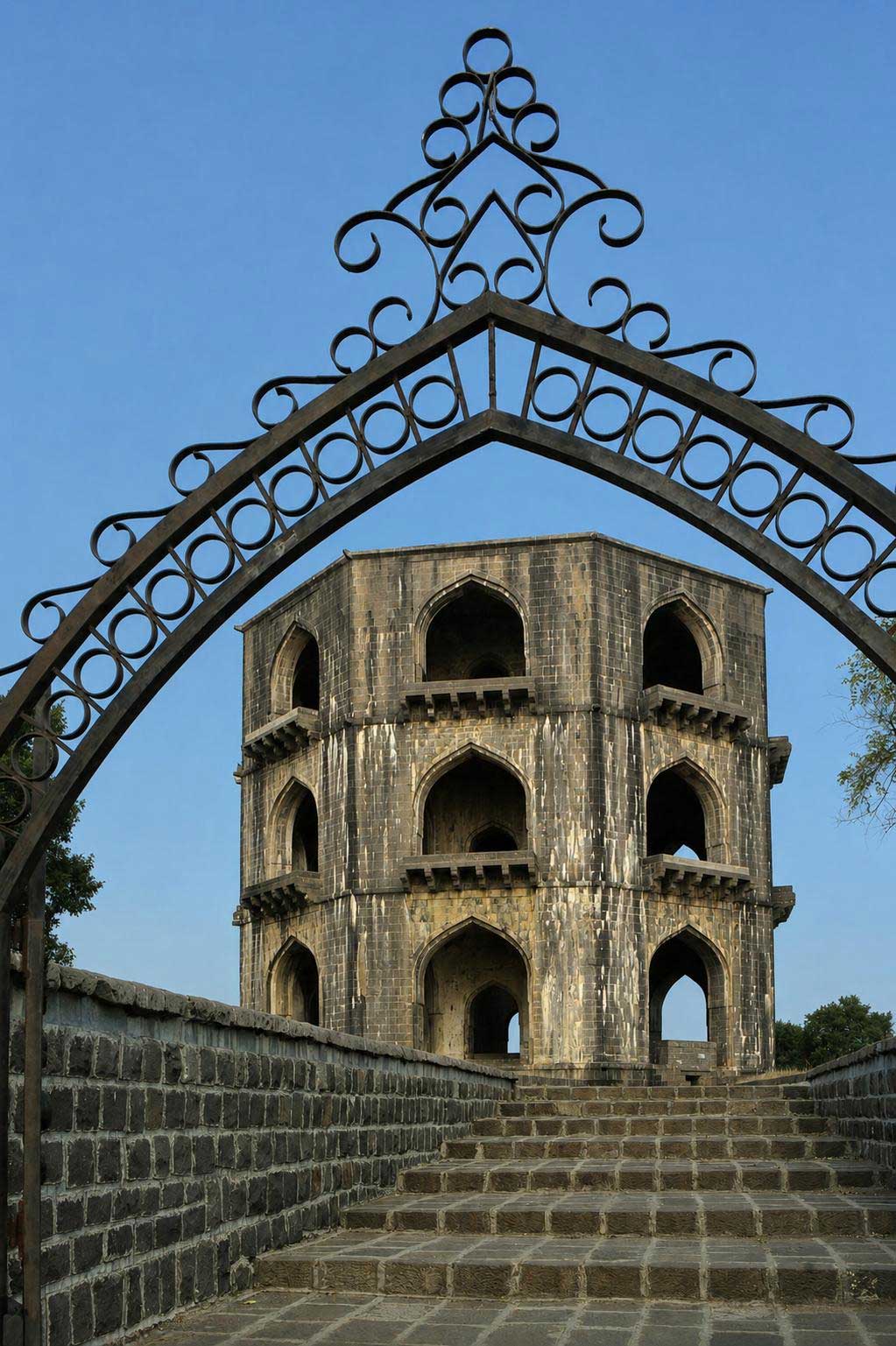
- Published By: shivaduvvuru
- June 30, 2026 / 12:53 PM IST


Centuries before the Deccan bowed to Mughal power, a Queen & Regent named Chand Bibi stood in a broken fortress wall and turned Akbar’s army away. Her story is one of courage, statecraft, and a betrayal that history has never forgiven.
DEFENDING BIJAPUR:
In the long story of the Deccan, few figures shine as fiercely or end as tragically as Queen Chand Bibi. She was a queen by marriage, a regent by duty, and a soldier by necessity. And in an age when the Mughal Empire was swallowing kingdoms whole, she remains one of the rare rulers who forced it to stop, regroup, and negotiate.
Her life unfolded at the dangerous meeting point of the great southern sultanates, where the rival houses of Ahmednagar and Bijapur watched each other across uneasy borders. Born a Nizam Shahi princess of Ahmednagar and married into the Adil Shahi court of Bijapur, Chand Bibi belonged to both worlds and would one day defend both.
A throne held for a child:
The first test came in 1580, when her husband, the Sultan of Bijapur, was assassinated. He left no son. The crown passed to his nine-year-old nephew, Ibrahim Adil Shah II, and the real burden of government fell to Chand Bibi, who took up the role of Queen Regent.
The years that followed were a war fought not on a battlefield but in the corridors of the palace. One ambitious general after another sought to push her aside, imprison her, or seize the throne for himself. A boy-king and a woman-regent looked, to such men, like an open door.
Chand Bibi proved them wrong. With patience and political skill, she balanced the proud Deccani nobles against the foreign-born commanders and advisors at court, conceding where she had to and striking where she could. She held a fractured kingdom together until Ibrahim was old enough to rule in his own name. It was a quiet victory, won without armies and it was only the beginning.
DEFYING AT AHMEDNAGAR:
The Mughals at the gate
In 1595, her birth kingdom of Ahmednagar collapsed into a violent succession dispute. With the throne contested and the nobility divided, one faction took the fateful step of inviting the Mughals to intervene. The most powerful empire in the subcontinent did not hesitate.
Chand Bibi returned home, taking command of the Ahmednagar Fort as regent for her infant great-nephew. There she found a desperate situation: a vast Mughal army outside the walls, commanded by Akbar’s own son, Prince Murad and inside, dwindling food supplies and nobles who could not stop quarrelling even as the enemy closed in.
ETCHED IN HISTORY:
What she did next sealed her place in history. She assumed direct military command of the defence. Clad in armour, her face veiled, she walked the ramparts in person and directed the resistance herself.
The defining moment, preserved in the lore that surrounds her name, came when a great Mughal mine tore open a section of the wall. As the breach yawned and the garrison began to panic and flee, Chand Bibi rushed to the gap herself, sword in hand, rallying her soldiers back into the fight. Through the night they held their ground, and through the night they rebuilt the shattered wall under enemy fire.
Unable to break her defence and short on supplies of his own, Prince Murad agreed to terms and withdrew. A veiled queen had compelled a Mughal prince to retreat.
A peace that could not last:
The treaty bought time, but not safety. The same factionalism that had invited the Mughals continued to weaken Ahmednagar from within. When the empire returned for a second siege in 1599, Chand Bibi read the situation clearly: the resources were exhausted, and the fort would fall.
Rather than condemn her people to slaughter, she chose pragmatism. She opened secret negotiations with the Mughals, prepared to surrender the fortress in exchange for safe passage for the royal family and the citizens sheltering within. It was the decision of a ruler who had run out of victories but not out of responsibility.
It cost her everything. A nobleman named Hamid Khan branded her realism as treason and turned the palace guards against her. An enraged mob stormed her private quarters and killed her. Only days later, the leaderless fort fell to the Mughals anyway the very catastrophe she had tried to soften.
LEGACY:
Chand Bibi’s life ended in bitter irony, destroyed by her own side for trying to save it, just before the disaster she had foreseen arrived all the same. Yet her death has never been allowed to eclipse her life.
She is remembered as a regent who mastered two scheming courts, a commander who stood at the breach when men of higher rank fled it, and one of the very few rulers to push back the Mughal tide at the height of its strength. The image endures across the centuries — the veiled figure on the wall, sword raised, holding an empire off for one more night.
History not only handed us a tragedy but also an unforgettable legend
Related News

Chief Minister Chandrababu Naidu seek cooperation of IIT professionals to develop Andhra Pradesh as a global knowledge hub

CM Chandrababu Naidu to lay foundation for three lakh housing project in Tenali constituency along with Union Minister Shivraj Singh Chouhan

Keep rivers clean: Chief Minister express concern over discharge of waste water into Krishna and Godavari rivers

Initiate measures on war footing to permanently address drinking and industrial water requirements of Visakhapatnam: CM

BGMI HOT DROP Lands in Visakhapatnam at Inorbit Mall