
Japan’s PM Heads to India: A New Sea Route for the Northeast
- Published By: shivaduvvuru
- July 1, 2026 / 05:11 PM IST


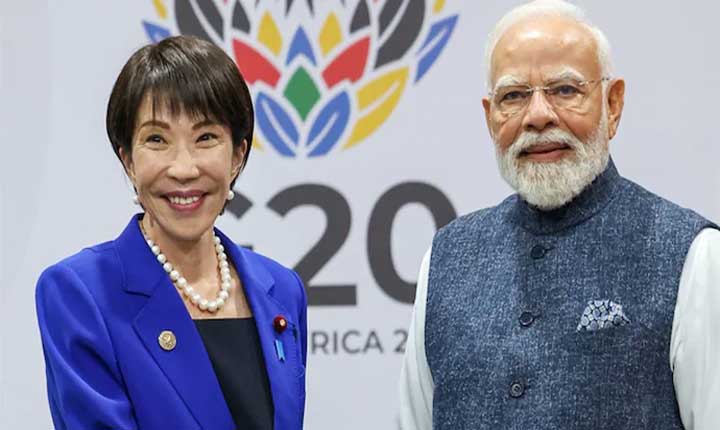
On the eve of Prime Minister Sanae Takaichi’s visit to India
Japanese Prime Minister Sanae Takaichi arrives in India on July 1 for a three-day visit, her first since taking office. She’ll meet Prime Minister Narendra Modi in New Delhi for the two countries’ annual summit. On the surface, it’s a routine diplomatic trip. Underneath, it touches on a long-term project that could reshape trade for one of India’s most isolated regions: the Northeast.
The Problem: A Narrow Neck
India’s eight northeastern states are connected to the rest of the country by a strip of land only about 20 kilometers wide, known as the Siliguri Corridor, or the “Chicken’s Neck.” Nearly everything the region imports or exports has to pass through this one narrow gap. It’s slow, it’s vulnerable, and it has held back the region’s economy for decades.
The Fix: A New Port in Bangladesh
Japan is funding a large deep-sea port at Matarbari, in southeastern Bangladesh, through its development agency, JICA. Once finished, big container ships will be able to dock there directly, instead of relying on smaller feeder boats. Japan is also paying for roads and rail lines to connect the port to the region.
The idea is simple: instead of northeastern India’s goods squeezing through the Chicken’s Neck, they could travel south through Bangladesh to Matarbari, then out to sea. That would cut costs, save time, and give the region a route that doesn’t depend on a single vulnerable corridor.
Why This Trip Matters
Reports ahead of the visit say this Bay of Bengal Northeast connectivity plan is officially on the agenda for the summit. That’s notable this isn’t just a background policy anymore, it’s something the two leaders are expected to discuss directly this week.
The summit was originally supposed to happen in Assam, in India’s Northeast, rather than New Delhi. That would have been a strong symbolic statement about Japan’s commitment to the region. It was later moved to New Delhi instead, which softened the symbolism a bit but the underlying agenda is reportedly unchanged.
The Bigger Picture
This visit isn’t happening in isolation. Japan is already India’s fifth-largest foreign investor, with about $48 billion invested as of March 2026. Trade between the two countries topped $27 billion last fiscal year. And last August, the two sides set a target of roughly $65 billion in new Japanese private investment into India over time.
Much of this cooperation is also read as a quiet counterweight to China’s Belt and Road Initiative, which has run into criticism in other countries over debt and delays. Japan and India aren’t framing it that way publicly, but the pattern reliable financing, transparent terms, joint planning speaks for itself.
What to Watch:
The two countries are expected to release a joint statement when the summit wraps up on July 3. That statement should show how firm or how vague the commitments really are. The Matarbari port itself is still years from full completion, with different reports pointing to dates anywhere between 2027 and 2029 for various phases. So even if this week produces strong words, the actual sea route around the Chicken’s Neck is still a ways off.
Related News
Chief Minister Chandrababu Naidu seek cooperation of IIT professionals to develop Andhra Pradesh as a global knowledge hub
CM Chandrababu Naidu to lay foundation for three lakh housing project in Tenali constituency along with Union Minister Shivraj Singh Chouhan
Keep rivers clean: Chief Minister express concern over discharge of waste water into Krishna and Godavari rivers
Initiate measures on war footing to permanently address drinking and industrial water requirements of Visakhapatnam: CM

BGMI HOT DROP Lands in Visakhapatnam at Inorbit Mall