
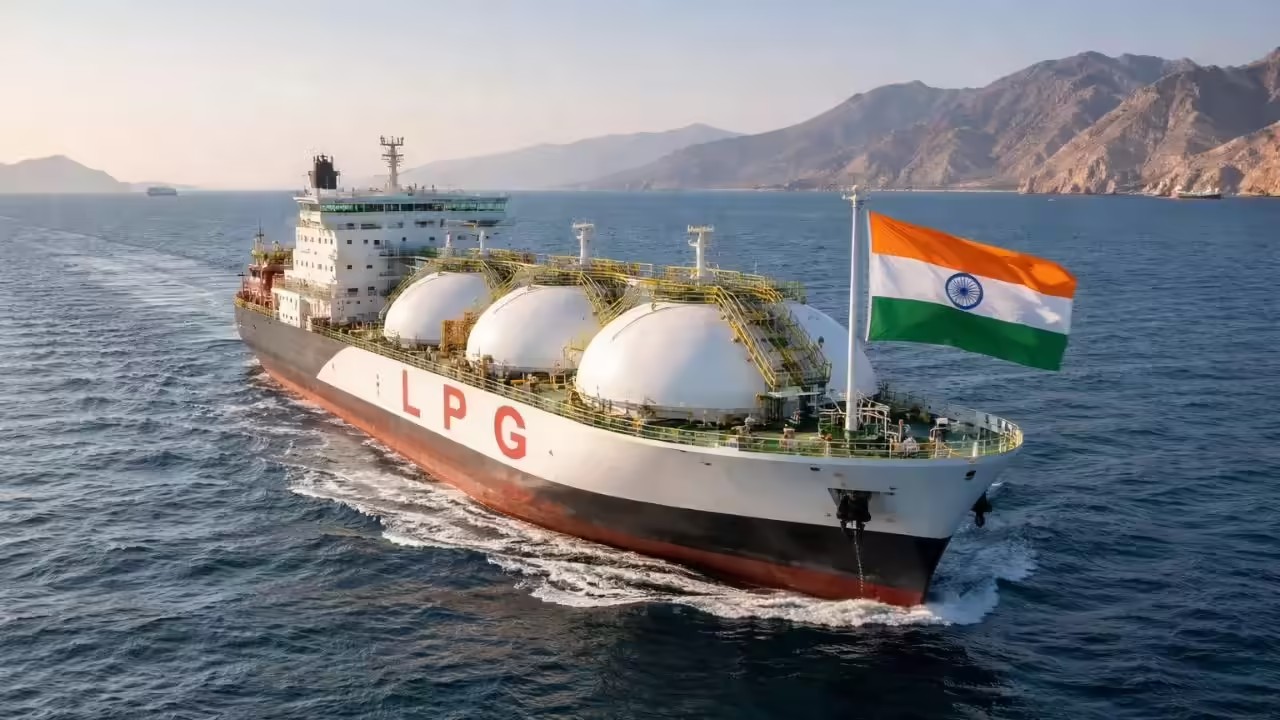
India Pivots to American LPG as Middle East Crisis Bleeds State Oil Companies
- Published By: Tech Team
- June 22, 2026 / 07:55 AM IST


The West Asian geopolitical crisis has completely rewritten India’s energy playbook. Facing severe supply chokepoints from the Gulf, India has rapidly rerouted its Liquefied Petroleum Gas (LPG) supply chains toward the West. While this aggressive pivot secured the nation’s energy grid, it triggered a massive financial fallout. A new report by CRISIL highlights a grim reality for state-run oil companies forced to absorb billions in losses.
Moving Away from Gulf Dependency
Historically, India relied on Gulf nations for a massive 90% of its LPG requirements. That reality shifted overnight. The sudden supply blockades forced New Delhi to aggressively increase purchases from alternative international markets. Imports from the United States jumped from a mere 8% in February to roughly 33% by April. A pivotal 2.2 million-tonne annual supply agreement struck in late 2025 made this rapid transition possible. This single US deal now covers 10% of India’s yearly LPG needs. The sourcing net widened significantly across the globe. April saw Iran capture a 6% share of Indian imports. Cargoes also arrived from Argentina, Chile, France, and the Netherlands as the government scrambled to build a safety net.
Skyrocketing Costs and Cratering Demand
Securing energy from across the Atlantic guarantees supply, but it comes with a brutal price tag. Extended shipping routes sent freight costs through the roof, forcing a massive drop in domestic consumption. Industrial and commercial buyers aggressively cut back their usage as prices spiked. The domestic market witnessed a rapid contraction in demand. Overall usage tumbled from 3.2 million tonnes in February to just 2.47 million tonnes in April. Year-on-year data shows a 13% drop in both March and April. The decline accelerated in May, recording a severe 20% crash in consumption. The Saudi Aramco contract price—the primary benchmark for Indian imports—surged 46% between February and June. Because commercial rates are directly linked to international markets, businesses felt the immediate impact.
A Rs. 22,000 Crore Blow to State Oil Firms
While commercial fuel rates skyrocketed, the government shielded ordinary households from the brunt of the global shock. In Delhi, the price of a 19 kg commercial cylinder exploded by over 79%. Meanwhile, the standard 14.2 kg domestic cylinder saw a controlled, limited increase of just about 10%. This deliberate price capping kept household demand stable but wrecked corporate balance sheets. State-run oil marketing companies (OMCs) absorbed the massive difference between high import costs and low retail prices. This financial buffer resulted in catastrophic damage for the government-owned energy firms. Over a span of just three months, these OMCs registered crushing financial losses amounting to Rs. 22,000 crore.
Related News

Dr. Vaidehi Taman Explores Kashmir’s Centuries-Old Knowledge Tradition

India wins the bid to host UCI Road World Championship 2032 in Pune

Keystone STEM Alliance: A Youth-Led Model Transforming STEM Education and Community Engagement

Blueband Sports Rally of Coimbatore Set to Host Round 2 of INRC 2026 with 64 Cars on the Grid

Thanks To Telugu Audience for Making Mandaadi a Blockbuster: Soori