
FIGHTING TYRANNY AGAINST WOMEN WITH TECH

- Published By: shivaduvvuru
- June 16, 2026 / 11:20 AM IST


Taliban : When Sara Wahedi was just eight years old, she witnessed a scene that would forever shatter her childhood. Inside a packed football stadium in Kabul, she watched the Taliban shoot a woman dead. For years, she carried that memory like a horrific bad dream a relic of a dark past she assumed could never return to modern Afghanistan.
She was wrong. The Taliban returned.
But this time, they have to face Sara Wahedi.
Now 30, Wahedi has transformed from a traumatized child into an Ivy League scholar, an Oxford graduate, a tech entrepreneur, and a literal thorn in the side of the regime. Following her recent graduation from Oxford University, a photo of her in her academic gown went viral, racking up nearly a million views. Her caption was a direct declaration of war against oppression:
“Made it my life’s mission to become the Taliban’s worst nightmare: A highly educated Afghan woman. First, Columbia University at the top of my class, and now Oxford University. Give Afghan girls one chance and see what they can achieve.”
In an exclusive coverage by Newsweek, Wahedi who now works as a policy researcher and technology specialist explained that the Taliban’s relentless war on women isn’t just backward tradition. It is a calculated survival strategy.
Since seizing power in August 2021, the regime has systematically erased women from society. More than 2.2 million girls have been locked out of secondary schools and universities. A staggering new law passed in 2024 took tyranny a step further, completely banning women from speaking on the radio or raising their voices in public spaces.
“The bans on schooling, careers, and public life are not random,” Wahedi points out. “They are a deliberate effort to contain what educated Afghan women would inevitably demand. An educated female population is incompatible with Taliban rule.”
While the Taliban uses guns and decrees, Wahedi uses data and code.
After studying Data Science at Columbia University, she co-founded Ehtesab, a groundbreaking mobile app that became a literal lifeline for everyday Afghans. Between 2020 and 2024, the app pushed out over 250,000 real-time security alerts, mapping bombings, checkpoints, and civic unrest.
When Kabul collapsed on August 15, 2021, and the official government panicked, foreign embassies fled and local communication systems went completely dark. Ehtesab remained online. In those chaotic, terrifying hours, Wahedi’s app became the premier real-time tracking tool used to coordinate the secret evacuation of vulnerable female judges, activists, journalists, and students.
Collapse of Women’s Rights in Afghanistan:
Elementary School Enrollment (2001-2021): Peak of 80%+
Current Status (Post-2021): Plummeting sharply
Girls completely banned from secondary/higher education: 2.2 Million+
The Underground Digital Resistance:
By late 2024, the Taliban’s tightening chokehold made it impossible for Ehtesab to safely employ local female staff, forcing the app to shut down. But Wahedi didn’t stop. She shifted into the shadows.
She launched Civaam AI, a low-profile technology firm that builds covert digital tools specifically designed for communities navigating extreme crises. Because her team operates directly under the nose of the Taliban, the exact mechanics of the software are strictly classified to keep her operatives alive. What we do know is that her platform quietly maps healthcare access and fuels secret, underground education networks.
While the world has largely turned its back on the plight of Afghan women, Wahedi remains fiercely optimistic. Deep inside the country, thousands of young girls are still completing their high school educations in secret, huddled around smartphones and forbidden radio frequencies.
Sara Wahedi’s story is proof that you can take away a woman’s school, her job, and even her voice in public but you cannot erase her mind that raises against tyranny.
Related News

‘Arz Kiya Hai’ by Anuv Jain and Lost Stories Reaches No. 1 on Spotify India and Global Charts

Experts Advocate Prevention, Early Detection, and Community Awareness at World Heart Day Conference
Pullela Gopichand Emphasizes Sports as Essential for Viksit Bharat at PRana 2026
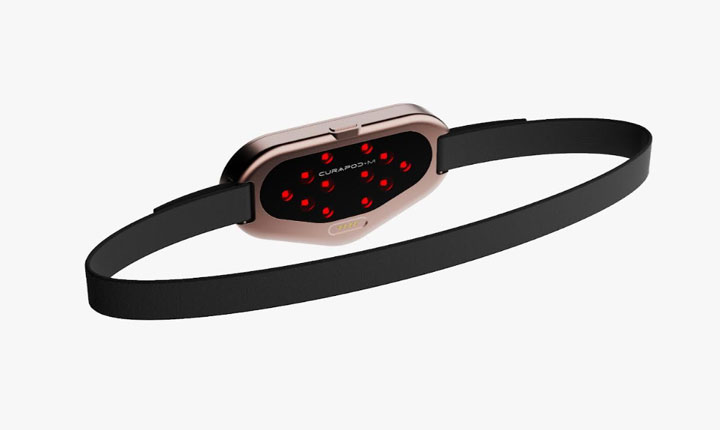
Litemed India Launches ‘Curapod M’, an Innovative Health-Tech Device for Menstrual Pain
Olympian Pranati Nayak to Represent India Solely in Gymnastics at Asian Games 2026