
Why the Center Selected Syed Ata Hasnain for Khamenei’s Funeral
- Published By: Tech Team
- June 30, 2026 / 07:03 PM IST


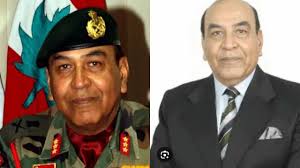
Two representatives from our country are attending the official funeral of Iran’s former Supreme Leader, Ayatollah Ali Khamenei. One is the Minister of State for External Affairs, Pabitra Margherita, and the other is the Governor of Bihar, Lieutenant General (Retired) Syed Ata Hasnain. The Central Government has officially announced this. In fact, the Iranian government had invited Prime Minister Narendra Modi. However, the Central Government decided to send two representatives from the country instead. They will attend these ceremonies on behalf of India.
However, Syed Ata Hasnain currently does not hold any military command position. Yet, the Center is sending him as a representative. He served in the Indian Army for many years and has a strong grasp on Kashmir. Even after retirement, he has been providing counsel on India’s strategic affairs. It is against this backdrop that he was selected.
Before assuming charge as the Governor of Bihar in March 2026, Lieutenant General Syed Ata Hasnain served in the Indian Army for nearly four decades. He retired as one of the country’s most respected counter-terrorism commanders.
Commissioned into the 4 Garhwal Rifles in 1974, he worked in several operational areas, including Sri Lanka under Operation Pawan, Punjab during the insurgency years, and United Nations peacekeeping missions in Mozambique and Rwanda. Later, he led troops along the Line of Control before commanding the Army’s strategically vital XV Corps (Chinar Corps), which is responsible for counter-insurgency operations across the Kashmir Valley.
His tenure as the Srinagar-based ‘Corps Commander’ between 2010 and 2012 was highly critical. Instead of relying solely on military action, Hasnain formulated an approach called the “Hearts Doctrine”; this was a strategy that blended counter-terrorism operations with continuous civil engagement, youth outreach, and confidence-building measures.
Reasons Behind His Selection Now:
First: At a time when West Asia is volatile following months of conflict involving Iran, Israel, and the United States, his experience as a former senior military commander with deep knowledge of regional security developments will be highly valuable.
Second: He possesses years of experience studying both security and diplomacy. He is the right person to represent India’s delicate stance of expanding strategic partnerships with Israel, the United States, and Gulf nations, while simultaneously maintaining long-standing ties with Iran.
Third: Diplomatic sources state that Hasnain is one of the few prominent figures from India’s Shia Muslim community currently holding a constitutional post. Although this visit is official rather than religious, his presence at the ceremonies honoring Iran’s Supreme Leader may also carry symbolic significance.
Related News
GOPIO Presents Memorandum on Diaspora Issues and Suggestions to Minister Jaishankar

Top 6 Stays in Dubai for Your Next Workation

SriLankan Airlines Restores Complete Middle East Network With Kuwait Service Resumption

Two Years After Trump’s Inflation Spotlight, Rising Grocery Prices Loom as a Political Vulnerability for Republicans Ahead of Midterms
US Imposes Up to 100% Tariffs on Drones to Curb Chinese Dominance and Bolster Security