

Martyrs of Ayodhya’s Harmony
- Published By: shivaduvvuru
- June 18, 2026 / 12:48 PM IST


Ayodhya: As we navigate the complexities of our modern social fabric, history often serves as a mirror not just to reflect where we came from, but to remind us of the heights of unity we are capable of achieving. Today, when headlines are easily dominated by discord, it is imperative to look back at the First War of Indian Independence in 1857. Amidst the blood and fire of that rebellion, an extraordinary story of interfaith brotherhood was written in the heart of Ayodhya.
It is the story of two secular heroes whose names deserve to be etched in gold, yet remain largely buried in the footnotes of time: Baba Ramcharan Das and Amir Ali.
The Dividing Wall and the Bridge of Brotherhood:
In 1857, as Hindus and Muslims fought shoulder-to-shoulder to overthrow British colonial rule, the East India Company sought any opportunity to fracture this dangerous unity. Recognizing the symbolic and emotional weight of Ayodhya, the British erected a dividing wall inside the compound of the Babri Mosque, hoping to stoke communal anxieties and spark an internal conflict that would derail the rebellion.
The trap was set, and tensions began to simmer. However, the British underestimated the moral fortitude of the local leadership.
Instead of falling into the snare of division, two men stepped forward to bridge the gap:
• Baba Ramcharan Das, a highly revered Hindu ascetic.
• Amir Ali, a prominent and influential local leader.
The Ayodhya Pact of 1857:
Realizing that internal strife would only strengthen the foreign occupiers, Baba Ramcharan Das and Amir Ali sat together and forged a historic peace pact. They agreed that both communities would pray side-by-side in separate, designated portions of the same compound. It was a masterclass in mutual respect, accommodation, and strategic unity.
The Price of Unity: Martyrdom at Kuber Tila
The British viewed this local peace pact not just as a failure of their “divide and rule” policy, but as an act of open defiance. When colonial forces finally managed to crush the rebellion, their vengeance against the architects of this harmony was swift and merciless.
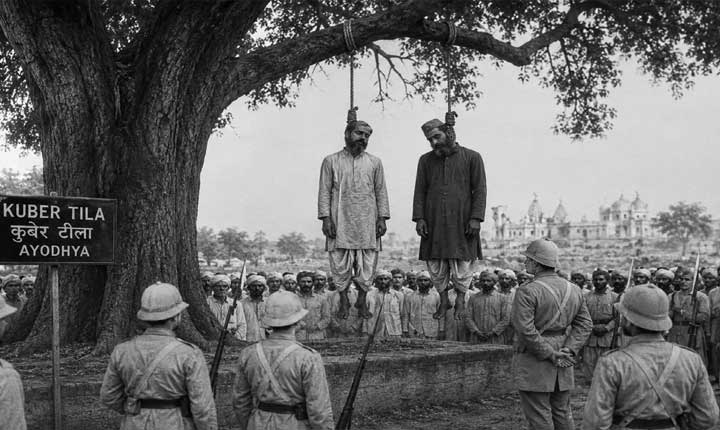
On 18 March 1858, Baba Ramcharan Das and Amir Ali were captured by British forces. Charged with sedition against the Crown, they were sentenced to death and hanged together from a tamarind tree at Kuber Tila in Ayodhya.
In death, as in life, the blood of a Hindu saint and a Muslim leader mixed with the soil of Ayodhya, sealing a covenant of peace.
A Living Monument Defies the Crown:
The British managed to take the lives of these two visionaries, but they could not kill the harmony they had engineered. The pact forged by Ramcharan Das and Amir Ali held strong, lasting nearly a hundred years.
Furthermore, the very site of their execution transformed into a powerful symbol of resistance. For decades, Hindus and Muslims together visited Kuber Tila, paying joint tributes at the foot of the tamarind tree. It became a living shrine of Hindu-Muslim unity a constant, public reminder that the two communities could stand together against outside manipulation.
This enduring symbol of brotherhood eventually became too much for the colonial administration to bear. In 1935, in a deliberate attempt to erase this powerful symbol of solidarity from public memory, the British government cut down the sacred tamarind tree.
Why Their Story Matters Today:
Though the tree was axed, the roots of their legacy remain indestructible. The true heritage of India lies in the absolute refusal to let differences become divisions. Baba Ramcharan Das and Amir Ali did not just preach tolerance; they practiced a profound, active secularism that cost them their lives.
As we look toward the future, the shared history of Ayodhya’s forgotten martyrs stands as a monument to what India is at its best: a land where faiths do not compete for dominance, but coexist in dignity. Their story is a timeless reminder that true harmony is not the absence of differences, but the presence of mutual respect.
Related News
GOPIO Presents Memorandum on Diaspora Issues and Suggestions to Minister Jaishankar

Top 6 Stays in Dubai for Your Next Workation

SriLankan Airlines Restores Complete Middle East Network With Kuwait Service Resumption

Two Years After Trump’s Inflation Spotlight, Rising Grocery Prices Loom as a Political Vulnerability for Republicans Ahead of Midterms

US Imposes Up to 100% Tariffs on Drones to Curb Chinese Dominance and Bolster Security