
Good News for H-1B Workers? New US Green Card Bill Brings Fresh Hope
- Published By: techteam
- August 3, 2026 / 11:00 AM IST


— Surya Prakash Josyula
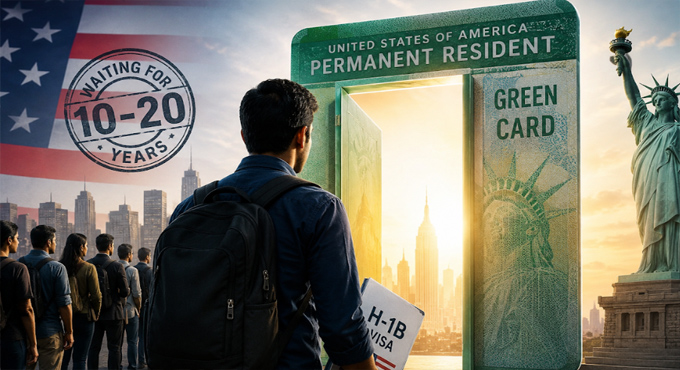
For thousands of Indians living in the United States, life appears almost complete. They have good jobs, stable careers, decent salaries, and their families are gradually building a future there. Yet one important thing is still missing—the confidence to say, “This is now my permanent home.” That uncertainty has followed many H-1B professionals for years, as they continue waiting for one life-changing approval: a Green Card.
Behind what looks like a successful life is a question that never seems to disappear: “When will my Green Card finally arrive?” For some, the wait has lasted five years. For many others, it has stretched beyond a decade, and in some cases, close to twenty years.
Why is a Green Card so important?
A Green Card is much more than an immigration document. For Indian professionals working in the US, it offers long-term security and peace of mind. Without it, they must continue renewing their visas, face limitations while changing jobs, and deal with uncertainty if they unexpectedly lose employment. As their children grow older, immigration rules can also affect their legal status. That is why getting a Green Card is often seen as the final step toward building a stable life in America.
Why has the waiting period become so long?
The biggest reason is the US employment-based Green Card system, which has country-wise limits. Since India accounts for a very large number of applications every year, the waiting list has continued to grow. As a result, many highly skilled professionals who have worked in the US for years are still waiting for permanent residency despite meeting all the eligibility requirements.
Is the new bill trying to change that?
Against this backdrop, California Democratic Senator Alex Padilla has introduced the Renewing Immigration Provisions of the Immigration Act of 1929. If passed into law, the bill would allow immigrants who have lived continuously in the United States for at least seven years to apply for lawful permanent residency, provided they meet all existing eligibility requirements.
The proposal would also update the current “Registry” provision, which now applies only to people who have lived in the US since January 1, 1972. Instead of relying on that outdated cut-off date, the bill proposes a rolling seven-year residency requirement.
Why does this matter to Indians?
Indian professionals make up the largest share of H-1B visa holders in the United States. Every year, thousands of engineers, IT professionals, doctors, researchers, and other skilled workers move to America in search of better opportunities. Many of them eventually find themselves stuck in the Green Card backlog, making this proposal especially significant for the Indian community.
Will everyone become eligible?
No. Simply living in the United States for seven years will not automatically qualify someone for a Green Card. Applicants must have a clean criminal record and satisfy all other existing Green Card eligibility requirements. The bill is designed to create another legal pathway, not to grant automatic permanent residency.
Can the bill become law?
Not immediately. The proposal must first pass both houses of the US Congress before being signed by the President. With immigration remaining one of the most politically divisive issues in the country, the bill is expected to face significant debate before it can become law.
The Bottom Line
For thousands of Indian H-1B professionals, this proposal is more than just another immigration bill. It represents hope after years of waiting. Whether that hope finally turns into permanent residency or becomes another chapter in a long journey will depend on the political decisions made in Washington over the coming months.