

AI vs Big-Budget Cinema: Hollywood Watches as Two ‘Odyssey’ Films Redefine Filmmaking Economics
- Published By: techteam
- July 17, 2026 / 07:15 AM IST


— Surya Prakash Josyula
The timeless Greek epic “The Odyssey,” written by Homer thousands of years ago, is once again at the center of global attention. But this time, it is not just the story that is making headlines—it is the radically different ways in which two filmmakers are bringing it to life.
On one side stands Christopher Nolan, one of the most influential directors in modern cinema. On the other is Ash Koosha, an AI-driven filmmaker exploring new creative frontiers.
Together, they represent two contrasting visions of the future of filmmaking.
A Tale of Two Budgets
Christopher Nolan’s The Odyssey comes with a staggering production budget of approximately $250 million, reflecting the scale, craftsmanship, and traditional filmmaking infrastructure associated with Hollywood blockbusters.
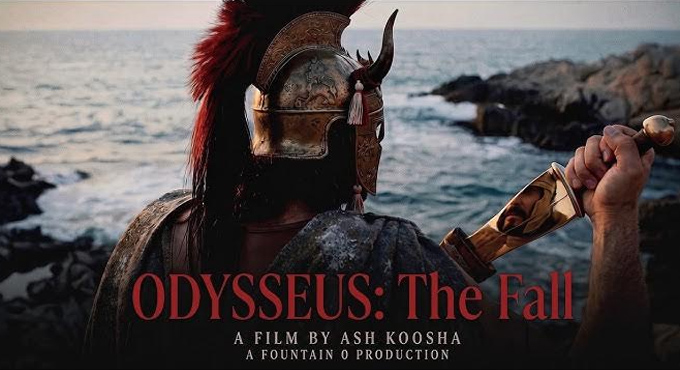
In sharp contrast, AI studio Fountain O has announced Odysseus: The Fall, produced at a budget described as “mid-five figures,” estimated between $30,000 and $70,000.
The disparity is striking.
The cost of a single Nolan production could potentially fund hundreds of AI-generated films, raising important questions about cost efficiency and scalability in the entertainment industry.
Strategic Choice: Why the Same Story?
The decision by both filmmakers to adapt the same epic has sparked widespread curiosity.
Ash Koosha offers a clear perspective:
“We are not trying to compete with Christopher Nolan. We hope his film becomes a huge success. Our goal is to allow audiences to compare how a large-scale Hollywood production interprets this story versus how a single creator can do it using AI.”
Rather than positioning it as a competitive clash, Koosha frames the project as a creative and technological experiment, highlighting the evolving capabilities of AI in storytelling.
Redefining Production: No Cameras, No Actors
Unlike traditional filmmaking, Odysseus: The Fall was created entirely without physical production elements.
There were no actors, no cameras, and no sets.
Instead, the film was generated using a suite of AI tools:
Kling AI for visual generation
Google Nanobanana for key frame creation
Claude AI for language refinement
Google Gemini for research support
Despite the heavy reliance on technology, Koosha emphasizes that creative control remained human-driven, with decisions on narrative, script, and character development guided by the director.
The Human Element in AI Filmmaking
A key question emerging from this development is whether AI can replace traditional creative roles.
Koosha’s stance is clear: AI is a tool, not a storyteller.
He argues that while technology can assist in execution, the core elements of storytelling—ideas, emotion, and intent—remain inherently human.
Ultimately, the success of a film still depends on the strength of its narrative rather than the sophistication of its tools.
Release Strategy: Traditional vs Digital Distribution
Christopher Nolan’s The Odyssey is scheduled for a global theatrical release on July 17, following the conventional blockbuster distribution model.
In contrast, Odysseus: The Fall will adopt a direct-to-digital strategy, releasing later this summer on the Fountain O platform as a $9.99 rental.
Additionally, Koosha’s earlier AI project, Dreams of Violets, will begin streaming on the same platform starting July 17.
This divergence highlights a broader shift in distribution strategies, with AI-driven productions leaning toward cost-effective, digital-first models.
Industry Implications: A New Path for Creators?
Until recently, AI’s role in cinema was largely limited to supporting functions such as posters, trailers, and short-form content.
Now, it is enabling the creation of full-length feature films.
This development opens up new possibilities for independent filmmakers and small creators, who have traditionally been constrained by high production costs.
The emergence of AI filmmaking could democratize content creation, lowering barriers to entry and reshaping the competitive landscape of the film industry.
Conclusion: A Turning Point for Cinema
Whether Nolan’s film dominates the box office or the AI-driven project captures audience attention remains to be seen.
However, one conclusion is already evident.
AI is no longer a peripheral tool in filmmaking—it is becoming an active participant in the creative process.
“The Odyssey” now represents more than just another cinematic adaptation.
It stands as a symbol of a transformative moment where traditional filmmaking and AI-powered innovation converge, signaling a new chapter in the evolution of global cinema.
Related News

Are Our Children at Risk? A New Report Raises Questions About Google’s AI

Will UPI Stay Free? Government Reviews MDR for Large Merchants

A New Headache with AI: Is Hacking Your Account Becoming Even Easier?

Digital Crime Wave: Investigation Reveals Social Media Gateways Driving Traffic to AI Abuse Tools

The Agentic Shift: When AI Becomes the Actor