

What Happens When AI Enters India’s Government? The Answer Will Surprise You
- Published By: techteam
- July 31, 2026 / 11:00 AM IST


— Surya Prakash Josyula
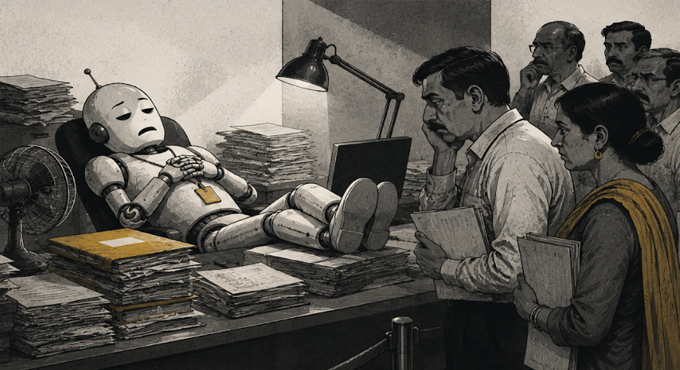
There was a time when visiting a government office almost always meant hearing the same responses. People were asked to check another file, visit another office, or bring one more document before their work could move forward. Today, the world has entered the age of Artificial Intelligence. AI can understand questions, hold conversations, and deliver answers within seconds. Governments are also embracing the technology to improve public services.
Yet, an interesting irony is now drawing attention. While the technology has changed, the experience often feels exactly the same. Instead of giving direct answers, some government AI tools simply respond with a PDF, a website link, or another portal. That has led many technology experts to ask an uncomfortable question: Has AI adapted to the government system, or has the government system reshaped the way AI behaves?
The Problem Isn’t AI
The Ministry of Electronics and Information Technology has recently selected six companies to develop AI capabilities for government departments. These companies are expected to build AI copilots, chatbots, and smart assistants that can make government services faster and more efficient.
On paper, it looks like a major step toward digital governance. However, experts argue that building advanced AI is only one part of the challenge. The bigger problem lies beneath the surface. Government departments have accumulated decades of scattered files, incomplete records, outdated databases, and disconnected information systems. Even the world’s smartest AI cannot provide accurate answers if the information it receives is inaccurate or poorly organized.
One Question… Completely Different Answers
Technology experts often point to the government’s AskSarkar chatbot as an example of this problem.
When users ask, “I want to start a startup. What government schemes are available?”, the chatbot reportedly suggests unrelated schemes such as Pradhan Mantri Awas Yojana and Swachh Bharat Mission instead of startup-focused programs. Likewise, when asked about India’s AI policy, the chatbot often responds with a 170-page PDF and a few website links instead of providing a clear, easy-to-understand explanation.
For ordinary citizens, the expectation from AI is simple: ask a question and receive a straightforward answer. Instead, they often end up searching through lengthy documents and multiple links on their own.
The Railway Chatbot Isn’t Very Different
Experts say the Railway Ministry’s AskDisha chatbot reflects the same limitations.
If a passenger asks the chatbot to book a train ticket, it does not complete the booking process itself. Instead, it redirects users to the IRCTC website, where they must manually finish the transaction. While AI serves as the entry point, the actual user experience remains largely unchanged from the old system.
Six Companies… But One Massive Challenge
The six companies selected by the government certainly have the expertise to develop world-class AI systems. They can build sophisticated copilots, conversational assistants, and intelligent automation tools.
However, experts warn that AI is only as good as the information it receives. If government data is outdated, incomplete, or inconsistent across departments, even the most advanced AI models will struggle to deliver reliable answers.
The Weight of Five Decades of Government Data
Government information in India has evolved over several decades. Some records have been digitized, while many continue to exist only in paper files. Different departments often maintain information in different formats, and some databases are updated regularly while others are not.
This fragmented data environment makes it extremely difficult for AI to understand the complete picture. As a result, users may receive incomplete, outdated, or even irrelevant responses despite interacting with advanced AI systems.
Every Department Works in Its Own World
Another major obstacle is the lack of coordination between government departments.
Information available with one department is often inaccessible to another. Similar work is sometimes repeated by multiple agencies, each maintaining its own independent database. Without seamless data sharing, AI cannot connect information across departments to provide comprehensive answers.
In other words, the technology is intelligent, but the information ecosystem it depends on is not.
The System Needs an Upgrade Before AI Does
Experts believe that India’s biggest AI challenge is not creating smarter chatbots. The real task is modernizing government data itself. That means digitizing old records, cleaning outdated information, connecting departmental databases, and ensuring that government data remains continuously updated.
Only after these structural issues are addressed can AI deliver the speed, accuracy, and convenience that citizens expect. Otherwise, even the most advanced AI systems may simply become digital assistants that keep pointing users toward another PDF, another website, or another government portal.
Finally…
Artificial Intelligence is designed to make information easier to access and public services more efficient. But technology alone cannot solve problems created by decades of fragmented data and disconnected government systems.
India’s AI ambitions will ultimately depend not just on better algorithms, but on better governance of information itself. The country’s digital transformation will truly begin only when government departments speak the same language, share the same data, and build systems that allow AI to help citizens instead of simply directing them to another document.
Related News
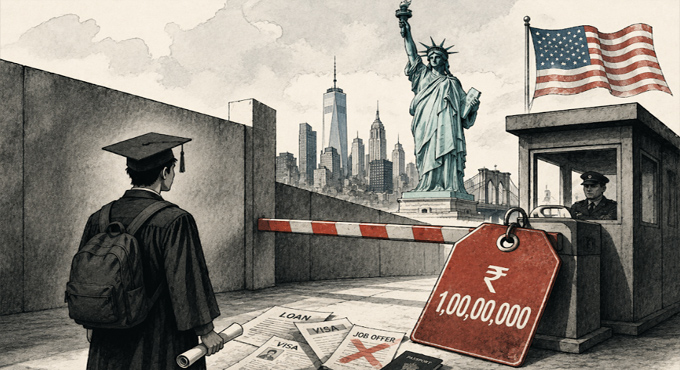
Want to work in the US? Pay ₹1 Crore? Trump’s New Twist

Why Has Sai Pallavi Suddenly Become a Target of Trolls?
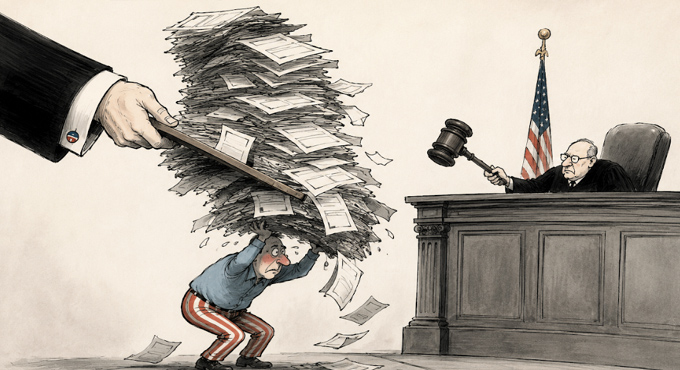
Trump Court Losses Could Cost U.S. Taxpayers Millions in Legal Fees

Is India Crazy About Spider-Man? These Box Office Numbers Tell the Story

The NTR Blueprint: Why Yash’s Ravana Is Striking a Chord