

Trump Court Losses Could Cost U.S. Taxpayers Millions in Legal Fees
- Published By: Tech Team
- July 30, 2026 / 06:30 PM IST


— Surya Prakash Josyula
A president signs an executive order in a matter of seconds. It is one signature, one document, and one political decision. But sometimes, the consequences of that signature do not end inside the White House. They travel through courtrooms, government agencies, and legal battles that last for months or even years. In the end, the biggest cost may not be political at all—it may be financial.
That is exactly the debate unfolding in the United States today. Since returning to office for his second term, President Donald Trump has signed a series of executive orders on issues ranging from immigration and foreign students to university research funding, food assistance, and transportation policies. Many of those decisions were immediately challenged in court, setting off one of the largest waves of legal battles in recent American history.
As those lawsuits progressed, federal judges examined whether the administration had acted within the limits of the law. In several important cases, courts ruled against the government, while many others continue to move through the legal system. For most people, that would seem like the end of the story. But in reality, it is only the beginning of another, far more expensive chapter.
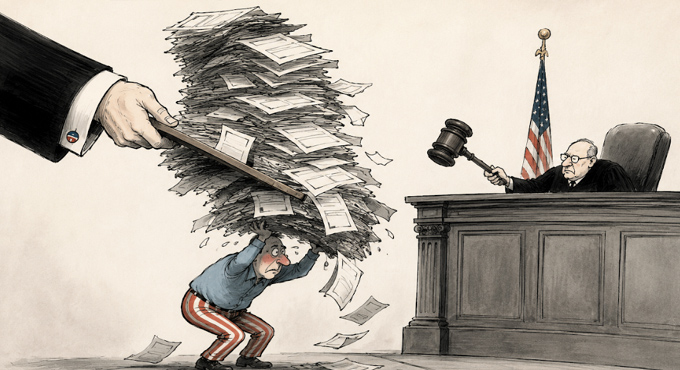
The new debate is not simply about legal victories or political defeats. It is about money. More specifically, it is about who should pay the lawyers who successfully challenged the government. The answer is surprising. In many cases, the bill does not go to Donald Trump personally. It does not go to the White House either. Instead, it may be paid by the U.S. government itself.
That is where the story takes an interesting turn. The government’s money is, ultimately, taxpayer money. Every dollar spent on legal fees comes from the same public treasury that is funded by millions of Americans through their taxes. What began as a political fight has therefore become a public debate about how taxpayer money is being used.
This is possible because of a law passed more than four decades ago. The Equal Access to Justice Act, enacted in 1980, was designed to make sure ordinary citizens, nonprofit organizations, and small businesses would not be discouraged from challenging the government simply because legal action was too expensive. If the government cannot substantially justify its position and loses in court, judges may order it to reimburse the winning side’s legal expenses.
That law is now becoming a significant financial issue for the Trump administration. According to Bloomberg’s analysis of court records, lawyers have already requested more than $2.5 million in fees across at least ten major cases. In one lawsuit involving federal research funding alone, attorneys are seeking more than $1.5 million. Several other disputes are still pending, which means the final amount could become even larger.
The irony has not gone unnoticed. The U.S. Justice Department is now asking courts to reduce some of those fee requests, arguing that taxpayer money must be protected. Critics, however, point out that the government had already spent public funds defending those same policies in court. If it must now pay the legal fees of the people who defeated it, taxpayers could effectively be paying twice for the same decisions.
That is why this story extends beyond Donald Trump or American politics. It raises a broader question about democratic governments and accountability. Governments have the authority to make bold decisions, but courts exist to determine whether those decisions comply with the law. When they do not, political consequences may fall on elected leaders. Financial consequences, however, are often carried by taxpayers.
Perhaps that is the real lesson behind this story. A government decision may take only seconds to sign, but its legal and financial consequences can continue for years. Long after the political headlines disappear, the bills may still be arriving. And in many cases, those bills are ultimately paid not by the people who made the decisions, but by the citizens who fund the government itself.