
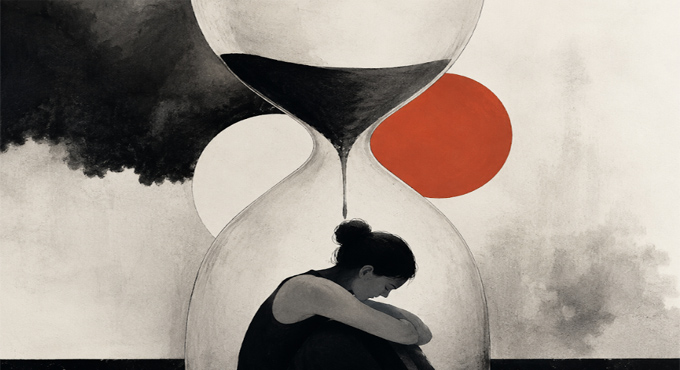
The June Period Mystery: Why Did Thousands of Women Experience the Same Change?
- Published By: techteam
- August 1, 2026 / 10:15 AM IST


— Surya Prakash Josyula
In June, thousands of women around the world started asking the same question.
“My period has never been this late.”
“I got my period twice in the same month.”
“Something felt different in June.”
At first, many believed it was just a personal issue. But within days, women from different countries began sharing almost identical experiences on social media. Their lifestyles were different. Their climates were different. Their cultures were different. Yet many were describing the same unusual changes in their menstrual cycles.
As conversations spread across Reddit, TikTok, Instagram, and X, what looked like a personal health issue quickly turned into a global discussion. It was no longer just another social media trend. It had become a scientific question.
Was this a real biological change happening across the world? Was it simply a “collective illusion” created by social media? Or was it a mystery that science has not fully explained yet?
The Conspiracy Theories That Took Over Social Media
As more women shared their experiences online, the internet did what it often does—people started searching for extraordinary explanations.
Some claimed powerful solar flares had changed Earth’s magnetic environment.
Others linked it to astrology, saying a new form of “matriarchal consciousness” was emerging.
A few even blamed experiments at the Large Hadron Collider (LHC) in Switzerland.
These theories spread rapidly across social media, but none of them are supported by scientific evidence.
Is Climate Change Affecting Women’s Bodies?
One explanation that scientists are taking more seriously is extreme heat.
June saw intense heatwaves in many parts of the world, including India. Record-breaking temperatures, rising air pollution, and harsh weather conditions placed enormous stress on the human body.
Could these environmental changes affect the menstrual cycle?
Scientists say it is possible—but they are also careful not to jump to conclusions.
What Does Science Actually Say?
This is where the story becomes more interesting.
Medical experts say there is no scientific evidence proving that women around the world experienced the same menstrual changes during June.
However, they also say such changes are entirely possible on an individual level.
When the body experiences extreme stress, high temperatures, illness, or poor sleep, it produces higher levels of the stress hormone cortisol. During stressful situations, the body may temporarily change hormone balance, which can affect ovulation and delay or alter menstrual cycles.
In other words, stress, heat, and illness can influence periods—but scientists cannot yet say they caused a worldwide pattern in June.
Why Do Periods Become Late?
There is no single reason why a period may be delayed.
According to medical experts, common causes include psychological stress, heatwaves, lack of sleep, sudden weight gain or weight loss, intense exercise, hormonal imbalance, PCOS, thyroid disorders, certain medications, long-distance travel, time-zone changes, and pregnancy.
The human body constantly adapts to changing conditions. Sometimes it temporarily changes the menstrual cycle as part of that natural response.
What Should You Do If Your Period Is Late?
The first thing is simple—don’t panic.
A delayed period once in a while is common and does not always indicate a serious problem.
If pregnancy is possible, taking a pregnancy test should be the first step.
If not, think about whether you’ve recently experienced unusual stress, travel, illness, poor sleep, or major lifestyle changes. Staying hydrated, getting enough rest, and maintaining healthy routines can also help.
However, if your periods remain irregular for two or three months, or if you experience severe pain or unusually heavy bleeding, you should consult a gynecologist.
Why Did This Trend Go Viral?
This may be the most fascinating part of the story.
Epidemiologists point out that people are much more likely to post about unusual experiences than normal ones.
Very few people go online to say, “Everything was normal this month.”
But someone saying, “My period has never been this late,” attracts attention immediately.
Once such posts begin trending, thousands of others with similar experiences start commenting, creating the impression that something extraordinary is happening everywhere.
This makes it difficult to separate a genuine population-wide pattern from the amplifying effect of social media.
Was There a Marketing Strategy Behind the Trend?
Another interesting question also emerged.
Some social media accounts connected to period-tracking apps posted videos and polls asking women whether their periods had changed in June.
That led some people to wonder whether these discussions were helping promote period-tracking apps.
At the moment, however, there is no evidence that this was a coordinated marketing campaign.
What does seem clear is that social media algorithms, viral posts, and trending videos helped transform a collection of personal experiences into a worldwide conversation.
The Bigger Picture
When we talk about climate change, we usually think about rising temperatures, melting glaciers, damaged crops, or extreme weather.
But scientists are increasingly asking another important question.
Could these environmental changes also be affecting the human body, especially women’s reproductive health?
The June period mystery has not given the world all the answers.
Instead, it has raised even bigger questions.
And perhaps that is why this story became much more than just another viral social media trend—it became a scientific mystery that researchers are only beginning to explore.
Related News

Twitter Is Becoming Hollywood’s Biggest Piracy Nightmare in telugu
American AI Behind China’s Military Weapons? The Shocking New Power Game!

Is a ₹100 Crore Poster Worth Another ₹3 Crore? The New Business Formula Behind Telugu Cinema

Spider-Man: Brand New Day Review, Did It Surpass No Way Home?

Why Are There So Many Real Estate Companies in Dubai? What’s Really Going On?