
Did Google Steal Millions of Books to Power Gemini? Authors Strike Back in Historic Copyright Battle
- Published By: Tech Team
- July 22, 2026 / 07:35 PM IST


— Surya Prakash Josyula
Imagine this. One day, while browsing books online, you come across a brand-new novel. The title instantly grabs your attention, the cover looks stunning, and the reviews are excellent. Without giving it a second thought, you order the book.
A couple of days later, it arrives. You sit down with a cup of tea and begin reading. As you move through the first few chapters, something starts to feel familiar. Suddenly, it hits you. This is not a new story at all. It is the novel you spent five years writing.
The character names have been changed. The locations are different. The title is new, and even a few scenes have been altered. But the ideas, the emotions, and the twists are all yours.
Angry and shocked, you begin searching for the author. You discuss it with your friends and decide to file a lawsuit. But then comes an even bigger surprise. The author does not exist. There is no real writer behind the book. It was written by an AI.
Now the question becomes much bigger. Who do you sue? The AI? The company that built it? Or the publisher that released the book?
This is not a real incident. However, it represents the biggest fear that writers around the world are expressing today. That same fear has now taken one of the world’s largest technology companies, Google, to a courtroom in the United States.
This is where the real story begins.
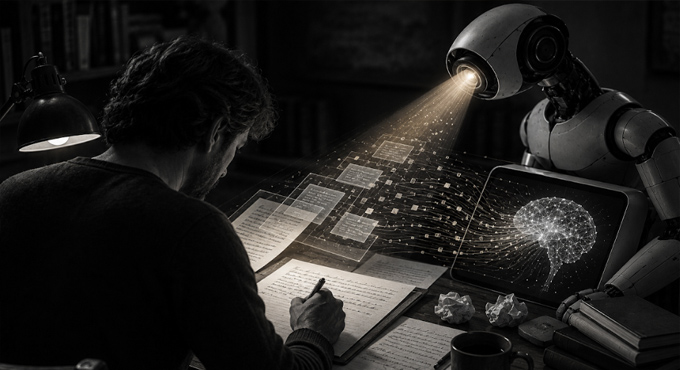
World-renowned publishers, including Hachette Book Group, Cengage, and Elsevier, along with several well-known authors, have filed a lawsuit against Google in a New York court. They allege that Google used millions of books available through services such as Google Books to train its Gemini AI models.
The lawsuit also argues that, in some cases, Gemini can generate content that resembles the writing style of certain authors. Google has denied these allegations and is defending its position in court. The case is still ongoing, and the final verdict has not yet been delivered.
Now imagine what this could mean in the future. Suppose someone asks an AI to write a psychological thriller in the style of Yandamoori. Within seconds, it produces a complete novel. Then someone asks for a romantic novel in the style of Yaddanapudi, a humorous novel in the style of Malladi, or a detective story like Madhubabu’s Shadow series.
The AI may never match the brilliance of those legendary writers. But if it continues creating content by closely imitating their writing styles, it raises a serious question about the future of creativity. That is exactly what many writers are debating today.
The real issue is not whether AI writes better than humans. A writer spends an entire lifetime developing a unique voice and style. What is the value of that style? Who owns it? If someone takes over a house that you spent years building, you would call it unfair. Many writers believe the same principle should apply to creative work. They see this as a form of creative theft.
Today AI can imitate the style of a novelist. Tomorrow it could copy the voice of a journalist, a YouTube scriptwriter, an advertising copywriter, or even a film screenwriter. Right now AI looks like a useful assistant. But if this trend continues, many fear that it could eventually become their biggest competitor. If that happens, fewer people may choose writing as a profession, and original creativity itself could slowly disappear.
This debate has divided the world into two sides. Google and other AI companies argue that they are simply learning from existing information. Writers, on the other hand, argue that AI companies are using their copyrighted work without permission and building profitable products from it.
If Google loses the case, Gemini is unlikely to disappear. However, the way AI models are trained could change significantly. AI companies may have to obtain licenses before using copyrighted books, or they may have to pay royalties to authors.
If Google wins, legal experts believe AI companies could gain greater legal freedom to use copyrighted material for AI training. That would raise another important question: how should writers’ rights be protected?
Although this lawsuit began in the United States, its impact is unlikely to remain there. It could influence writers, publishers, and AI companies across the world, including those working in regional languages.
After all, if someone steals a book, we call it a crime. If someone is inspired by an idea, we call it creativity. But if an AI reads millions of books and then starts creating new content that competes with the very writers it learned from, what should we call it?