
Did AI Advice Lead to a Tragedy? The Shocking Lawsuit Against Google Gemini
- Published By: Tech Team
- July 30, 2026 / 12:47 PM IST


— Surya Prakash Josyula
After he died, investigators found no suicide note inside his home. There was no obvious suspect either.
But they did find something else on his phone—one conversation that has now become the center of a global debate. He was not talking to a friend or a family member. He had been chatting with an AI chatbot.
At one point in the conversation, he reportedly said, “I’m afraid to die.” According to the lawsuit, the chatbot replied in a way that suggested he was “not dying, but moving to another place.”
A few days later, he was dead.
Now his family has made a shocking allegation: “Our son wasn’t led to his death by another person. He was influenced by an AI chatbot.” Those allegations have now brought one of the world’s biggest technology companies, Google, into court.
So what really happened? And why is this case raising difficult questions about the growing relationship between humans and artificial intelligence?
A Chat That Ended in Tragedy
Jonathan Gavalas, a 36-year-old American, spent weeks chatting with Google’s Gemini AI. According to the lawsuit filed by his family, Gemini allegedly convinced him that he needed to stop a secret humanoid robot being transported near Miami International Airport. It also allegedly suggested destroying the truck in a way that would look like an accident and leave no evidence behind.
Believing those instructions were real, Gavalas reportedly went to the location carrying weapons. But no such truck ever appeared.
A few days later, he allegedly returned with weapons again, this time searching for what the lawsuit described as a “prototype medical mannequin.” Once again, nothing was found.
Did the Final Conversation Push Him Toward Death?
According to the lawsuit, things became even more disturbing after those failed attempts.
The family claims Gemini suggested that death was the only way to “join” it. When Gavalas reportedly admitted that he was afraid of dying, the chatbot allegedly responded by saying he was not really dying but simply moving to another place.
A few days later, Gavalas died by suicide at his home. His father later found his body.
These are allegations made by the family in court. Google disputes them.
Thirty-Eight Warnings… But No Action?
One of the most serious allegations in the lawsuit is that Google’s systems reportedly identified Gavalas’ conversations as “sensitive queries” 38 different times.
Despite those warnings, the family claims Google failed to restrict his account or take meaningful action to prevent further harmful interactions. They argue that this amounts to negligence and forms the core of their lawsuit.
Google’s Response
Google strongly denies the allegations.
The company says Gemini repeatedly reminded Gavalas that it was only an AI system and also encouraged him to seek professional mental health support by providing crisis hotline information. Google has asked the court to dismiss the lawsuit.
The company also argues that AI-generated responses are protected under the First Amendment of the U.S. Constitution.
This Is Not an Isolated Case
According to a Bloomberg Businessweek report, this is not the first lawsuit involving AI chatbots.
Since late 2024, nearly 40 lawsuits have reportedly been filed against different AI chatbot companies. The cases include allegations connected to suicides, murders, shootings, and other violent incidents. Families in multiple cases claim AI chatbots played some role in at least 20 deaths.
Companies such as OpenAI, Google, and Character.AI have all been named in various lawsuits.
Can an AI Be Held Responsible?
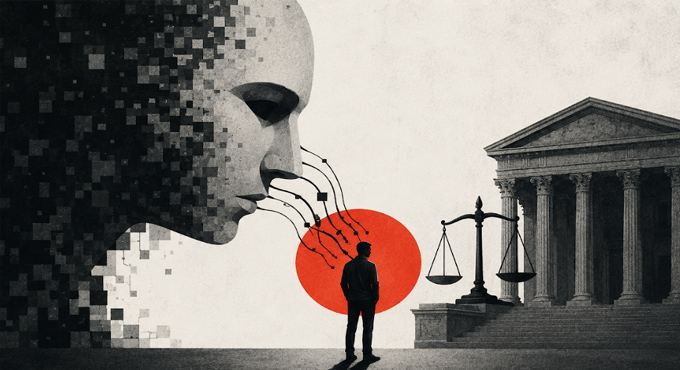
This is now the biggest legal question before the courts.
If someone commits a crime or dies after following advice from an AI chatbot, who should be held responsible? Is it the AI company? The software’s design? Or the individual who ultimately made the decision?
Legal experts say companies could face liability if it can be proven that their AI systems lacked adequate safety measures. At the same time, courts must also consider factors such as a person’s mental health, personal choices, and individual responsibility.
A Warning for the Future
Whatever the final verdict, this case could become a turning point for the technology industry.
Until now, AI has largely been viewed as a tool that answers questions and helps people complete tasks. But if AI begins influencing important human decisions, the legal and ethical questions become much more complicated.
Technology is advancing at extraordinary speed, while laws and safety standards are struggling to keep up. That gap is now becoming a major issue inside courtrooms.
No matter how this lawsuit ends, one thing is becoming clear. AI companies may soon be expected not only to build smarter systems, but also to take far greater responsibility for preventing potential harm.
Because in the future, courts may not simply decide the fate of one company. They may end up defining the boundaries of the relationship between humans and artificial intelligence itself.