
Accused of Making People Addicted: Facebook and Instagram Face Major EU Case
- Published By: Tech Team
- July 15, 2026 / 10:46 AM IST


— Surya Prakash Josyula
Just be honest for a moment.
Have you ever picked up your phone thinking, “I’ll spend just five minutes on Facebook or Instagram,” only to realize an hour has passed while you’re still scrolling?
One Reel…
Another Reel…
One more video…
A notification…
Before you know it, you have no idea where the time went.
According to the European Union (EU), this may not be just your habit. The EU has made serious allegations against Meta, saying that Facebook and Instagram were designed to keep users glued to their screens for longer periods.
On July 10, the European Commission, in its preliminary findings, said Meta may have violated the Digital Services Act (DSA) through the addictive design of Facebook and Instagram.
If these allegations are confirmed, Meta could face a fine of up to 6% of its global annual revenue. Based on current estimates, that could be around $12 billion. However, this is not a final decision. These are only preliminary findings, and Meta has rejected the allegations and is challenging them in court.
This Case Is Not About Posts… It’s About Facebook’s Design
The main issue in this case is not the posts or videos people see on Facebook or Instagram. It is about how the platforms are designed.
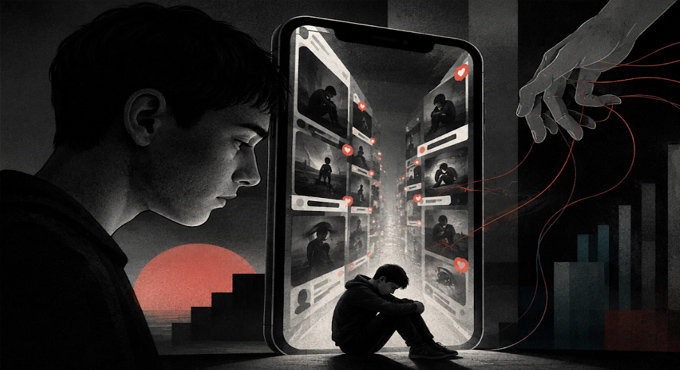
The European Commission alleges that Meta intentionally uses certain design features to keep users from leaving the app and encourage them to keep scrolling.
1. Infinite Scroll
In the past, web pages had an end.
But Facebook and Instagram do not.
You scroll down…
Another post appears.
You scroll again…
Another video appears.
There is no real stopping point.
As a result, what starts as “just one more post” can easily turn into hours of scrolling.
2. Autoplay Videos
As soon as one video ends, another starts automatically.
You don’t even have to press the play button.
Before you realize it, another piece of content is already playing.
3. Constant Notifications
“Your friend posted a new photo…”
“You got a new Like…”
“There’s a new video for you…”
According to the European Commission, these notifications are not just meant to inform users. They are also designed to bring them back into the app.
4. Algorithms That Show What You Like
Did you watch one video?
Then you are shown several more similar videos.
Interested in a particular topic?
You will continue seeing similar content.
The Commission says Meta’s recommendation system identifies what users like and keeps showing similar content to increase the time they spend on the platform.
Is the Brain Going Into “Autopilot Mode”?
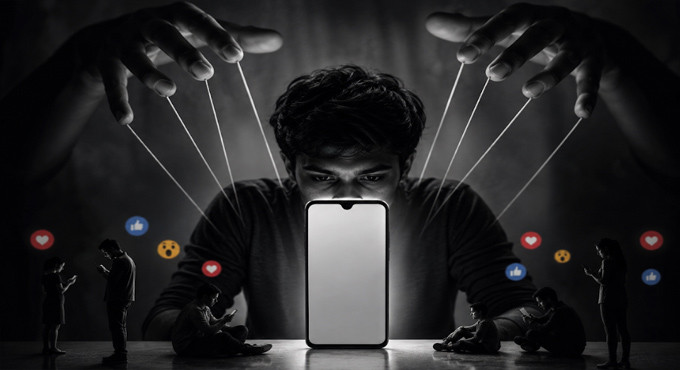
According to the European Commission, these four design features together can push users into an “autopilot mode.”
The Commission says these features may have a greater impact on children, teenagers, and people who spend long hours on social media.
It also said that existing Screen Time and Time Limit tools are not effective because users can easily dismiss them and continue scrolling.
That is why the Commission has asked Meta to disable Autoplay by default, limit Infinite Scroll, and introduce Screen Break features that genuinely help reduce usage.
Why Did Meta Go to Court?
Meta has completely rejected the European Commission’s allegations.
The company has also challenged the Irish media regulator’s investigation in the Irish High Court, arguing that the regulator has exceeded its legal powers.
The case is still under investigation.
Meta will have the opportunity to present its defense before a final decision is made.
So far, no fine has been imposed.
Why Does This Matter to Us?
Although this case is happening in Europe, it is relevant to millions of Facebook and Instagram users in India as well.
Many people begin their day by opening Facebook or Instagram.
Many spend hours watching Reels after planning to use the app for just a few minutes.
Others immediately check their phones whenever a notification appears.
These habits have become part of everyday life.
That is why this case is not just about Meta.
It has started a much larger discussion about how social media platforms influence the way we spend our time.
Finally…
After reading this article, take a moment to check your phone’s Screen Time.
See how much time you spend on Facebook and Instagram every day.
Then ask yourself one question…
Are you opening Facebook… or is Facebook opening you?