

US Court Battle Clouds $110 Billion Hollywood Merger
- Published By: Tech Team
- July 14, 2026 / 02:30 PM IST


By Surya Prakash Josyula
If a major announcement suddenly declared that Geetha Arts, Mythri Movie Makers, DVV Entertainment, Haarika & Hassine, and Sithara Entertainments were merging into a single company, it would immediately trigger a debate across the Telugu film industry. Questions about competition, creative freedom, opportunities for new filmmakers, and the future of small production houses would dominate discussions. Many would wonder whether a single corporate entity would eventually decide which films get made, which actors receive opportunities, and which stories reach theatres.
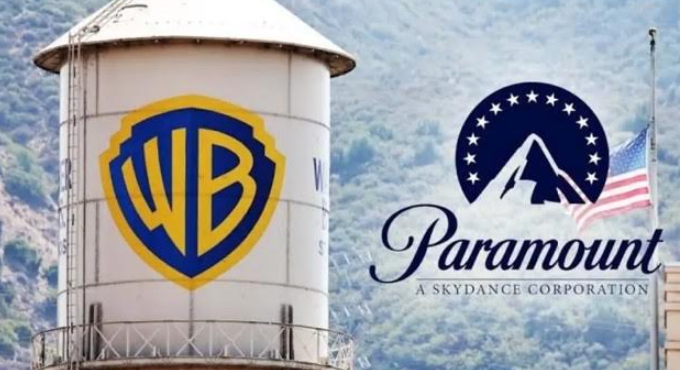
While such a scenario remains purely hypothetical in Telugu cinema, a remarkably similar debate is now unfolding in Hollywood. A proposed $110 billion merger between Paramount and Warner Bros. Discovery has evolved far beyond a corporate transaction, becoming one of the most significant legal and political battles in the global entertainment industry.
The merger comes at a time when Hollywood’s traditional business model is under unprecedented pressure. The rapid rise of streaming platforms such as Netflix, Amazon Prime Video and Apple TV+, declining theatrical attendance, rising production costs and the growing influence of artificial intelligence have fundamentally changed the economics of filmmaking. Faced with these challenges, several legacy studios increasingly see consolidation as a strategy for survival rather than expansion.
If the proposed merger is completed, some of the world’s most valuable entertainment properties—including Superman, Batman, Harry Potter, Mission: Impossible, Top Gun and Transformers—would come under a single corporate structure. Supporters argue that such scale is necessary to compete with technology-driven entertainment giants. Critics, however, believe that concentrating so much creative and commercial power within one company could weaken competition across the industry.
Those concerns have now moved from industry discussions into the courtroom. Although the merger has already received clearance from US federal regulators, a coalition of state attorneys general led by California is preparing to challenge the transaction under American antitrust laws. Their argument is that the merger could significantly reduce competition by creating an entertainment company with unprecedented market influence.
Antitrust laws are designed to prevent excessive market concentration and ensure that consumers continue to benefit from competition. Regulators fear that when a single company acquires too much control over a market, it can influence pricing, limit consumer choice and reduce opportunities for competitors. Similar concerns have been raised in India in recent years during large media transactions, including the proposed Zee-Sony merger.
Opposition to the deal is not limited to regulators. Hollywood’s creative community, including actors, writers and producers, fears that fewer major studios could translate into fewer buyers for original stories, reduced employment opportunities and greater difficulty for emerging filmmakers. Theatre owners have also expressed concerns that consolidation could eventually reduce the number of theatrical releases, even though Paramount has publicly stated that the combined company intends to release around thirty films annually.
Paramount maintains that the merger is essential to remain competitive in a rapidly evolving entertainment landscape. The company argues that combining financial resources, production capabilities and intellectual property will enable it to compete more effectively with global streaming companies that have transformed audience behaviour over the past decade.
Although the transaction is taking place in the United States, its consequences could extend well beyond Hollywood. Any shift in the production and distribution strategies of one of the world’s largest entertainment companies could eventually influence international film releases, regional language dubbing, streaming content availability and licensing agreements in markets such as India. While such outcomes remain speculative, industry observers believe the merger has the potential to reshape the global entertainment ecosystem.
The financial stakes are equally significant. The combined company is expected to carry approximately $80 billion in debt, while prolonged legal challenges could substantially increase the overall cost of the transaction through contractual delay payments. These financial pressures further underline how critical the merger has become for both companies.
Should the courts eventually block the merger, companies such as Netflix, Disney and Amazon could find themselves facing one less powerful competitor. Conversely, if the deal proceeds, Hollywood will witness the creation of one of the largest media companies in its history, potentially redefining the balance of power across the global entertainment industry.
More than a dispute over a corporate merger, this case has become a test of how much consolidation regulators are willing to permit in an industry increasingly dominated by a handful of global players. The outcome is likely to influence not only the future of a $110 billion transaction, but also the competitive landscape of global entertainment for years to come.