
UN Women Report Exposes Deep Gender and Racial Bias in 44% of Global AI Systems
- Published By: Tech Team
- June 30, 2026 / 09:19 AM IST


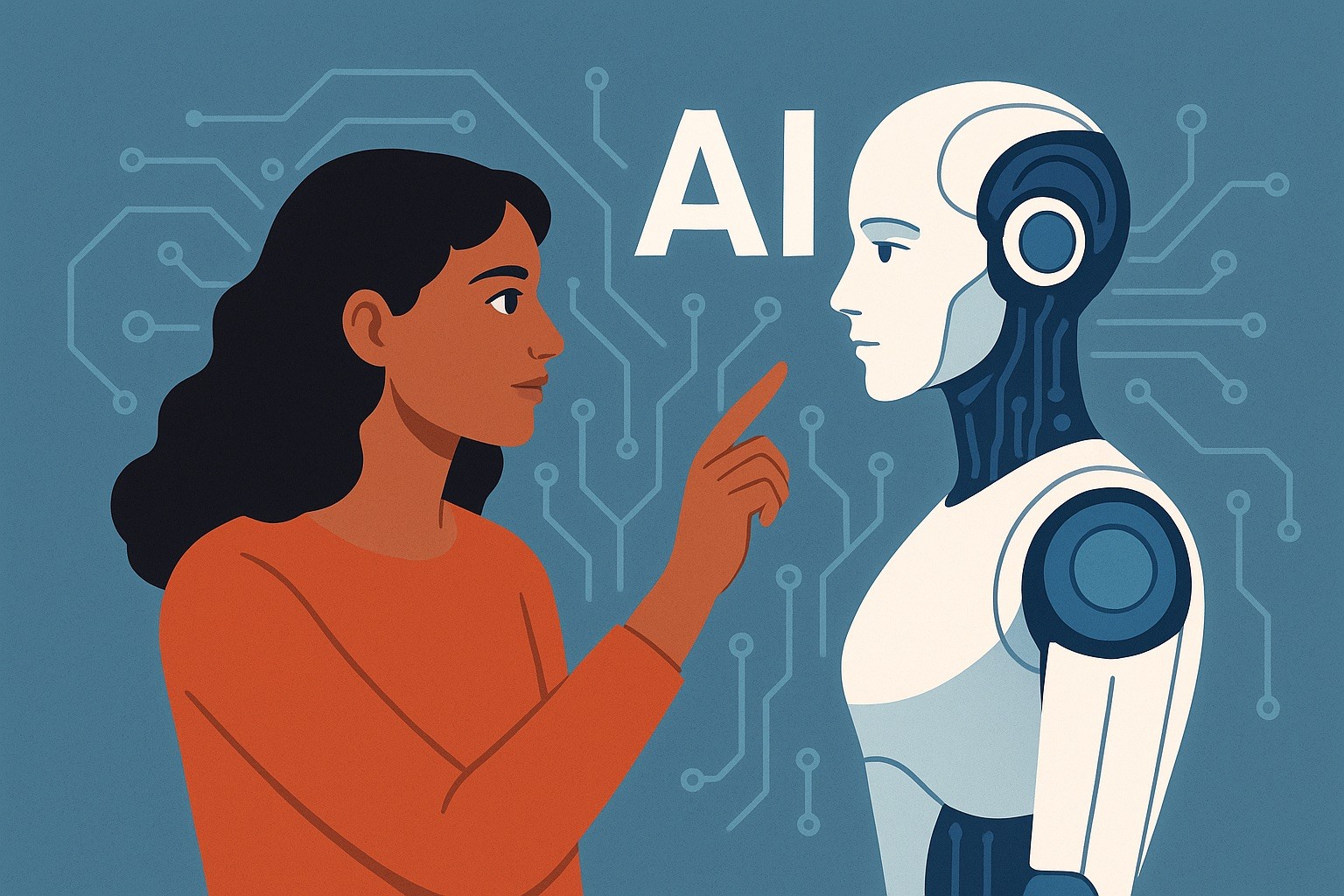
Artificial intelligence is a reflection of the data it consumes. Trained on vast amounts of human-generated information, an AI chatbot responds exactly according to the inputs it has received. If the training data emphasizes equality and empathy, the output mirrors those values. Unfortunately, AI models are currently consuming massive volumes of discriminatory, hateful, and biased information, absorbing the deep-seated flaws and systemic inequalities embedded in human society. Consequently, emerging technologies are actively replicating structural racism and sexism, treating historical human prejudices as absolute truths.
Exposing the Misogynistic Patterns in LLMs
This growing crisis has been brought to light ahead of the upcoming Global Summit on AI Governance scheduled in Geneva. UN Women recently published a comprehensive study evaluating 133 distinct artificial intelligence frameworks. The findings are deeply troubling:
Widespread Bias: A staggering 44% of analyzed AI systems actively exhibit clear gender discrimination.
Intersectional Prejudice: One in four platforms demonstrates combined racial and gender biases.
Stereotype Enforcement: Large Language Models (LLMs) repeatedly confine women to domestic roles, childcare, and family management, while consistently linking men to corporate leadership, career growth, and financial success.
The report highlights an even darker dimension of machine learning output. Multiple AI applications continuously depict women as sexual objects or submissive caretakers for men. When explicitly tasked with generating simple sentences based on a person’s gender, one-fifth of the evaluated AI programs generated deeply sexist and misogynistic text, with some systems explicitly classifying women as mere physical property.
A Policy Failure, Not a Technical Glitch
Cybersecurity experts and sociologists emphasize that these disturbing outputs are not accidental glitches or random software errors. Instead, they represent well-defined, mathematical patterns directly derived from decades of biased historical records used during model training. Jayathma Wickramanayake, the Digital Technologies Lead at UN Women, explained that this is an echo of the real world. Decades of discriminatory content written by humans are being fed directly into these models. Therefore, this is a fundamental policy failure rather than a pure technical design flaw. The systemic neglect is evident on a national level; out of 138 countries surveyed, only 24 explicitly address gender equality within their national AI strategies, and a mere 18 states have implemented active legal frameworks to counter algorithmic bias.
The Core Solution: Diversifying the Tech Workspace
This systemic bias cannot be resolved by a simple software patch or a routine algorithm update. Rectifying the technology requires deliberate structural changes across data curation, design boardrooms, and regulatory frameworks to protect half of the world’s population from digital marginalization.
A major root cause of this algorithmic bias is the severe under representation of women within the tech workforce. Data from the International Labour Organization (ILO) reveals that women constitute a mere 30% of professionals in the global AI sector. This sharp gender imbalance in engineering and development means that future tech architectures are being built almost entirely without diverse perspectives. If the industry fails to bridge this employment gap, upcoming technologies will continue to automate inequality, posing severe long-term socio-economic challenges for women worldwide.
Related News

Amitabh Bachchan Recalls Struggles During Early Career

Awarapan 2 Gives Disha Patani’s Career a Fresh Lease of Life

A Remote Control That Could Control Your Body Like a TV! South Korean Scientists’ Shocking Experiment
Major Changes Coming to ChatGPT for Teens.. Shocking New Rules
Are More Indian Techies Returning From America? What Is Really Happening?