

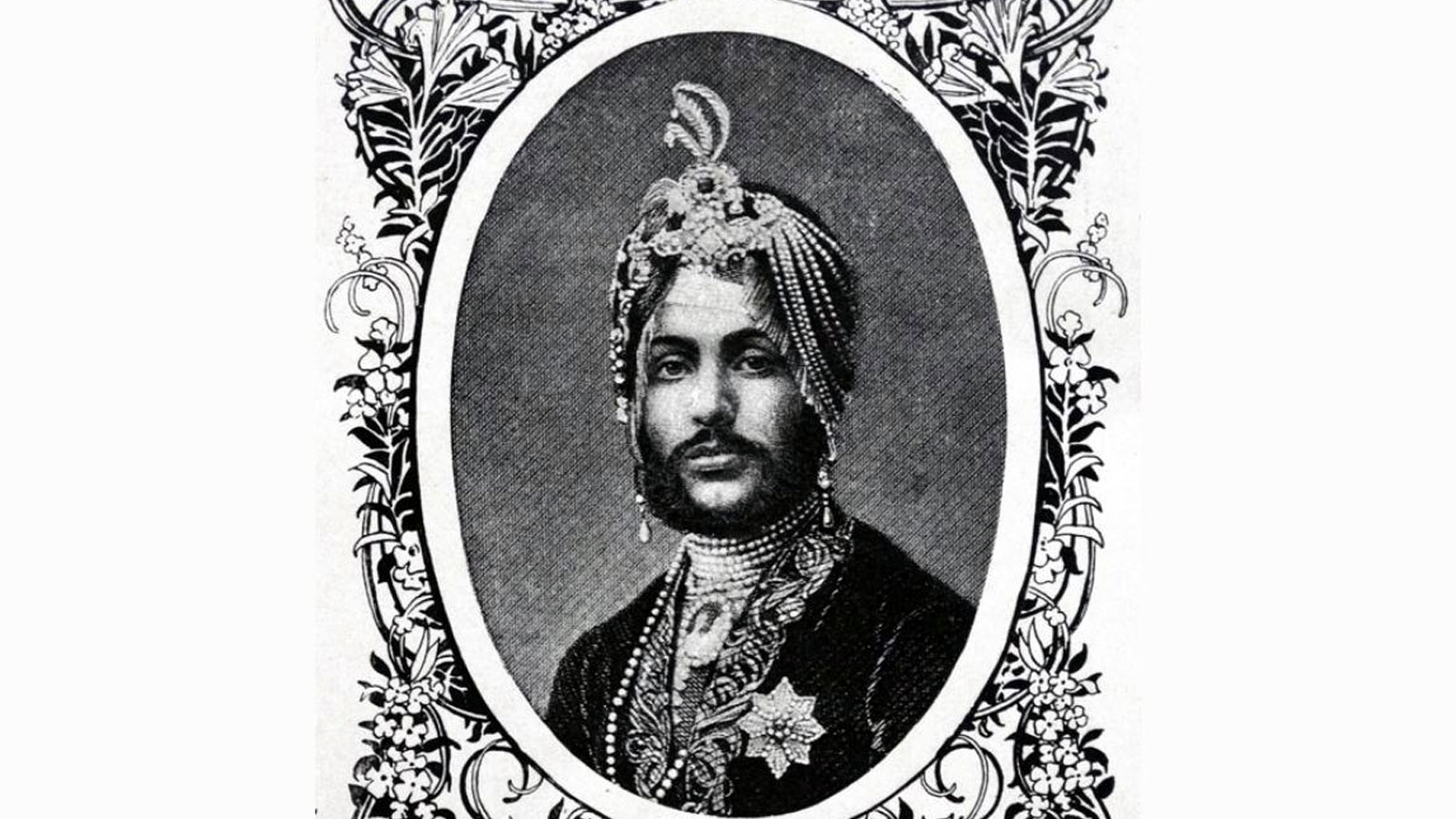
The Emperor of Hearts: How Maharaja Ranjit Singh United a Fractured Land
- Published By: techteam
- June 21, 2026 / 11:28 AM IST


When BBC History Magazine conducted a global poll to identify the single greatest leader in human history, the results took Eurocentric historians by surprise. Topping a list that featured Abraham Lincoln, Winston Churchill, and Julius Caesar was a 19thcentury ruler from the Indian subcontinent: Maharaja Ranjit Singh.
Securing more than 38% of the global vote, the founder of the Sikh Empire was recognized not merely for the territory he conquered, but for the profound, enlightened manner in which he governed.
The legacy of the “SherePunjab” (The Lion of Punjab) is exceptionally resonant. His life offers a timeless manual on statecraft, demonstrating how a ruler can wield absolute power to uplift, rather than suppress, a multiethnic society.
From Chaos to Cosmos
To appreciate the magnitude of Ranjit Singh’s achievements, one must understand the volatile landscape of late 18thcentury India. Following the decline of the Mughal Empire, Punjab disintegrated into a fractured collection of twelve independent, warring Sikh military fraternities known as Misls. Seizing upon this internal chaos, Afghan invaders launched frequent, devastating raids through the Khyber Pass, plundering cities and destabilizing the populace.
Born in 1780, Ranjit Singh survived a childhood bout of smallpox that cost him the sight in his left eye. He lost his father at just 12 years old and took over the leadership of his family’s Misl shortly thereafter. What followed was a masterclass in political consolidation.
Through strategic marriages, brilliant diplomacy, and decisive military action, he united the fractured factions. In 1801, at the age of 21, he was proclaimed the Maharaja of Punjab, building an empire that stretched from the borders of Afghanistan to the edges of Tibet.
Crucially, during his coronation, he refused to sit on a grand throne, opting instead to sit crosslegged on a simple carpet. He declared that his true role was not a master, but a servant of the people under divine command. His empire was built on unity, not mere conquest.
Inclusivity as State Policy
The most extraordinary aspect of Ranjit Singh’s fortyyear reign (SarkariKhalsa) was its radical secularism. Though he was a deeply devout Sikh, his government was fundamentally cosmopolitan. He understood that a sustainable empire could not be built on majoritarian triumph; it required the active buyin of every community.
1. Meritocracy Over Monarchy
The Maharaja completely dismantled caste and religious barriers within his administration, filling the highest echelons of state power based strictly on capability:
The Prime Minister: Raja Dhian Singh, his most trusted administrator, was a Dogra Rajput Hindu.
The Foreign Minister: Fakir Azizuddin, a brilliant diplomat who expertly handled delicate negotiations with foreign powers, was a devout Muslim.
The Finance Minister: Diwan Dinanath, who managed the complex revenue models of the empire, was a Kashmiri Brahmin.
2. A Compassionate Legal Code
At a time when European powers were executing citizens for minor thefts, Maharaja Ranjit Singh banned the death penalty entirely within his domain. Under his fourdecade rule, not a single person was given capital punishment.
His legal system focused heavily on rehabilitation and financial restitution rather than physical torture. Historians note that even during intense military campaigns, his standing orders to his generals were absolute: no civilian was to be harmed, no standing crop destroyed, and no place of worship desecrated.
Cultural Patronage and Spiritual Reverence
The Telugu community possesses a profound historical reverence for sacred architecture and the preservation of ancient heritage. Ranjit Singh’s actions as a patron of faith provide an inspiring parallel to this cultural ethos. His generosity knew no theological boundaries, treating all religious groups with equal reverence.
He was the visionary ruler who donated over 500 kilograms of gold to line the marble facades of the Sri Harmandir Sahib in Amritsar, transforming it into the worldrenowned Golden Temple. Yet, his reverence for India’s spiritual landscape extended far beyond his own faith.
Learning of the historical and spiritual weight of the Kashi Vishwanath Temple in Varanasi—one of the holiest shrines dedicated to Lord Shiva—the Maharaja donated an immense cache of pure gold to plate its towering spires. He similarly patronized the Jawalamukhi temple in Himachal Pradesh, providing gilded roofs, and made massive grants of land and revenue to ancient Islamic mosques across Lahore. In his empire, state funding for the restoration of a house of God was determined by its historical importance to the local community, not the personal faith of the monarch.
The Modernized Shield
Ranjit Singh’s administrative benevolence was backed by a military apparatus of astonishing sophistication. Recognizing that the British East India Company was systematically colonizing the rest of India through superior Western tactics, the Maharaja set out to beat them at their own game.
He established the FaujiKhas (The Royal Brigade), a highly trained, modernized wing of the army. He actively recruited veteran French, Italian, and German officers—many of whom had commanded brigades under Napoleon Bonaparte at the Battle of Waterloo—to train his troops in modern infantry formations and advanced artillery usage.
Aspect of Military Traditional Indian Armies Ranjit Singh’s FaujiKhas
Command Structure Feudal, based on caste and nobility Meritbased, trained by European veterans
Primary Force Cavalrydependent, vulnerable to artillery Highprecision infantry and elite artillery units
Weaponry Disparate, often outdated firearms Standardized, locally manufactured Frenchpattern muskets
Because his military was so formidable, the aggressively expansionist British East India Company blinked. Recognizing that a conflict would be ruinously expensive, the British signed the Treaty of Amritsar in 1809, respecting the Sutlej River as an unbreakable geopolitical border.
For four decades, while the rest of the Indian subcontinent fell piece by piece to colonial maneuvering, Punjab remained an independent, proud, and completely impenetrable sovereign superpower. He successfully halted both Western colonization and centuryold northwestern incursions simultaneously, bringing unprecedented peace and economic prosperity to the region.
Why the Lion Still Roars
The ultimate metric of Maharaja Ranjit Singh’s greatness—and the reason he dominated the global poll centuries after his passing—is the enduring peace he brought to an area historically defined by bloodshed. His era was a golden age of high literacy, economic abundance, flourishing international trade, and profound, unshakeable communal peace. The global recognition highlights a crucial truth: greatness is not measured by the number of enemies defeated, but by the number of lives uplifted.
As global societies in the 21st century grapple with deep internal fractures and polarizations, the “Lion of Punjab” stands out as a beacon of light. His life remains a powerful, timeless reminder that true power does not lie in building monuments to a ruler’s ego. It lies in building a shield of security, prosperity, and human dignity around your people.
Related News

Qualities of a Winner by Yandamoori Veerendranath

The Inside-Out Glow 6 Essential Nutrients for Radiant Skin

Corporate Leader Turned Polar Pioneer: The Extraordinary Journey of Satish Gogineni

FIGHTING TYRANNY AGAINST WOMEN WITH TECH

Advancing Precision Oncology Novartis Launches India’s First Approved Radioligand Therapy for Prostate Cancer