
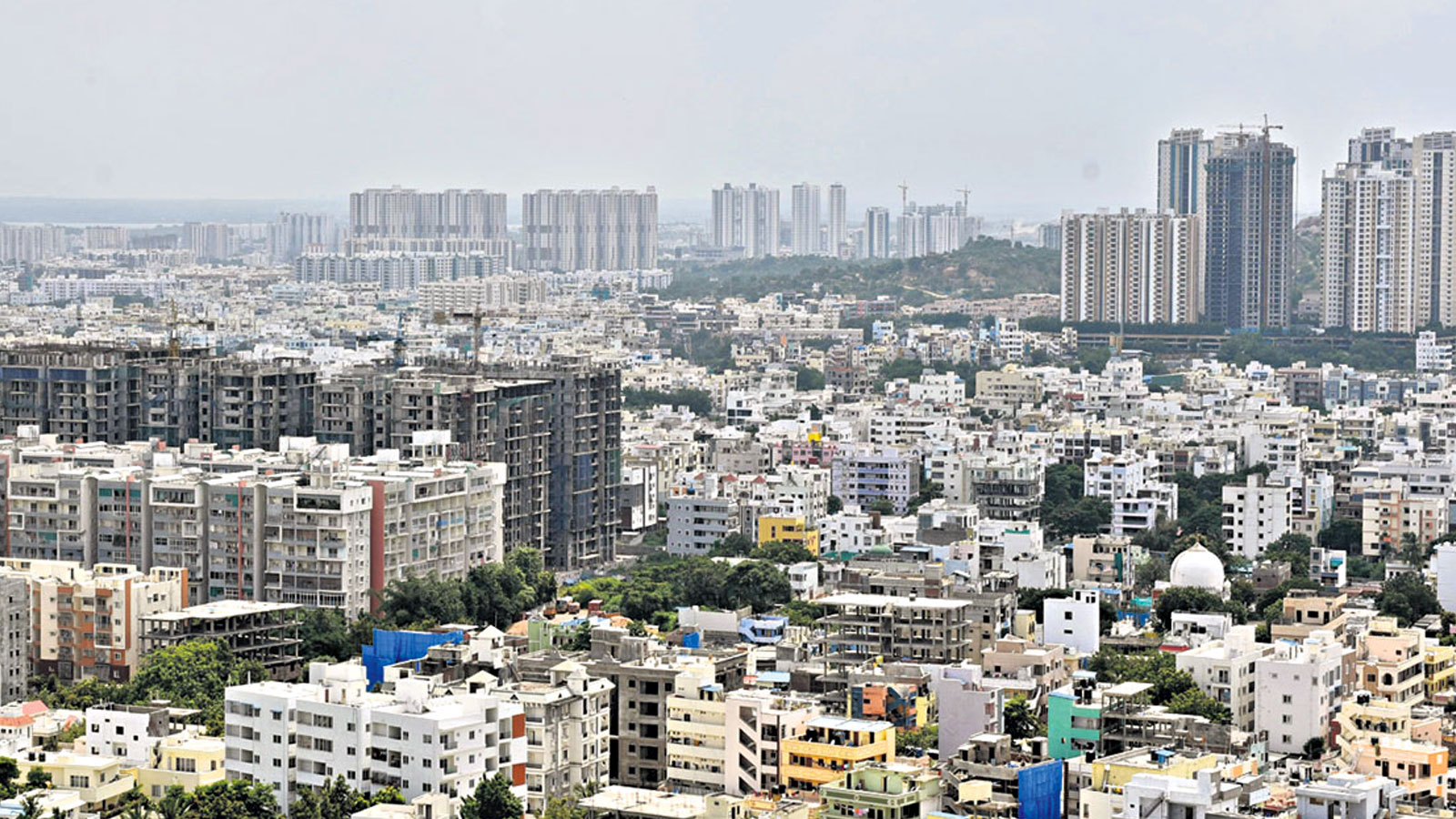
The Looming Real Estate Crisis: Unsold Flats in Hyderabad
- Published By: shivaduvvuru
- June 21, 2026 / 11:46 AM IST


A major real estate crisis is quietly unfolding in Hyderabad. Once hailed as one of India’s fastest-growing property markets, the city is now grappling with a staggering oversupply of residential properties. According to Dr. Nandi Rameswara Rao, a prominent real estate expert with over 35 years of experience in the local market, overall lakhs of apartments are currently sitting empty or stalled in pipeline phases across the metropolitan area.
This startling revelation dismantles the conservative social media rumors claiming that only 50,000 plus flats are facing a slowdown. The ground reality is far more severe, bringing what industry insiders describe as a phase of “blood and tears” for builders, investors, and agents alike.
Anatomy of the Glut: Where are the Empty Flats?
The crisis spans both premium high-rise luxury projects and standalone multi-story buildings across Hyderabad.
The High-Rise Clusters: In Western Hyderabad’s premier IT corridors—specifically Kokapet, Narsingi, Financial District, and Tellapur—sky-high land prices have driven aggressive vertical development. In Kokapet alone, thousands of high-rise flats are approaching final construction stages, with tens of thousands more in various pipeline stages. Land auction values in these areas soared from ₹39 crore per acre in 2019 to an astronomical ₹237 crore per acre recently, forcing builders to construct massive high-rise complexes to recover costs.
The Standalone Market: Outside the luxury zones, thousands of mid-tier standalone buildings (typically 5 to 10 stories with roughly 20–25 flats each) populate areas like Kukatpally, Bachupally, Nagole, Uppal, and Patancheru. Across these satelite townships, hundreds of thousands of individual 2BHK and 3BHK flats are struggling to find takers.
Why Has the Market Ground to a Halt?
Several powerful geopolitical, macroeconomic, and local factors have converged to trigger this sudden freeze in demand:
1. Tech Layoffs and Income Insecurity
Hyderabad’s real estate boom was aggressively fueled by the IT elite. However, widespread global tech layoffs, shifts in corporate strategies under changing international leadership, and the rise of Artificial Intelligence (AI) replacing entry-level tasks have created deep job insecurity. Tech professionals earning high monthly salaries, who previously drove the luxury market, are delaying big-ticket purchases out of fear that their income could evaporate overnight.
2. The Affordability Disconnect
Skyrocketing land rates have forced the price of premium 2,000+ sq. ft. high-rise apartments up into the ₹2 crore to ₹5 crore range. To realistically afford a ₹2 crore to ₹4 crore apartment with a standard 25% downpayment and loan EMIs, a buyer needs a stable annual income of ₹50 lakh to ₹60 lakh (roughly ₹4 lakh per month). The pool of buyers meeting these financial criteria has dramatically shrunk.
3. Surge in Distress Resales
The panic isn’t isolated to new buyers. Tens of thousands of IT employees and also investors who bought properties during the peak of the market (2014–2024) are now finding themselves unable to service their massive home loans due to job losses or salary cuts. Consequently, a massive wave of secondary “distress sales” has hit the market, with desperate sellers trying to liquidate their flats at significant losses, further undercutting builders.
4. The Impact of “HYDRAA” and Policy Shifts
The transition to the new state administration brought strict civic enforcement under HYDRAA (Hyderabad Lakes & Water Management, Development Authority), which clamped down on illegal encroachments near water bodies (FTL and buffer zones). While the expert notes that the panic has recently eased as the government refined its approach, the initial fear of demolition temporarily paralyzed buyer confidence, prompting people to put their money on hold.
Is This a Buyer’s Paradise or a Trap?
Despite the staggering drop in transactions, base property prices are unlikely to crash drastically because builders are already operating on razor-thin margins due to high historical land costs. Instead of dropping prices, developers are offering heavy compromises, such as delayed EMI schemes, gold, or luxury cars to attract buyers.
For genuine end-users looking to purchase a home to live in, Dr. Rameswara Rao suggests that this stagnation represents a rare, highly lucrative window of opportunity.
“Prices haven’t risen significantly over the past two years, and builders are desperate to negotiate. This is a 120% right time to buy if you have financial stability—you will likely never see these flexible bargaining conditions again.”
However, the expert issues a stern warning regarding “Pre-Launch” schemes where developers promise massive discounts before obtaining RERA (Real Estate Regulatory Authority) approvals. Buyers are urged to avoid paying 90% upfront on non-approved projects, as an estimated 80% of unestablished developers are currently struggling to deliver on time.
Before investing lifetime savings, buyers must perform rigorous due diligence: verify the RERA number online, check legal titles, inspect the Encumbrance Certificate (EC), and ensure the selling entity explicitly matches the registered landowner or joint-venture partner.
Summary Checklist for Hyderabad Property Buyers
Target Approved Projects: Look exclusively for properties with active RERA, GHMC, or HMDA approvals.
End-Use vs. Speculation: Buy for personal residence or long-term family assets; avoid short-term trading or speculative flipping in this market.
Exercise Extreme Caution with “Gimmicks”: Do not let free cars, gold, or “no EMI for a year” schemes mask an unstable builder or unapproved project.
Prefer Land for Long-Term Gains: If investing purely for capital appreciation, secure clear-titled land in gated communities over high-rise apartments, which degrade in value quicker.
Related News

CM Revanth Reddy pays rich tributes to Mahatma Gandhi
AM Green named winner of Asian lot in H2Global auction funded by German government

HCL Group’s 50th Anniversary Celebrations Continue in Hyderabad with Devi Sri Prasad Concert

Shriram Group awards scholarships to class 10 toppers from govt school across Telangana constituencies

KLH Aziznagar Brings Global Experts Together to Explore AI and Industrial IoT Security