
When Humanity Lost: America’s Bombs, Iran’s Cruelty, and the Cost of a Corps
- Published By: techteam
- June 19, 2026 / 04:16 PM IST


“The Bullet That Haunted Even After Death!”
The son died… but the bill for the bullet that killed him did not leave the family.
There can be no greater tragedy for a mother than losing her child. At such a time, what she needs most is comfort and a shoulder to lean on. Instead, authorities looked at her like a debtor. The government placed a cold piece of paper in her trembling hands.
“Pay the cost of the bullets used to kill your son… then take the corpse away,” they said.
Wars kill people. But some governments go a step further—they kill the dead over and over again. While fixing a price for the bullet that took a life is a profound act of cruelty, collecting that price from the victim’s grieving family is entirely subhuman.
What actually happened?
The Blood on the Streets of Iran Even before external conflicts escalated, intense internal protests erupted across Iran. Domestic protestors revolted against severe economic hardships and skyrocketing inflation.
There were thousands of unarmed citizens on the streets that day. No one carried weapons. No one had war in their eyes. But everyone shared the same question in their hearts: “Why have our lives turned out like this?”
They marched in search of answers. Fathers brought their sons; brothers walked side by side. Others told their mothers waiting at home, “I will be back soon,” and left. But what echoed through the streets that afternoon was not the voice of the people—it was the sound of state-sponsored gunfire.
Everything changed in a single moment. The young man who was a cherished family member in the morning became a mere statistic by evening. The son expected at the dinner table was found cold in a mortuary.
Hearing the news, his mother came running, begging through tears to see her son’s face one last time. But what faced her there was not solace. The words that fell on her ears were more terrifying than death itself: “Pay the bullet fee, or the body stays here.”
What is the “Bullet Fee”?
- The Bullet Fee (Hak-e-Tir): A dystopian policy where the government demands that families of executed or shot protestors reimburse the state for the cost of the ammunition used to kill their loved ones. If the family cannot or will not pay, the government strictly refuses to hand over the corpse for burial.
The Math of Cruelty
The Cost per Bullet: Authorities demanded approximately $480 to $1,720 per bullet (equivalent to about ₹40,000 to ₹1,40,000 in Indian Rupees).
The Multiplier: If two or three bullets pierced a person’s body, the state calculated the combined cost of all bullets and strictly enforced collection.
To put this into perspective, the monthly salary of a common laborer in Iran is often less than $100 (nearly ₹8,000). Under such devastating economic conditions, forcing impoverished, grief-stricken families to fund the ammunition that slaughtered their own children stands as one of the cruelest human rights anomalies in modern history.
Caught in the Crossfire: The Global Toll on Common People
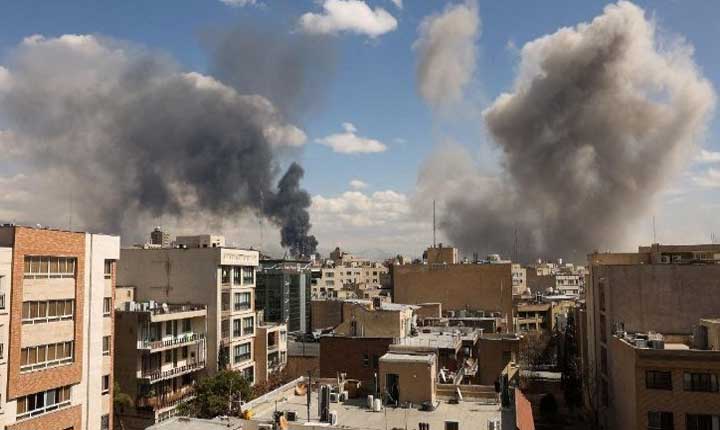
This tragedy extends beyond internal tyranny. The broader geopolitical conflict—fueled by the US-led coalition and regional retaliation—has turned ordinary citizens into collateral damage.
Coalition Strikes (Operation Epic Fury): Under the banner of international peacekeeping, intense airstrikes launched by the US-Israel coalition devastated civilian areas. Between 1,700 and 3,600 innocent citizens across Iran lost their lives, many killed in their sleep. Tragically, the inclusion of at least 254 infants among the dead serves as a grim testament to the blindness of modern warfare.
Iran’s Retaliation & The Gulf Crisis: In response, Iran launched hundreds of drones and missiles. These retaliatory strikes claimed the lives of 40 to 48 innocent civilians and migrant workers in neighboring Gulf countries like the UAE, Kuwait, Bahrain, and Saudi Arabia—people who had absolutely no stake in the war. Among them was an innocent Indian national, killed during an attack on the Kuwait Airport.
The Devastation of Lebanon: As the theater of war expanded into Lebanon, the destruction reached catastrophic levels. Over 3,800 Lebanese citizens were killed, including more than a hundred frontline medical personnel. Furthermore, nearly 1.2 million people were displaced, forced overnight into homelessness.
Statistics Don’t Bleed
Whether killed by coalition bombs or state oppression, these victims were not politicians. They were not military strategists. They were not data points. They were someone’s son, someone’s husband, someone’s father. They were someone’s entire world.
But to war, people are reduced to numbers. They are figures in intelligence reports and statistics in press conferences.
Back home, however, they are empty chairs. They are framed photos hanging silently on the wall. They are memories that will never walk through the front door again.
The real tragedy of war does not lie in the macroeconomic toll or the map lines redrawn. It lies in the tears of a mother who must beg for money just to buy back her son’s corpse. It lies in the question of a toddler who doesn’t understand why their father isn’t coming home.
Death takes away a life. But this brand of institutional cruelty takes away a family’s right to even mourn in peace. This is not just a story about war; it is a eulogy for the day humanity lost its way.