One Word Vanished. India Heard Everything.
- Published By: shivaduvvuru
- June 19, 2026 / 04:09 PM IST


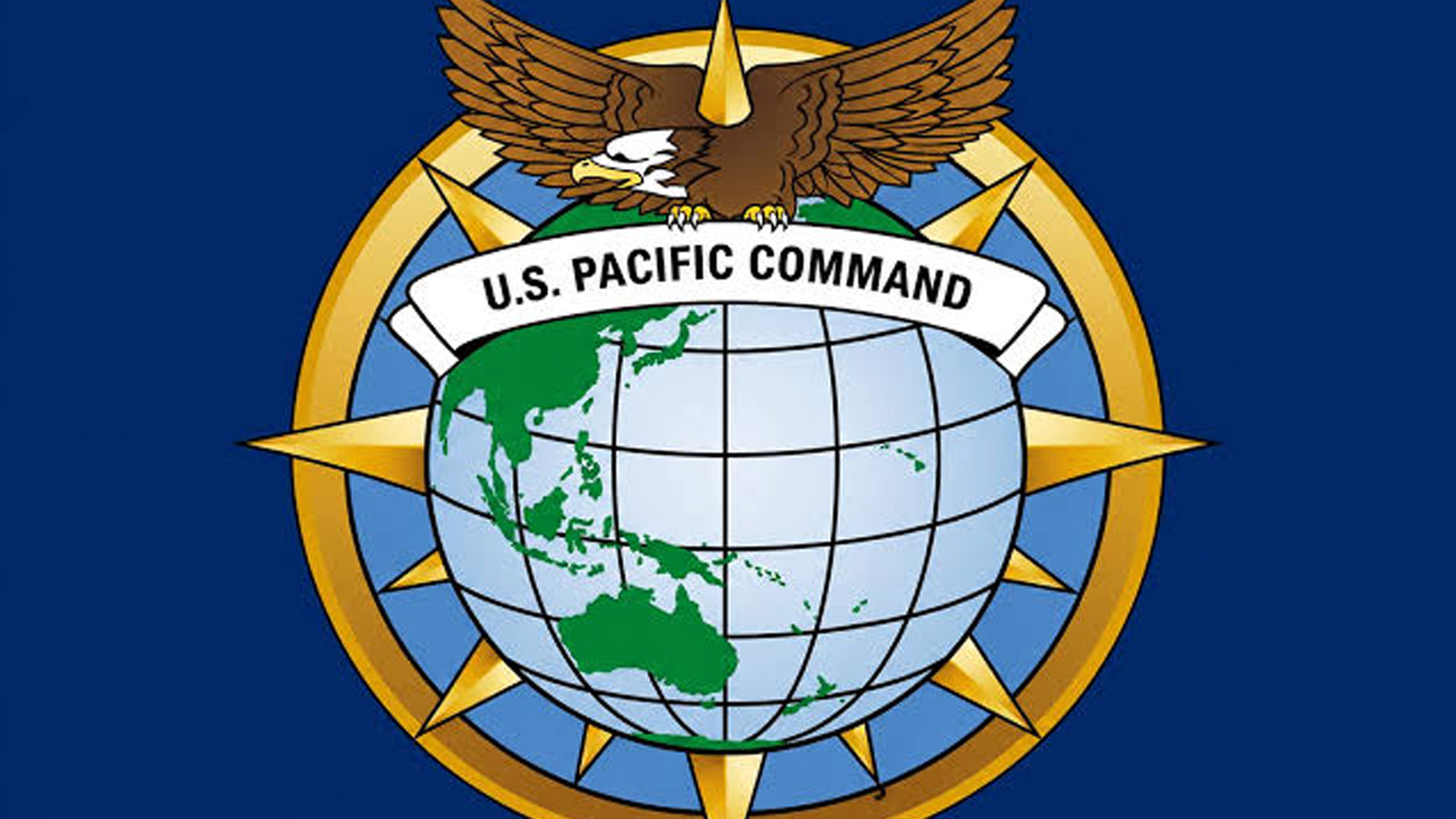
On 16 June 2026, the United States quietly deleted one word from the name of a military command.
No press conference. No phone call to Delhi. The “US IndoPacific Command” simply became the “US Pacific Command” again. The official explanation was four words long: honouring our historical legacy.
Most people scrolled past it. But in India’s strategic circles, that deleted word set off alarm bells — because of what it said, and because of everything that happened around it in the same three weeks.
To see why, you have to understand what that one word was carrying. So let’s break it down, exactly the way it unfolded.
The word was never just a word
For 70 years, this command was simply called “Pacific Command” — the giant umbrella controlling all American military operations from the coast of California to the western border of India.
Then in 2018, during Trump’s first term, America added one word: Indo.
That small edit was a message. It told India: you are not a side character. We now see the Indian Ocean and the Pacific as one single chessboard, and you are a major piece on it. The US defense secretary at the time joked the command stretched “from Bollywood to Hollywood.”
For India, this was recognition on a global stage — and it came with substance: joint military exercises, intelligencesharing, deeper defense ties.
So in 2026, deleting that word wasn’t housekeeping. It was a message in reverse. And the map America posted alongside it made the message louder.
The map that “accidentally” insulted India
The announcement came with a map of the command’s area of operation. On it, the part of Jammu & Kashmir that Pakistan illegally occupies was shown as Pakistani territory. Aksai Chin, which India claims, was placed outside India’s borders too.
A mistake? Maybe. Except months earlier, in February 2026, America had posted a map showing complete, undivided India — and then quietly deleted that one after Pakistan complained.
So: correct map → Pakistan objects → map vanishes. Wrong map → India objects → we’ll see.
This is the rule nobody teaches you. Maps aren’t geography. Maps are messages. And to decode this one, you have to look at who America is suddenly getting friendly with.
Follow the real story: America and China are talking again
Here’s the development that explains everything.
In May 2026, Trump flew to Beijing — the first US presidential visit to China in nearly nine years. Xi Jinping gave him the full redcarpet treatment: a grand banquet, a tour of the Communist Party’s private compound, the works. The two announced they wanted a “constructive relationship of strategic stability.”
In plain terms: after years of trade war, Washington and Beijing decided to cool things down. China would buy 200 Boeing jets and $17 billion of American farm goods a year. New institutions were set up to manage the trade.
Now connect it. The word “Indo” was added in 2018 specifically to warn China that America was teaming up with India to check it. So if America now wants Beijing’s friendship, what’s the cheapest, most deniable thing to remove? The word that irritates China the most.
That’s the fear haunting Delhi — even a name for it: the “G2,” a world run by two superpowers cutting deals over everyone else’s heads. A USChina friendship is the precise scenario India’s whole partnership with America was built to prevent.
Meanwhile, the Quad is running on low battery
The Quad — USA, India, Japan, Australia — was meant to be the big counterweight to China in Asia.
It isn’t dead. But the energy is gone. India was set to host a Quad leaders’ summit in 2025; it was cancelled. The May 2026 meeting got downgraded to foreign ministers only — no prime ministers, no presidents.
Picture a wedding that keeps getting postponed until it quietly becomes a coffee meeting. Technically still on. Practically deflated. An Indian MP captured the mood in one line: “One more nail in the coffin of the Quad?”
Then the story turned deadly
Here’s where it stops being about symbols.
In June 2026, America was running a naval blockade in the Strait of Hormuz, the narrow waterway carrying a huge share of the world’s oil. During the operation, a US strike hit a tanker in the Gulf of Oman.
Three Indian sailors were killed. India’s Foreign Ministry filed a formal protest.
So stack it all up. In a matter of weeks, America deleted India from a command name, posted a map slighting India’s borders, started courting India’s biggest rival, let the Quad fade — and killed three Indian citizens.
And then Trump did something that tells you exactly how this relationship really works.
The hug that became a handshake
Days later, Trump met Modi at the G7 in France and turned on the charm. He called Modi “calm, cool, a total killer.” He said Modi looks “like an angel” but negotiates “as tough as” anyone. He said a trade deal was “very close.”
Lovely words. But watch the body language.
For years these two greeted each other with bear hugs — “Howdy Modi,” the giant Ahmedabad rally. This time: no hug. A stiff, formal handshake.
And Modi didn’t just bask in the flattery. He raised the dead sailors to Trump’s face, saying their safety was “of utmost importance” to India. Trump’s reply was cold: “It’s a tough profession.”
That handshake says more than every compliment combined. The friendship is being performed. The relationship underneath has cracks.
So what does this actually mean for India?
Here’s the part that matters — and it’s counterintuitive.
If you only watch the symbolism — the deleted word, the cold handshake, the cancelled summits — you’d think India and America are drifting apart. But the opposite is true underneath. While the words got colder, the deals got deeper.
In 2025, America hit India with tariffs as high as 50%. By February 2026, it slashed them to 18%. India committed to buying $500 billion of American energy, technology, and goods, and signed a major pact on critical minerals and rare earths — the raw materials behind semiconductors, EVs, and weapons.
Which leads to the paradox at the heart of India’s position:
India is buying more from America to depend less on China — and in doing so, it is depending more on America.
It’s like leaving one landlord to escape rent hikes and signing a bigger lease with another. You gained options. Did you gain freedom? That’s the real question.
The lesson: weather versus climate
The cleanest way to read all of this is the difference between weather and climate.
The name change, the map, the cold handshake, even the flattery — that’s weather. Noisy, daytoday, headlinegrabbing.
The trade deals, the minerals pact, the energy contracts, the military exercises — that’s climate. Slowmoving, and what actually shapes the future.
India has chosen, very deliberately, to ignore the weather and track the climate. When America deletes a word, India shrugs. When America kills its sailors, India protests on the record but keeps the trade talks alive. It takes the charm, banks the deals, logs the grievances, and hedges everywhere else — Europe, the Gulf, even a door left open to Russia.
That’s what “strategic autonomy” looks like in practice. Not loud. Not emotional. Cold, patient calculation.
The quietest moves carry the loudest messages. America didn’t need a speech to tell India where things stand. It deleted one word.
India said nothing. But silence, in geopolitics, is also a position.
Related News

Top 6 Stays in Dubai for Your Next Workation
SriLankan Airlines Restores Complete Middle East Network With Kuwait Service Resumption
Two Years After Trump’s Inflation Spotlight, Rising Grocery Prices Loom as a Political Vulnerability for Republicans Ahead of Midterms
US Imposes Up to 100% Tariffs on Drones to Curb Chinese Dominance and Bolster Security
Iran Mocks Trump Over Secret Aircraft Switch During Turkey Visit