
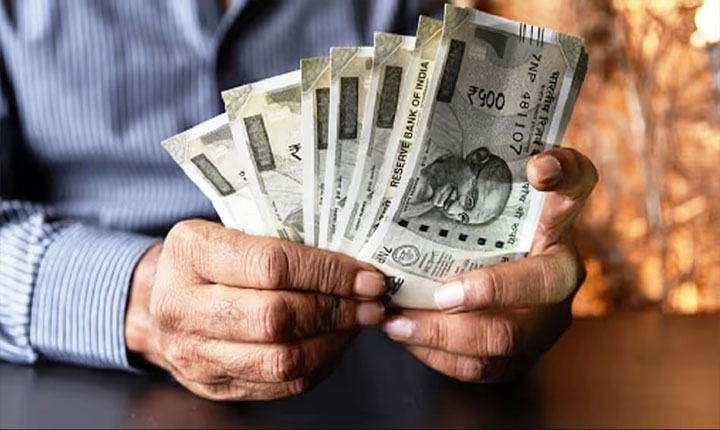
Why Are Some Indians Super Rich While Others Struggle?
- Published By: Tech Team
- April 16, 2026 / 11:32 AM IST


A Look at India’s Wealth Gap
What Is the Wealth Gap?
Wealth means everything a person owns — their house, savings, land, and investments. When a small number of people own most of the wealth in a country, we call it a wealth gap or wealth inequality.
In India, the richest 1% of people own 40% of the entire country’s wealth. Meanwhile, the poorest 50% of people — that’s over 700 million people — own just 3% combined.
How Did This Happen?
India’s economy has been growing fast. New businesses, tech companies, and factories have created enormous wealth. But the people at the top — big business owners, investors, and highly skilled professionals — have captured most of those gains.
For someone born into a poor family, breaking out is incredibly hard. If your parents couldn’t afford good schooling, chances are you won’t get a high-paying job. This cycle repeats generation after generation.
Does India’s Economy Grow for Everyone?
Not equally. India’s GDP — the total value of everything the country produces — keeps rising. But a rising GDP doesn’t mean everyone is getting richer. Think of it like a rising tide that lifts big yachts a lot, but barely moves small boats.
Between 2019 and 2024, the number of Indian dollar-millionaires grew by thousands. At the same time, the average wealth of an ordinary Indian adult actually fell in real terms. The rich got richer; everyone else barely kept up.
What Makes It Worse?
A few things deepen the gap:
Education : Quality education is mostly available to those who can already afford it. If you grow up in a village with a poor school, your chances are limited from the start.
Gender : Only about 1 in 6 working-age women in India actually has a job or is actively looking for one. Women are largely shut out of wealth creation.
Caste: Communities historically classified as Scheduled Castes and Scheduled Tribes still face barriers in accessing jobs, land, and credit.
Should We Be Worried?
Yes — and economists around the world agree. When too much wealth piles up at the top, it weakens democracy, fuels corruption, and slows down the economy for everyone. A society works best when more people have the money to spend, invest, and build a decent life.
India has enormous potential. It has a young population, a growing tech sector, and one of the fastest-growing economies in the world. But that potential can only be fully unlocked when the benefits reach everyone — not just the few at the very top.
Sources
World Inequality Report 2026 | UBS Global Wealth Report 2025 | Thomas Piketty et al. – Income and Wealth Inequality in India 1922–2023
By Shiva Duvvuru, CPA. email: [email protected]
Related News

Kalyan Jewellers Expands Footprint with New Showroom Launch in Attapur, Hyderabad

Why Gold Loans Are Becoming a Bigger Part of India’s Lending Story

UpTik Scales Nearly 4X in Six Months, AUM Hits ₹25.4 Cr
AM/NS India Signs Shareholders’ Agreement to Upgrade Four Government ITIs in Andhra Pradesh Under PM-SETU Scheme

HCLTech and Anthropic Form Global Premier Partnership to Accelerate Governed Enterprise Agentic AI