

Union Cabinet takes a key decision to promote Indian mobile phone brands
- Published By: Tech Team
- July 16, 2026 / 04:32 PM IST


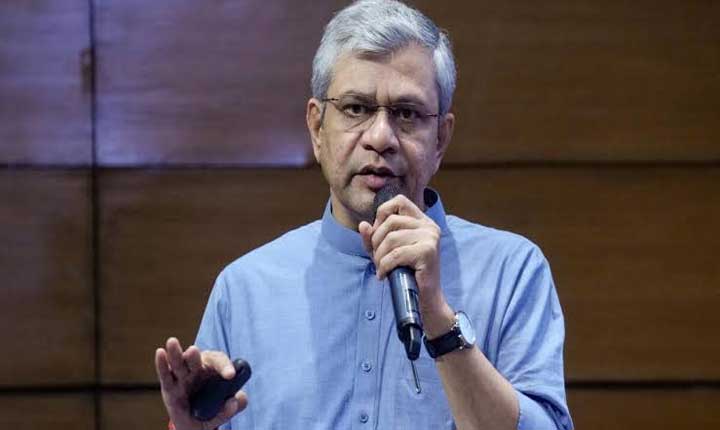
The Union Cabinet, chaired by Prime Minister Narendra Modi, took key decisions on Wednesday. These details were announced by Union Minister Ashwini Vaishnaw in a press meet. The Cabinet approved seven major proposals belonging to sectors such as infrastructure, semiconductors, mobile phone manufacturing, fertilizer production, and railway expansion.
Currently, our country ranks second in mobile phone purchases. However, we are still mostly purchasing brands from other countries. Even though 99 percent of the phones used in the country are manufactured domestically, the mobile brands owned by India among them are very few. With this, the Center aims to not only promote Indian brands but also emerge as the world’s number one in mobile phone exports. For this purpose, it will launch the MPMS scheme with ₹62,500 crores. By the time this scheme is completed in the next five years, they aim to produce ₹39 lakh crores worth of mobile phones in the country. As part of this scheme, incentives ranging from 2.25 percent to 5 percent will be provided on the sales of certain mobile phones. An incentive of 1.5 percent will be given for the domestic production of mobile components. Incentives of 3 percent will be provided to Indian companies investing in the fields of mobile phone design and research. Minister Ashwini Vaishnaw revealed that they expect to create 60,000 new jobs in the domestic mobile phone industry along with exports worth ₹15 lakh crores through MPMS.
Cabinet approval for Semiconductor Mission as well
As part of the strategy to transform India into an international semiconductor hub, the Center has initiated the ‘India Semiconductor Mission (ISM) 2.0’. For this purpose, ₹1.27 lakh crores have been allocated. Through this project, it is estimated that an additional ₹4 lakh crores in investments will flow into the country, and domestic production of semiconductors worth nearly ₹2 lakh crores will take place.
The Minister explained that Semicon 2.0 will work on six major pillars, the first of which is ‘chip design’. Incentives will also be provided in this phase to ancillary industries that supply raw minerals and gases.
It is known that under the previously introduced Semicon 1.0, 12 projects worth ₹1.64 lakh crores were approved in partnership with giant companies like Tata Electronics. With the latest upgrade, India will achieve self-reliance in meeting the chip requirements of Artificial Intelligence (AI) devices.
The Union Cabinet approved the National Investment Policy-2026 to boost the agricultural sector. Through this, they aim to set up 8 to 9 new natural gas-based urea plants in the country and achieve an additional production of one crore tonnes of urea. This will reduce the dependence on fertilizer imports.
Related News

L&T Finance Partners with Pine Labs to Launch Agentic Commerce on PLANET App

Hyundai Motor India Introduces Bluelink Remote Immobiliser for Venue and Venue N Line via Over-the-Air Update

India’s MSME Credit Gap Exceeds INR 60 Lakh Crore, Says Bain & Company Report

Anushree Singh Appointed as Chief Human Resources Officer of Godrej Agrovet

Axis Bank and Hitachi Payment Services Unveil AI-Powered ‘Express Banking 2.0’ and ‘AI Soundbox’