

The Brains of the Train: How India Became a Global Exporter of Railway Electronics
- Published By: shivaduvvuru
- July 7, 2026 / 03:55 PM IST


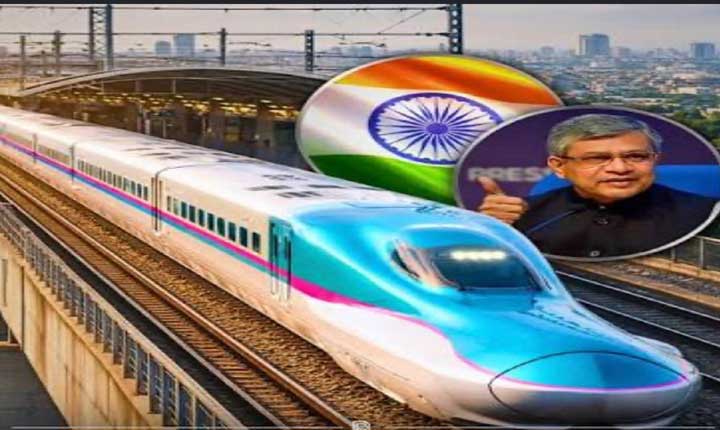
A dramatic technological shift is transforming Indian Railways. Union Minister for Railways, Electronics & IT, Ashwini Vaishnaw, recently highlighted a metric that underscores this evolution: electronics now constitute roughly 40% of the total cost of building a modern train.
From signaling networks to onboard communication, high-tech components are the new backbone of rail infrastructure. More importantly, India has transitioned from being a major importer of these systems to exporting high-value railway electronics to some of the world’s most advanced economies, including the United States, France, and Italy.
Moving Beyond Simple Assembly:
Shifting from “Screwdriver Technology” to Core Engineering:
For decades, the global perception of India’s electronics sector was limited to assembly operations often dismissed as “screwdriver technology.” Minister Vaishnaw firmly rejected that narrative, pointing out that India has successfully progressed up the global manufacturing value chain.
The Three Phases of Manufacturing Evolution:
The manufacturing evolution typically follows three distinct phases: 1. Finished Product Assembly (e.g., smartphones)
2. Module Manufacturing (sub-systems and sub-assemblies)
3. Component & Deep-Tech Production (semiconductors and high-layer PCBs)
Most countries entering electronics manufacturing get stuck in phase one for decades. India’s claim backed by the minister’s numbers is that it has skipped ahead to phase three within a single generation.
Proof of Concept: The Vande Bharat Express:
A standout example of this indigenous capability is the Vande Bharat Express, which was designed completely from scratch by Indian engineers, integrating massive amounts ofdomestic software and electronic control systems. It’s the closest thing India has to a flagship case study for “designed here, not just assembled here.”
Expanding the Domestic Manufacturing Ecosystem:
Boosting Employment and Output
To support this massive surge in rail and commercial tech, India’s industrial landscape is rapidly retooling.
Key Milestone: India’s electronics manufacturing ecosystem is rapidly expanding, supporting over 25 lakh (2.5 million) high-quality jobs.
The Upcoming Factory Boom:
Over 75 electronics component factories are currently under construction, with an estimated 250 new factories slated to go live over the next two to three years.
Plugging the High-Value Import Gap: The PCB Push
The government recently broke ground on massive projects in hubs like Jewar, Uttar Pradesh, to manufacture sophisticated multi-layer Printed Circuit Boards (PCBs). These facilities will help indigenize ₹40,000 crore (roughly $4.2 billion) worth of PCBs that were previously imported components that until now, India was paying other countries to make.
Accelerating the Semiconductor Surge:
Through the India Semiconductor Mission (ISM), the government has approved 12 semiconductor manufacturing projects with an investment pipeline of approximately ₹1.64 lakh crore (roughly $17.2 billion). These chips will directly feed into transport, automotive, and industrial electronics.
Redefining International Trade: Who’s Actually Buying:
Becoming a Trusted Global Technology Partner
The payoff of this ecosystem expansion is visible in India’s trade balance. India is rapidly moving up the electronics value chain, positioning itself as a reliable international alternative to established supply hubs.
The Twist: India Is Also Exporting to China:
Even more surprising to global market analysts is the destination of some of these goods. Beyond sending railway electronics to Western nations, India exported more than ₹35,000 crore (roughly $3.7 billion) worth of electronic components to China last year alone a reversal few would have predicted given China’s own dominance in the sector.
Shaping the Future of Global Transit:
As international supply chains continue to seek reliable alternatives, India’s blend of advanced engineering design, expanding component infrastructure, and domestic semiconductor hubs is positioning the country as a highly trusted global technology partner. The next time you see a high-speed train operating in Europe or the US, there is a growing chance that the “brains” controlling it were made in India.
Related News

HDFC Bank Develops In-House Generative AI Platform ‘Neev’ and Real-Time Fraud Monitoring

Will You Keep Your Job or Will AI Take Over? The Shocking Truth Behind Microsoft’s Mega Layoffs!

Tata Motors and Welspun Renewable Energy Partner for 86 MW Wind-Solar Hybrid Project

Cummins and CII Launch Advanced Decision Support System for Cleaner Air

Next Bharat Ventures Launches INR 2,000 Crore Impact Venture Fund