

Steve Jobs: Apple at 50 From Garage Roots to the Era of Spatial Computing
- Published By: Tech Team
- April 2, 2026 / 11:34 AM IST


Apple anniversary:April 1, 2026, marks the 50th anniversary of Apple, a journey that began in 1976 within a modest garage in Los Altos, California. Co-founders Steve Jobs, Steve Wozniak, and Ronald Wayne launched what would eventually transform from a niche operation into a global financial juggernaut. Guided by the visionary leadership of Steve Jobs and the subsequent strategic direction of Tim Cook, Apple has become a global benchmark for cutting-edge innovation, high-end aesthetics, and intuitive user interfaces. As it celebrates five decades, the company remains a dominant force in market capitalization, fundamentally altering the way humanity interacts with technology and media.
A Legacy of Industry Disruption:
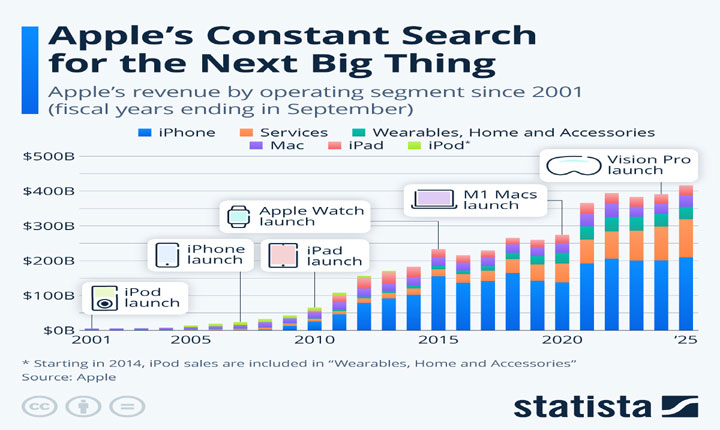
Throughout its history, Apple has consistently redefined entire markets through a series of iconic product launches. The company’s timeline is marked by milestones such as the Macintosh in 1984, which brought personal computing to the masses, the iPod in 2001, which revolutionized music, the iPhone in 2007, and the iPad in 2010. Each of these devices shifted the cultural and technological landscape.
The Dawn of Spatial Computing:
The 2023 reveal of the Apple Vision Pro at WWDC drew inevitable parallels to the legendary 2007 iPhone debut. While the announcement was delivered via a polished, pre-recorded presentation rather than a live theater, Tim Cook’s use of the classic “one more thing” signaled a major shift. The Vision Pro introduced a “magical” interface designed to pioneer the “spatial computing” era, much like the Mac did for personal computers and the iPhone did for mobile devices.
Navigating the Skepticism of Innovation:
Despite high praise from early testers, the Vision Pro initially faced skepticism regarding its “killer app”—the primary reason consumers would need such a device. This uncertainty, however, is a familiar part of Apple’s history. When the Apple Watch debuted in 2015, many critics viewed it as a luxury without a clear purpose. Over time, Apple successfully pivoted the Watch into a vital health and fitness tool. Similarly, the original iPhone had significant functional limitations at launch compared to modern standards, yet it eventually became the engine behind Apple’s climb to a $3 trillion valuation.
Looking Toward a Trillion-Dollar Future:
The iPhone alone has grown to generate nearly $210 billion in annual revenue since its inception. While the Vision Pro’s entry price of $3,499 suggests it may not be an instant mass-market success, Apple’s strategy often involves allowing early adopters and developers to refine the technology’s purpose. As costs potentially decrease in the coming years, this new platform could follow the trajectory of its predecessors, securing Apple’s place at the forefront of the next technological revolution.
Related News
EV Charging Becomes a Seamless Part of Daily Life A New Travel Experience

Cleartrip Enters Holiday Packages Market with Flexible, Expert-Curated Itineraries

Truecaller Launches Scam Checker to Combat Digital Fraud with Community Intelligence

HDFC Mutual Fund Wraps Up Tirupati Leg of ‘Naari Nivesh Yatra’ to Boost Financial Literacy Among Women

Ai+ Smartphone Expands Festive Portfolio with Pulse 2 FE, NovaTab, and Nova LapTab