

India Wants to Make EV Batteries at Home. Will Cars Get Cheaper?
- Published By: Phanindra
- July 26, 2026 / 11:15 AM IST


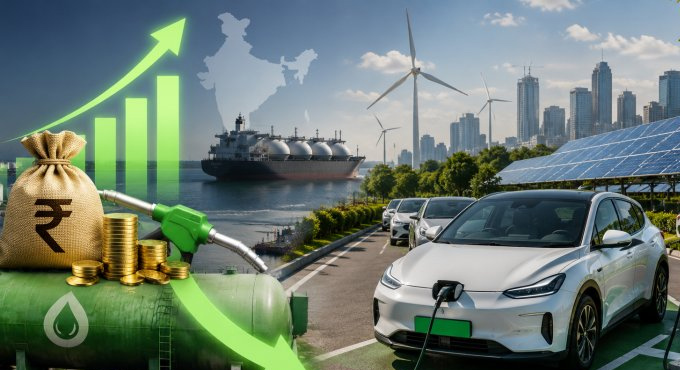
The Central Government firmly believes that scaling up domestic lithium-ion battery cell manufacturing is the key to bringing down the prices of electric vehicles (EVs) in India. With batteries accounting for nearly half of an EV’s total manufacturing cost, the government launched the massive ₹18,100 crore ‘Advanced Chemistry Cell (ACC) PLI’ scheme to curb the country’s heavy reliance on foreign imports, particularly from China.
However, making EVs truly affordable requires more than just assembling battery packs; it necessitates the domestic production of the actual cells. Currently, these local production plans are moving at a sluggish pace. Out of the government’s ambitious 50 Gigawatt-hour (GWh) target, only 1.4 GWh of production capacity has been initiated so far, entirely driven by Ola Electric.
Furthermore, India’s absolute lack of refining capacity for critical minerals like lithium, cobalt, nickel, and graphite means that even if cells are manufactured locally, the raw materials must still be imported. Coupled with equipment shortages, technical hurdles, and local regulatory delays, manufacturers have not yet been able to access the promised government incentives.
When Will the Burden on the Common Man Decrease?
Consumers should not expect a sudden, dramatic drop in vehicle prices just because local battery production is ramping up. Currently, a staggering 99% of the battery cells used in Indian-made EVs are imported. Even as domestic manufacturing gains momentum, companies will initially prioritize recovering the massive capital investments poured into setting up these gigafactories.
In the two-wheeler and three-wheeler segments, EV prices have already reached parity with their petrol counterparts. Therefore, manufacturers in these categories are highly likely to absorb future cost reductions to pad their own profit margins, rather than passing the savings onto buyers through price cuts. While the passenger car segment might see some price relief in the foreseeable future, final vehicle costs will remain highly vulnerable to foreign exchange fluctuations and global commodity prices.
Manufacturing Cells Alone Is Not Enough
Industry experts emphasize that simply manufacturing battery cells is not a silver bullet for cost control. To achieve true financial viability, India must develop a comprehensive, end-to-end “ecosystem.” This includes building domestic infrastructure for refining critical minerals, producing cathode-active materials, integrating semiconductors, establishing rigorous quality testing facilities, and setting up a robust battery recycling network.
While localization may not instantly slash sticker prices, it will deliver immediate tangible benefits: safer, higher quality, and longer-lasting batteries specifically optimized to withstand Indian road conditions and extreme temperatures. It is only after this entire domestic supply chain fully matures that the market can expect a gradual and sustainable reduction in EV prices.
Related News
JSW Group Enters Commercial Electric Vehicle Market with Brand AMPSTAR

KRAFTON India Announces KIGI Cohort 4 to Expand Support for Game Developers
HCLTech Partners with M Group to Modernize IT Operations Across UK and Ireland

Ai+ Nova 2 Power 5G Debuts in India Merging High Fashion with Long-Lasting Performance
Maruti Suzuki Aims for 30% Female Enrollment at Manesar JIM by 2028-29